Showing posts with label Mysterium Coniunctionis. Show all posts

Wednesday, September 17, 2008

Jungian Web Links

In recent weeks, in overlapping topics whose labels appear at the bottom of this post, I've been blogging about the psyche as mapped by Carl Jung, the Swiss psychologist who died in 1961. Through reading several books which I've mentioned in these posts, I have become convinced that Jung's insights speak volumes about our human capacity for spirituality — including my own Christian and Roman Catholic spirituality.

This post contains links to valuable information I've found on the Web concerning Jung's ideas.

The first link is to a lengthy but extremely readable article on "The Organization Leader as King, Warrior, Magician and Lover: How Jungian Archetypes Affect the Way Men Lead Organizations." This article, in addition to describing various organizational leadership styles in terms of Jungian archetypes, is a good introduction to the idea of archetypes in general:

Archetypes, in Jung's thought, are as basic as, and very similar to, instincts. They are power centers that are "hard-wired" into the psyche of every human being, whether male or female, that largely control, or at least provide channels for, our thought, speech and behavior ...

The purpose of this essay is to enlighten and empower male leaders and their male and female coworkers by describing how the positive and negative aspects of the King, Warrior, Magician, and Lover archetypes influence male behavior, the way men lead, and the way they follow leadership.


The second link is to the Symbol Watcher website, dedicated to "the search for meaning in cultural, artistic and dream imagery." A tasty appetizer for the smorgasbord of this site is the short, succinct "The Projection of Sarah Palin," which tells how the country has projected the archetype of the Great Mother upon the governor of Alaska, who has been tapped as the Republican nominee for vice president:

... the Great Mother is at once container, cherisher and guardian of life, as well as ruler, possessive controller/destroyer and seductress. ... we seem to have thrust some — if not all — of the Great Mother’s expansive powers onto Gov. Palin.


To me, the very fact that almost no one is neutral about Palin is indicative of the strength with which we are archetypally projecting an image onto her — whether or not we like the image! One of the advantages of a Jungian approach to understanding ourselves is that it allows us to step back and know that we are projecting. Giving full rein to our subjectivity and irrationality, then looking at it through Jungian eyes, can be the first step in reclaiming our reason and our objectivity.

My Roman Catholic faith calls me to be rational. The Church teaches the fundamental rationality of God above. Yet, paradoxically, for us the way to rationality can be through the chaos of the unconscious and its archetypal wisdom. Jungian Web links such as these may serve seekers as guideposts through the chaos and beacon lamps in the darkness.

Sunday, September 07, 2008

The God of Synchronicity

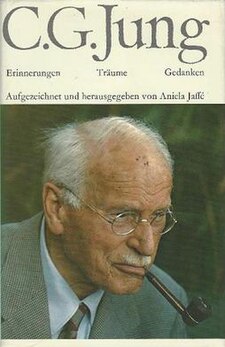
Carl Jung and Christian Spirituality: A Reader, edited by Robert L. Moore, contains an article that is required reading for anyone such as I who would like to bring Christian thought into harmony with Jungian psychological theory. Eugene C. Bianchi's essay "Jungian Psychology and Religious Experience" discusses five major points of conflict between traditional theology and Jungian imperatives. The first is the tension between the traditionalist view that the truths of Christ and his church are manifestly objective and historical, whereas Jungians emphasize the personal inwardness and subjectivity of all religious experience.

Bianchi admits he is biased in the Jungian direction, yet disturbed by the "discontinuities and inadequacies" of Jung's ideas about religion (p. 17). For example, he understandably feels Jungians' emphasis on pure spiritual inwardness "can lead to a diminishing of community responsibility ... [and] submerge social consciousness and civic responsibility" (p. 22).

Jung, for his part, held that universal archetypes common to all human beings produce images in the unconscious mind that show up always and everywhere in dream and myth. These images present themselves consciously as symbols. The conscious mind sees, not the archetypes themselves, but the symbols that the archetypes lie behind.

Furthermore, Jung found that there was often an uncanny coincidence between symbols appearing in our dreams and "real-world" events that transpire at roughly the same time. He called these coincidences "synchronicity."


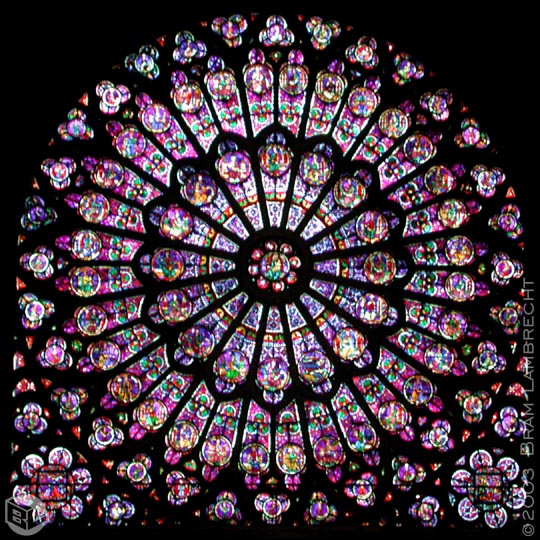
The cross of Christ is such an archetypally derived symbol. Because of its balanced shape, it is typical of all symbols of symmetry and wholeness. The rose window of Notre Dame Cathedral, depicted on the book's cover, is likewise a symbol of the archetype for wholeness.

Jung identified the archetype behind such wholeness symbols/images as the Self. The Self, if realized, is capable of bringing the psyche or soul into balance by harmonizing its internal tensions and bridging between its inherent pairs of opposites such as male-female or light-dark. It is the most important and potent of the archetypes ... and the most mysterious.

In earlier installments of my Quest for the Self series, I tried to show what the Jungian Self is all about. In the final two of those posts, I discussed the key related concept of "synchronicity." I believe this concept is capable of resolving Bianchi's doubts about joining Christian thought to Jungian.


Jung's idea of synchronicity covers many bases, to use a baseball metaphor. Jung's "first base of synchronicity," as it were, is the notion that there are uncanny coincidences between events that happen in the "real world" and events that happen in the psyche.

The events that happen in the "real world" are objective events that occur in time and space and are caused in the usual way. The events that happen in the psyche, often in visions and dreams, are archetypally produced images. The external events and the archetypal images, in confirming one another, give rise to a sense of deep meaning.

Such a synchronistic, confirming event occurred to my father at the time that his brother Ralph was released by death from his long, painful struggle against inoperable, incurable cancer. At the time that it happened, my father was away from home on the island of Guam, while Ralph was in Maryland with his family. My mother and I were living near Ralph Stewart and his family.

When Ralph finally succumbed to his terrible disease and was pronounced dead in the hospital by his doctor, it was night on Guam, and my father wakened from a dream — he later reported it to my mother — with the feeling of a great weight having been lifted from him. She and he calculated that his awakening from dream had taken place at very possibly the exact moment Ralph died. Thus the uncanny synchronicity of two events, one objective and "real," the other personal and psychic.

I never learned from Dad what the actual content of his dream had been, but in later years he often spoke of his fascination with widespread reports of near-death experiences, in which people who have almost died have come back to life saying they have "seen" a bright light at the end of a tunnel and even the figures of loved ones waiting to welcome them "to the other side." The contents of such near-death dreams and imaginings are so persistent and ubiquitous that they simply must be produced by archetypes, any follower of Jung would say. I wonder if Dad's synchronistic dream was not such an archetypally-driven near-death experience that he had on Ralph's behalf.


Extending the baseball metaphor to include Jung's "home plate of synchronicity," as I'll call it, involves making the assertion that the archetypes that "speak to us" so uncannily, in the guise of inexplicable coincidences between inner images and outer events, are objectively real in and of themselves. Furthermore, Jung said, they are "transgressive" — not in the sense of being sinful, but in the sense of traducing the ordinary boundaries of time, space, and causality.

Jung originally placed the archetypes in the individual's "collective unconscious," a part of the hidden psyche common to us all. Later, he came to realize that there was a distinction to be drawn between the archetypal images/ideas that well up in the deep unconscious of every individual human being, and the archetypes proper which produce them. The archetypes, he came to believe, must actually reside in a "psychoid" — i.e., psyche-like — region of the individual, a place outside the psyche per se which is part-mind, part-body.

Then, in expanding upon his "first base of synchronicity" idea, as I am calling it — the idea that external events and internal images uncannily co-occur — he said that archetypes actually exist on their own in a manner that is independent of the individual psyche. They pre-exist the psyche of any particular person, and they persist when each one of us dies.

Synchronicity writ large — my "home plate of synchronicity" — is Jung's idea that powerful, numinous, uncanny patterns show up in the world and its events, and are matched by similar events in the mind, because the archetypal potencies behind the events are godlike and very, very real.


Jung called these archetypal potencies "transgressive," a choice of terms that is not calculated to endear the idea to Christians for whom "transgression" and "sin" are synonyms. If he had called synchronicity's uncanny effects "miraculous" instead, ordinary believers might have welcomed Jung's ideas with open arms.

For what Jung had in mind by synchronicity was a way of explaining the "acausal orderedness" in the world.

That the world exhibits more order than it has any right to expect to have is a point of agreement between Christians and Jungians ... and, increasingly, among secular scientists who champion, say, Darwin's theory of evolution.

The secular point of view has it that the world is "causally closed," meaning that there is simply no way for a deity to reach into the intact causal chains by which events normally proceed and alter their outcomes.

If synchronicity were causal — bound by ordinary chains of cause and effect — it would violate that assumption. But Jung very carefully stated that synchronicity was at the opposite end of a conceptual axis from causality. Causality and synchronicity together explain events, Jung held, including the uncanny relationships between objective, factual, "real" events and internal, personal, psychic events.


In his article, Eugene Bianchi has trouble with what he perceives as a tendency among Jungians to overemphasize "symbolic causation," which "appears to proceed almost exclusively from the inward to the outward" (p.21), and underemphasize "external causality" (p. 22). Presumably, "external causality" is what the miracles, teachings, and life-death-resurrection of Jesus affirm to ordinary believers. That is, all that is told of in the Gospels actually happened and is objectively real ... even the miracles.

On the other hand, a Jungian perspective seems to Bianchi to suggest that such events as the Resurrection might have been dreamlike illusions, mere images welling up in the psyche of the Apostles due to the influence of internal archetypes.

But that is not what anyone who fully accepts Jung's ideas about synchronicity would hold, any more than they would hold that only in my father's dream did his brother Ralph die and "go to heaven." Ralph died objectively and really ... and may or may not now be in heaven, who can say? My father's dream did not cause his death. Nor did his death cause my father's dream. Rather, the two in their coincidence were an example of acausal order appearing in the world we know.

Likewise, for us believers to note that Jesus' Resurrection was an example of an archetypal image and a real-world event "falling together" need not imply that one of the pair was logically (or temporally) prior to, or any more "real" than, the other. Jung carefully insisted that in any such case of "falling together," the provision by an archetype of an internal image or symbol and the arranging by the same archetype of an external event whose meaning is given by the symbol are equally real.


Admittedly, this is an odd way for us to look at things. As creatures of modernity, we are so wedded to explaining things "rationally" by relying exclusively on ordinary notions of causality that there doesn't seem to be much room for synchronistically-based explanations.

This is in part why we, when we wear our hats as scientists, ascribe certain so-called "random" events to chance. The result of a flip of a coin is supposedly a chance event — either that, or we tend to go to elaborate lengths to qualify such a statement by saying that if we could only know all the factors leading up to the instant of the coin flip with sufficient precision, we would find the outcome to be as causally deterministic and predictable as the orbit of Jupiter.

Similarly, we say that the occurrence of genetic mutations in producing new types of organisms and accounting for biological evolution is chance or random, and has no cause.

In other words, all events have causes that arise naturally in a causally closed cosmos, or they have no cause at all, and are purely random.

Jung in effect said that causality (or its absence) isn't the whole story. Synchronicity plays a real, acausal, non-random role in explaining worldly events. And synchronicity is produced by archetypes that are as real as real can be. The archetypes, most notably the Self, are patterns that give meaning to what goes on in the world. They do so by influencing objective events and subjective ideas, in tandem with one another.

If Eugene Bianchi would have given full credit to Jung's ideas of the synchronistic workings of the Self, he might have seen that the Christian God of redeeming miracle and the Jungian God of uncanny synchronicity were one and the same God.

Sunday, August 31, 2008

Quest for the Self, Part 5

The final chapter of Murray Stein's book Jung's Map of the Soul: An Introduction, the ongoing concern of my Quest for the Self series of posts, is about synchronicity. This topic is the single most controversial one in the theory of the human psyche proposed by the late Swiss psychologist Carl Gustav Jung.

Jung, over a very long and productive lifetime as a psychologist and psychological theorist, came to believe many hard-to-believe things about how the psyche is constituted. For example, he found there to be, in addition to the personal unconscious mind that each of us instantiates individually, a collective unconscious that is the same from one person to the next.

In this deep, universal realm of the unconscious psyche he found a set of potent personifications: divine infant, hero, king, queen, mother, father, etc. — along with powerful images that are not personifications, such as the mandala and the cross familiar in the East and the West, respectively, as religious symbols.

These images make their presence known in our dreams and myths, our stories and our art, in every time and place and culture. Where do they come from?

Basically, Jung said, they come from the Self.

The Self is the master of all the archetypes. Many images come directly from it, including hero, king, queen, cross, and mandala images. Any archetypal image whose basic meaning is "wholeness" or "growth toward wholeness" comes from the Self. Thus, when we dream of a tree, it is the Self that hides behind it.


The human task during the first half of our normal lifespan of 80 years or so is to manifest the ego, the center of our conscious mind. During the second half, this changes. We are then on a quest to realize the Self.

But what is the Self?

An archetype, yes. As an archetype, it is a source of numinous power. It is by means of this power that the Self and the other archetypes provide the unconscious psyche with their archetypal images, which then gather strength and invade the conscious psyche in the form of symbols.

Provide? Invade? Yes. For the archetypes, including the Self, lie outside the psyche proper, in a "psychoid" region that builds bridges between the mind and the body.

In fact, the Self — and here is where controversy arises — exists independently of the psyche of the individual person. It exists independently of the body of the individual. It pre-exists each of us, and it goes on existing after we die.

Within each one of us, the Self represents the image of God, the imago Dei. As a Being that transcends our own limited being, the Self is like unto God himself.


The transcendent Self, furthermore, is the basis for synchronicity.

Jung defined synchronicity as coincidence with meaning. Life is filled with uncanny coincidences between external, objective events and internal, subjective events. Here is one such coincidence. Jung wrote of synchronicity in an essay called "Synchronicity: An Acausal Connecting Principle." It appeared in a book co-authored with physicist Wolfgang Pauli, whose contribution was an essay called "The Influence of Archetypal Ideas on the Expression of Scientific Theories of Kepler."

Whence the synchronicity? Today I perused Stein's chapter discussing these two essays; last night, by pure coincidence, I watched an episode of Carl Sagan's Cosmos series in which Sagan dramatized Johannes Kepler's life, spent in quest of an understanding of the planets' motion around the sun.

As of last night, I had no idea that Kepler's struggles were of Jungian import ... though I recognized that Kepler's original ideas, discarded only after a long, failed attempt to harmonize them with actual observations of planetary movements, were projections of Jungian archetypes onto the natural world.

Kepler spent his life trying to show how the world in its adherence to natural laws exemplifies ideas in the mind of God.

My watching a TV show about Kepler and the very next day reading of the importance of Kepler in Jungian discussions of synchronicity is itself an example of synchronicity: "the simultaneous occurrence of a certain psychic state with one or more external events which appear as meaningful parallels to the momentary subjective state" (p. 211).

Put more simply, synchronicity is a "falling together in time" of two events in such a way as to produce a subjective sense that the falling together is meaningful in some way. Synchronicity is coincidence with meaning.


In my example, the falling together of two "Kepler events" means subjectively to me that I'd better put aside my ordinary skepticism and take synchronicity seriously, as a sign of the Self.

Stein puts it all this way:

Synchronicity is defined as a meaningful coincidence between psychic and physical events. A dream of a plane falling out of the sky is mirrored the next morning in a radio report. No known causal connection exists between the dream and the plane crash. Jung posits that such coincidences rest on organizers that generate psychic images on one side and physical events on the other. The two occur at approximately the same time, and the link between them is not causal. Anticipating his critics, Jung writes: "Skepticism should ... be leveled only at incorrect theories and not at facts which exist in their own right ... " (p. 210)


Synchronicity is acausal. The internal image, a fact in its own right, does not cause the external event. Nor does the external event cause the associated appearance of the internal image.

In my example, the external event is the coincidence of two apparently unrelated "Kepler events." The internal image is, I'd say, another way in which the Self presents itself to the psyche: as a world which, in Jung-speak, is more of an unus mundus than we normally give it credit for. Things that go on in such a close-coupled world have meaningful, if surprising, connections. They have hidden "organizers" that generate coincidences that are uncaused but meaningful.

The Self is chief among these hidden organizers. From a Jungian perspective, the Self is God.

Saturday, August 30, 2008

Quest for the Self, Part 4

Murray Stein's book Jung's Map of the Soul: An Introduction, my ongoing focus of late, was last taken up in Quest for the Self, Part 3. The Self is perhaps the most mysterious component of the human psyche as mapped by the late Swiss psychologist Carl Gustav Jung.

The Self can be thought of as the most important of the "archetypes" of the collective unconscious shared by every member of species Homo sapiens. Each of the several archetypes we all possess within ourselves represents "an innate potential pattern of imagination, thought, or behavior" (p. 233), and, while this pattern itself remains outside our ordinary waking consciousness, it is capable of representing itself as images of various sorts that become symbols in dreams, myths, fairy tales, art, and religious icons.

One of the symbols the Self can employ in its ongoing mission to shape and reshape our lives is the mandala, such as the one pictured at right. Another is the Celtic Christian cross shown at left, or any other Christian cross. The Self uses such abstract symbols to transform our consciousness because they have a form that represents wholeness, symmetry, and balance.

When we start talking about the Self "using" images and symbols to provoke in us a greater consciousness and wholeness, things are admittedly getting really weird from the everyday rational perspective. In this post, I'd like to sort through some of these "weird" ideas.

Let me begin with this quote from Stein (p. 197):

... we can think of the self [note that Stein does not capitalize this and other Jungian terms, as I do] as a cosmic entity that emerges in human life and renews itself endlessly ... .


The Self is, Jung believed, an imago Dei, an image of God. The images that it introduces into the human psyche are images of this image of God.

One of these images generated by the Self from outside the psyche, but showing up in the psyche per se, is the idea of the Hero. Archetypal images can be personifications, as with the ideal of the Hero, or they can simply be transformative, as with abstract cross/mandala images, which if meditated on and otherwise taken seriously, can bring us to higher stages of consciousness and personal development.


The thrust of the Self as the prime archetype in the collective unconscious is, in fact, to bring itself fully into the light of consciousness. We start out life with very little consciousness indeed: what consciousness there is represents a sort of "participation mystique" in which we as newborn infants are unable to distinguish between our own selves and everyone and everything surrounding is in our immediate environment.

As we learn to make such careful distinctions, what Jung called the "ego" becomes the center of the conscious psyche. At this and subsequent stages of conscious development, it is necessary for the ego to banish huge portions of the original contents of the psyche into the unconscious depths. We lose touch with many of the things that are contained inside the mind, including the images and ideals of which the Self and the other archetypes — which, Jung showed, are actually working from a region outside and beyond the psyche proper — form the basis. Yet these images and ideals still make themselves felt, popping up in our dreams and fantasies, where they often become the raw material for myths.

The Hero ideal, a manifestation of the Self archetype, typically shows up for the first time while we are children. It personifies what our inbuilt expectations of the hero are. Mythic heroes and those of film, TV, and popular fiction — think Superman — typically adhere to these expectations. Each of us goes through several stages of life in which we are particularly susceptible to Hero images.


There are many stages of conscious development and associated archetypal images that reflect the guidance of the Self. Stein lists some of these (p. 194): "the divine infant, the hero, the puer and puella, the king and queen, the crone and the wise old man [are all] expressions of this single archetype." (No, I don't know what the "puer" and "puella" represent, but I do know these are the Latin words for "boy" and "girl," respectively.)

As we go through these various stages and respond to these images and the ideas associated with them, Jung said we cycle repeatedly through four basic levels of conscious development. I won't try to describe these levels and cycles in detail here, but I mentioned the levels briefly in Quest for the Self, Part 3. The four levels are defined by the five circles of available psychic wholeness: Anthropos, humankind's spiritual ideal, the highest circle of attainable wholeness; Homo, our everyday ideal of humanistic perfection; Serpens, the serpent, symbolically the root of all animal wisdom; Lapis, representing the integrity associated with plant life and mineral formations; and Rotundum, the position in the hierarchy of wholeness which roots the entire hierarchy in the abstract place where physical matter emerges from pure energy.

Rotundum and Anthropos, surprisingly, coincide. Thus, any ascent or descent through these (actually) five levels, as we grow in wholeness during the course of a lifetime, turns out to be a repeated circular movement through four stages. This fact of circular movement that has to be repeated over and over again adds immeasurably, of course, to the great mystery of the realization of the Self.


Again, the main point to keep in mind is that by "realizing the Self" Jung means bringing it, the Self, to conscious awareness. The ego, therefore, has to accommodate itself to the entry of the (capital-S) Self into the realm of consciousness. This is something the ego is not about to permit without a struggle. Jung characterizes the process of "individuation" by which the Self is gradually realized as, per Stein, "not fundamentally a quiet process of incubation and growth [but] a vigorous conflict between opposites" (p. 189).

The "opposites" which together form the psyche are the conscious mind, centered on the ego, and the unconscious mind, wherein the archetypal images form. These two realms are engaged in, says Jung himself, "open conflict and open collaboration at once." Jung's great desideratum is that consciousness and unconsciousness be allowed to engage in, in Jung's own words,

... a fair fight with equal rights on both sides. Both are aspects of life. Consciousness should defend its reason and protect itself, and the chaotic life of the unconscious should be given its chance of having its way too — as much of it as we can stand. ... It is the old game of hammer and anvil: between them the patient iron is forged into an indestructible whole, an "individual." (Stein, ibid.)


This is why Self-realization through the process Jung called individuation has to proceed according to anything but a straight line. There are cycles within cycles, wheels within wheels. The Self feeds archetypal images and ideals into the hopper of the unconscious mind, which turns them into symbols that appear in our dreams and imaginings. The symbols alone are visible to ego-consciousness; the archetypes and their images remain hidden. If we respond to the symbols in the way that the Self, as the image of God, intends, we will in effect transform the hidden Self itself!

Jung schematized this Self-transforming process as a repeating cycle of letting each symbolized image or idea pass through the four levels of conscious development, ultimately arriving mysteriously back at the original level, in such a way as to cumulatively "change the originally unconscious totality [i.e., the Self] into a conscious one":

... an archetypal image enters the psychic system at the archetypal end of the spectrum [corresponding to both Anthropos and Rotundum as levels of conscious development] and an integration process ensues on each of the other three levels. (p. 195)


This integration process first arranges for the incipient idea corresponding to the archetypal image that generates it to "become clearer." Then this bright, shiny new idea shifts to the "shadow level," where it must be lived out in the real world — where the new idea inevitably "casts shadows" and provokes conflicts of a light-vs.-dark type. Other people, not given to accept the darker manifestations of the Self, are apt to start registering their disapproval of us at this point — as, I might add, are we ourselves. This seems to be why Self-realization is such a hammer-and-anvil affair.

If we can get beyond such tensions, the clarified and shadow-beset idea next descends to a yet lower level in the consciousness hierarchy, the "level of physis, which is extremely deep in the material substrate of the body, and the body itself begins to change" (p. 196).

Finally, at the fourth level, "the energy level itself is reached ... the submolecular and subatomic level of energy and the forms which shape it" are altered. Owing to the third and fourth stages, the imago Dei, if and when fully realized, is able to in effect move the proverbial mountain to Mohammad and generate the energy of a thousand splendid suns.

Jung, furthermore, likened the whole cyclic process, with its four repeating stages, to "a process of restoration and rejuvenation" — and not just of the individual human person as bearer of the imago Dei. Stein calls the Self, instead,

... a cosmic entity that emerges in human life and renews itself in its rotations through the psyche. Perhaps it relies on human individuals to become conscious of itself, to incarnate in the three-dimensional world of time and space, and also to rejuvenate itself and extend its existence. It subsists in the universe beyond the psyche. It uses our psyches and the material world, including our bodies, for its own purposes, and it continues after we grow old and die. We provide a home where it can emerge and reside, yet in our pride and ego inflation we take far too much credit for its genius and beauty. (p. 197)


Manifestly, this is the Jungian vision of God.

Tuesday, August 26, 2008

Quest for the Self, Part 3

I continue to work my way through Murray Stein's book Jung's Map of the Soul: An Introduction. In my last post, Quest for the Self, Part 2, I talked about five stages of consciousness that Carl Gustav Jung, the Swiss theorist of the human psyche, posited we members of the species Homo sapiens are capable of traversing.

We start out, as infants, experiencing a "participation mystique" in which we have not yet become aware that we are distinct from everyone and everything in our environment.

In ensuing stages we become more and more "rational," as we learn to differentiate between ourselves and the outside world; as we stop projecting our inner sources of psychic energy, the Jungian "archetypes," out onto entities in our immediate environment; and then as we stop projecting them onto abstract entities such as religious doctrines about God or more secular bastions of allegiance, devotion, and fidelity.

Yet by the time we have become maximally rational, we often find the need to go a step further and deal rationally with all these archetypal fountains of inward energy. This, Stage 5 of the development of consciousness, is the mark of Jungian Self-realization. In this stage, we find it behooves us to interpret the meaning of the symbols that our unconscious mind throws out, into the light of consciousness, by way of our dreams, our fantasies, our preoccupations, and our myths.

Taking symbols seriously, we may even find our way to a conscious understanding of the prime archetype of all, the Self, which is the taproot and guiding force of Jungian "individuation." Individuation is the process by which we are able to become more and more complete as conscious human individuals.

But this level of consciousness, Jung's Stage 5, is not the be-all and end-all. Jung hypothesized that there may be two more stages. Stein writes:

Officially Jung stopped at Stage 5, although ... he contemplated further advances beyond it. There are suggestions in his writings for what could be considered a sixth and even a seventh stage. For example, in his Kundalini Yoga Seminar, given in 1932, Jung clearly recognized the attainment of states of consciousness in the East that far surpass what is known in the West. While he is dubious about the prospects for Westerners to achieve similar stages of consciousness in the foreseeable future, he nevertheless does grant the theoretical possibility of doing so and even describes some of the features such stages would have. The type of consciousness revealed in Kundalini could be considered a potential Stage 7. (Stein, p. 186)


Kundalini yoga is a system of meditation which seeks to carry the practitioner's awareness ever upward to higher and higher centers of energy, called "chakras" (see image at left). The highest chakra, Sahasrara, visualized as residing at the top of the head, represents ultimate consciousness — Stage 7 in Jung's hierarchy.

I envision the attainment of the Sahasrara chakra as mirroring the Buddhist goal of Nirvana.

Stein continues:

Backing up a bit, there is a type of consciousness that is more accessible to the West and would occupy the place between Stage 5 and this putative Stage 7. Later in his own life when he explored the structure and function of the archetypes in the context of synchronicity, Jung suggested that perhaps these apparently inner structures correspond to structures of being in the nonpsychic world. ... [A] possible sixth stage of consciousness would be one that takes into account the wider ecological relation between psyche and world ... a state of consciousness that recognizes the unity of psyche and the material world. (p. 187)


Synchronicity, says Wikipedia, is "the experience of two or more events which are causally unrelated occurring together in a meaningful manner."

My mental model of synchronicity has to do with the death of my Uncle Ralph. In the early 1960s my father was not at home with us in Maryland when his brother was diagnosed with incurable cancer. Dad was on the Pacific island of Guam gathering information to write a report on the U.S. territory's public safety institutions. While Dad was away, over several long months my uncle declined steadily, in great pain, and Dad was heartbroken that he could not be with him. Finally, the end came. When my mother called Dad to inform him, Dad told her he had had the most uncanny dream the night before, in which all the burdens of life seemed abruptly lifted from his shoulders. He woke up joyously convinced that his dream had signaled the end of brother Ralph's great misery, at long last. And so it had done. Calculating the time difference between Maryland and Guam, my mother and father figured Dad's dream had occurred at just the moment that Ralph passed on.

Jung saw synchronicity as, alongside causality, a patterning of events in this world. The events that can only be explained by synchronicity are the uncanny things we encounter in life.

A world where synchronicity is real is a world, said Jung, where (in Stein's words) "apparently inner structures correspond to structures of being in the nonpsychic world." The archetypal potencies we find thrusting their way into our unconscious minds, first, and then via symbols into our conscious awareness are not just inner potencies. They exist in the outer, nonpsychic world as well.


Here, then, is the reason why Jung was careful to say that the archetypes are not actually contained in the psyche per se. They impinge on the psyche from what he termed the "psychoid" gray area between the physical body and the nonphysical mind. If there is indeed a "unity of psyche and the material world," it stands to reason that there must be some interface between the two. Jung's psychoid region is this interface.

To me, these ideas are earthshaking ones, that the patterns of the inner world of the psyche are also patterns hidden in the exterior world; and that these hidden patterns in the exterior world produce meaning through synchronicity, where mere causality as a mode of scientific explanation can produce none.

It is as if these ideas of Jung's about Stages 6 and 7 of the growth of consciousness imply that in Stage 6 the boundary between inside-the-mind and and outside-the-mind begins to crumble; as if the Beatles' lyric "Your inside is out, and your outside is in/Your outside is in, and you inside is out" makes sense. (This lyric is from "Everybody's Got Something To Hide Except For Me And My Monkey" on the "White Album.") At Stage 6 we begin to see that. At Stage 7 we are completely sure.

It is as if Stage 7 consciousness has come full circle, back to the "participation mystique" of infancy in which we have not yet become aware that we are distinct from everyone and everything in our environment. The difference is that originally we did not understand the inner-outer distinction in the first place, while now we are fully conscious of having overcome it.

It is as if the same Beatles song gets it right when it says "the deeper you go, the higher you fly, the higher you fly, the deeper you go." To Jung, the highest circle of attainable wholeness is Anthropos, the spiritual ideal. Next lower in the hierarchy of circles of wholeness is Homo, our everyday ideal of human perfection, rooted in our ordinary ego-consciousness. Below that is Serpens, the serpent, the symbolical root source of all animal wisdom. The lower two circles of wholeness are Lapis, the integrity associated with minerals and plant life, and Rotundum, the circle which roots the hierarchy of wholeness in the place where physical matter emerges from pure energy.

A neat vertical axis of the growth of wholeness and unity, no? Well, Jung also illustrated it as coming full circle and having its South Pole, Rotundum, meet its North Pole, Anthropos (see Stein, p. 167). The deeper you go, the higher you fly, the higher you fly, the deeper you go.

Monday, August 25, 2008

Quest for the Self, Part 2

In Quest for the Self, Part 1 I talked about Murray Stein's book Jung's Map of the Soul: An Introduction. It's an easy-to-read summation of what the Swiss psychologist Carl Gustav Jung found concealed in the depths of the human psyche, during a long lifetime of investigation. Namely, Jung found that we all carry in the unconscious portion of our minds prefabricated images of reality that he termed "archetypes," among which the preeminent one is that of the Self. Other archetypes include that of the Mother, the Father, and the Hero.

The Self is the taproot and guiding force of Jungian "individuation," the process by which we become more and more consciously complete as human individuals. This individuation process has as its ultimate goal the conscious realization of the Self archetype.

In the first stage of consciousness, we as infants experience a "participation mystique" in which we have not yet become aware that we are distinct from everyone and everything in our environment. Then, during the ensuing second stage, we learn to differentiate external persons and objects from ourselves — and right off we begin outwardly projecting the contents of our inner unconscious mind, clustered around the universal archetypes. For example, we project the complex surrounding our Mother archetype out upon our own mother.

This second-stage emphasis upon differentiation and projection continues through most of our early adulthood, during which the main task facing us psychologically is to develop our ego as the center of our conscious identity, and along with it our persona as the mask we wear for purposes of social acceptability and inclusion. The second stage will often culminate in projecting our inner image of a perfect mate of the opposite sex — in a man, this image is called the Anima; in a woman, the Animus — out upon the person we fall in love with, marry, and have a family with.

It is the nature of Anima/Animus projection that it also underwrites all of our capabilities for enthusiasm and enchantment, and ideally we never fully outgrow the second stage of conscious development.

Yet our conscious development typically goes on to a third stage, one in which we stop projecting our unconscious contents out onto specific people and things. Instead, we begin to project our images of ideals out upon abstract entities. Such an abstraction carrying our inner archetypal projections is our idea of God, who as Our Father in Heaven receives the projection of our inner Father archetype. God can also be the recipient of our nurturing Mother archetype, when it is likewise projected abstractly outward; in my faith, this is the role of Mary, the Blessed Mother of God.

The third stage of consciousness is necessary for us to gain a capability for allegiance and fidelity, as they apply not only to ideas about God and religion but also to secular ideas such as our country, its military forces, its flag, our favored political party, etc. It is no wonder that for many Americans, allegiance to the United States of America and fidelity to God's word are part and parcel of the same worldview. This is why so many are insistent on keeping the words "under God" in the Pledge of Allegiance.

To my mind, Jung's ideas also explain why Americans of a traditionalist religious view are so emphatically against gay marriage and would like to see the Constitution amended to outlaw it. The combination of Stage 3 consciousness, as it relates to the importance of allegiance and fidelity, with Stage 2 consciousness as it emphasizes projecting one's inner opposite-sex ideal out upon an eligible mate and undergirds our capability for zeal is a potent one.


Jung held that never going beyond Stage 3 is not at all uncommon. Yet there is a fourth stage of consciousness, and a fifth. (There may even be a sixth and a seventh. I'll talk about the possible sixth and seventh stages in a later post in this series.)

Stage 4 consciousness has a bright side and a dark side; it can be, Jung admitted, downright dangerous. The fourth stage of conscious development is characterized by a seeming end to the erstwhile proclivity to project the energy of our inner archetypes out onto persons and things, whether they be concrete and specific (Stage 2) or abstract and general (Stage 3).

Instead of disappearing entirely, though, projections of unconscious images and complexes now have as their (secret) target the person's own ego. Even so, our center of conscious awareness is strangely not aware that it is, in effect, being elevated to the status of a god.

When we project, for example, our Father complex out upon our actual, physical father, we invest him with a godlike can-do-anything quality. At some point, usually during our teen years, we become disabused of this mythic identification, often to the point where Dad is now seen as unable to do anything right. But if our consciousness develops into Stage 3, we quickly come to project the same omnipotent, omniscient Father attributes onto our idea of God.

Then, if and when Stage 4 arrives, there is a tendency to think there is, after all, no God. We become atheistic, secular, relativistic, and "modern" in our outlook. In reality, Jung knew, what is happening is that we become our own God. The archetypes once projected out onto the Deity are now being stealthily redirected toward our own ego.

That's not necessarily bad, since for Jung the word "ego" doesn't have to have its usual undesirable connotations. The bright side of this stage of conscious development is, Stein writes, that "it is a real achievement when projections have been removed to this extent and individuals take personal responsibility for their destinies ... The person who has achieved the self-critical and reflective ego characteristics of Stage 4 without falling into megalomaniac inflation has done extremely well in developing consciousness, and is highly evolved in Jung's assessment" (p. 185).

In my estimation one of the prime exemplars of Stage 4 consciousness at its best is the late astronomer Carl Sagan, of Cosmos fame.

But the dark side of Stage 4 is the potential for "megalomaniac inflation" that Stein alludes to. An attitude of "If I want to do it and figure I can get away with it, it must be okay" can result from no longer seeming to have a God or gods to answer to. Another part of the unconscious mind, the Shadow, may take the opportunity to exercise its "seductive persuasions" upon the ego, which can be "easily led to indulge in the shadow's lust for power and its wishes to gain control of the world" (p. 184). At the extreme, this can lead an individual to sociopathic behavior.

Even if inflation of unconscious energies into the realm of the unbridled ego doesn't always go that far, Stein says, "many people cannot bear [Stage 4's] demands. Others consider it evil. The fundamentalisms of the world insist on clinging to Stages 2 and 3 out of fear of the corrosive effects of Stage 4 and of the despair and emptiness it engenders." Despite the fact that Stage 4's brighter aspect can further the psychological health and wholeness of some individuals, there is for others the possible "trap ... that the psyche becomes hidden in the ego's shadow" (pp. 184-185).


Thus, the first four stages of conscious development. Then there may arrive a Stage 5. This stage is what Stein refers to as "postmodern," in the sense that the "modern man's" anomie, meaninglessness, and lack of spiritual center, typical of Stage 4, gives way to an ability to take the once-hidden potencies of the unconscious mind — the archetypes — and bring them under mental scrutiny and into conscious acceptance. Stein writes of this stage:

To approach the archetypal images and to relate to them consciously and creatively becomes the centerpiece of individuation and makes up the task of the fifth stage of consciousness. This stage of consciousness produces another movement in the individuation process. The ego and the unconscious become joined through a symbol. (p. 186)


Specifically, Jung is referring here to one or more of the universal symbols of the Self such as the mandala (see picture at right). The Cross of Christ at left is a version of this same universal symbol.

In my previous post, Quest for the Self, Part 1, I mentioned that some years ago I was heavily invested in studying the recent scientific ideas about the "edge of chaos." Scientists first discovered that "chaos" is a big part of the natural order of things. Systems such as the weather are inherently unpredictable, beyond the next few days, because they are chaotic. Tiny perturbations can change their destinies in ways impossible to follow or predict.

Then there is the "edge of chaos," a regime where abrupt, unpredictable change is married to the graceful preservation of the novel forms thus engendered. This is where the "tree of life" symbolically grows, as novelty and stability are both imperatives of evolution.

I compared the continuum ranging from order to chaos, centered as it is on the fecund, life-giving edge of chaos, to an axis Jung drew into a diagram he made of the hierarchy of wholeness in the human psyche. One one side of this axis Jung placed Christus (Christ) and on the other, Diabolus (the Devil). In the middle, where I'm saying the "tree of life" grows, Jung placed the symbol of Serpens, the serpent.

The serpent-symbol, of course, is an ambiguous one to Christians. On the one hand, Jesus tells us to be "wise as serpents" — for serpents are ancient symbols of instinctual wisdom. On the other hand, it is in the guise of a serpent that the Devil tempts Eve and then Adam in the Garden of Eden. How appropriate, then, that the serpent-symbol is to the Christus-Diabolus line what the edge of chaos is to the order-chaos continuum.

The "tree of life" is another version of the tree as Self-symbol. In fact, Christ's cross is sometimes depicted as a tree.

Chaos, meanwhile, can be taken to symbolize the forces of the unconscious mind, just as order represents ego-consciousness. Jung's desideratum is to make one whole out of these two halves of the psyche. He wrote [per Stein, p. 189]:

Conscious and unconscious do not make a whole when one of them is suppressed and injured by the other. If they must contend, let it at least be a fair fight with equal rights on both sides. Both are aspects of life. Consciousness should defend its reason and protect itself, and the chaotic life of the unconscious should be given the chance of having its way too — as much of it as we can stand. This means open conflict and open collaboration at once. That, evidently, is the way human life should be. It is the old game of hammer and anvil. Between them the patient iron is forged into an indestructible whole, an "individual."


The "patient iron" must be beaten at least until we arrive at last at Stage 5 of consciousness, it seems. In this stage we begin to take the serpent seriously as, in its paradoxicality, constituting yet another vital symbol of wholeness — as does the "tree of life," as does the "edge of chaos."

Yet we cannot seem to get to this point unless we risk Stage 4 of the individuation process, with its attendant danger of losing our way and giving the ego over to the diabolical machinations of the shadow!

Saturday, August 23, 2008

Quest for the Self, Part 1

At the bottom of this post there are a number of labels. If you click on any one of them, you'll see a list of earlier posts I've made. In many cases, the same posts show up in more than one list. That's because they all revolve around the thought of the late Swiss psychologist Carl Gustav Jung.

Jung mapped the depths of the human psyche. Among the things he found buried there, according to Murray Stein in his book Jung's Map of the Soul: An Introduction, are a "plurality of unconscious images and fantasies" (p. 153).

One of these images, or as Jung called them, "archetypes," depicts from the perspective of any male of our species an idealized bearer of humankind's feminine qualities: the perfect woman, so to speak. This female-ideal is the Anima (see Addressing the Anima). Jung's own Anima, once he had addressed it sufficiently and at great length — a process that took several years — led Jung to a interior experience of an even deeper archetype: the Self.

Stein calls the Self the "most fundamental feature of [Jung's] theory" of the human soul, as well as its "capstone" (p. 151). But the Self is even harder to describe than the Anima (or, in women, the Animus, an image of the masculine ideal which likewise serves its female possessor as a "spirit guide" to the Self).


The Self is, in fact, exquisitely hard to talk about precisely. Specifically because of what Jung called the Self's "transcendence," every correct statement that can be made about the Self is to some extent inadequate to conveying the Self's full truth in its entirety. (Stein, by the way, does not capitalize terms like "Self"; I usually do because I think it makes the discussion clearer.)

"Transcendence" is a term of convenience Jung used to suggest a realm of thought and experience past all opposites, beyond every either-or polarity. Jung thought of the Self as transcendent in this specific sense: if we say the Self is this, we naturally need to add that the Self could not also be that, where that is the opposite of this. But in the case of the Self, Jung taught, such conclusions are unwarranted, precisely because the Self is by its very nature a bridge uniting — or, again, transcending — all the various polarities of our human identity.

First of all, the Self lies beyond the usual subjectivity-objectivity divide, the conceptual opposition between our personal, subjective attitudes and what purports to be the objective truth about the world. For example, Stein writes:

For Jung, the self is paradoxically not oneself. It is more than one's subjectivity, and its essence lies beyond the subjective realm. The self [instead] forms the ground for the subject's commonality with the world, with the structures of Being. In the self, subject and object, ego and other are joined in a common field of structure and energy. (p. 152)


In Jungian terms, the "ego" is the part of the conscious mind we ordinarily think about whenever we say "I": it is what we believe (in the end, erroneously) to be the center of our being. Our own identity is intrinsically different, or so we think, from that of every other being, and any assertion that "ego and other are joined in a common field of structure and energy" is bunk. Hence, much of what we do in life is aimed at furthering the apparent needs of this supposedly unique ego which rules our individual consciousness, potentially at the expense of failing to serve or even opposing the true needs of our fellow men and women. We might be by virtue of our evolutionary heritage self-serving in the way any animal is self-serving, but we couldn't be truly selfish without having evolved an ego.

Yet Jung's interior experience, documented in his autobiography and in his many other writings, went beyond such ego/other oppositions to the realization that:

When the ego is well connected to the self, a person stands in relationship to a transcendent center and is precisely not narcissistically invested in nearsighted goals and short-term gains. In such persons there is an ego-free quality, as though they were consulting a deeper and wider reality than merely the practical, rational, and personal considerations typical of ego consciousness. (Stein, p. 152)


It is one of my preoccupations, in the many posts I've been making and continue to make about Jung in this blog, to try to peer into what his thought has to say about my Christianity, such as it is.

I say "such as it is" because it is regrettably an attenuated notion of God that I find I have in my personal experience, just now in my life.

Yet when I read books like Stein's and the several others I've mentioned in this group of posts about Jung, I find that contemplating Jung's ideas about the Self helps me regain something of the wonder and awe I formerly associated with my contemplation of a Judeo-Christian God.

Why? What's the connection? At a basic level, the answer is a simple one: Jung spoke of the Self as the imago Dei, the image of God within each one of us. Christian theology has it that we all bear such a stamp or spark of divinity, and Jung affirms the exact same thing in different terms:

At the most immediate level [in the hierarchy of agencies within the depths of the psyche] is the shadow, and over this the anima/animus ... stands as a superior authority and power. Presiding over the entire psychic government is the self, the ultimate authority and highest value: [Jung wrote that] "unity and totality stand at the highest point on the scale of objective values because their symbols can no longer be distinguished from the imago Dei." Jung contends that every one of us bears the God-image — the stamp of the self — within ourselves. We carry the mark of the archetype: typos [in Greek] means a stamp impressed on a coin, and arche means the original or master copy. Each human individual bears an impression of the archetype of the self. This is innate and given.

Since each of us is stamped with the imago Dei by virtue of being human, we are also in touch with [per Jung] "unity and totality [which] stand at the highest point on the scale of objective values." When needed, this intuitive knowledge can come to our assistance ... (Stein, pp. 158-9)

This idea that our intuitive, archetypal knowledge of God as imago Dei comes to our assistance when needed is like, to me as a Christan, the answer to a prayer.


Let me try to be as clear as I can: to Jung the Self is the imago Dei, a supreme, supernal archetype which in turn enshrines certain values above all others: unity, totality, and wholeness.

Bringing the Self into the field of conscious awareness takes power away from the unconscious Shadow by bringing it, too, into the province of ego-consciousness. The Shadow, which represents our "lower" nature — basically, the urges we inherit from our evolutionary forebears — is not destroyed, but it is "depotentiated" and brought into harmony with our other, "higher" nature, our spiritual destiny.

Realizing the Self likewise defuses the power of the Anima or Animus, in its destructive, negative aspect, to take over and ruin the personality.

In short, there is nothing in the psyche, no matter how unsavory at first blush, which cannot be redeemed through Self-realization. Parallels with the Christian message of redemption are obvious here.


Which leads me to the subject of Sin and Evil. (These words are not part of the Jungian vocabulary per se, but I am capitalizing them in deference to their importance in the Christian lexicon.)

It seems likely to me that many Christian theologians as well as lay believers would feel uncomfortable with the implications of Jung's theory towards traditional religious notions of Sin and Evil. In order to try to put my finger on why there would be such controversy, such resistance, let me begin by discussing Jung's thoughts about serpent-symbols.

According to Stein (pp. 162-168), Jung constructed an elaborate schema of wholeness as it pertains to the human soul. There are four levels represented by four three-dimensional double pyramids. I won't go into detail about those four structures, but these doubled pyramids, each pair having a single base in common, are bounded by five separating or terminating circles, each representing a level of attainable wholeness. It is the circles I want to concentrate on.

The highest circle of attainable wholeness is Anthropos, Jung's name for the spiritual ideal he identifies also as the ultimate goal of Self-realization. In Christian terms, Anthropos corresponds to angels, saints, and us after we die and go to heaven, or are redeemed and resurrected into a heaven-come-to-earth. Next lower in the hierarchy of circles is Homo, which corresponds to our everyday ideal of human perfection, rooted in our ordinary ego-consciousness. Below that is Serpens, the serpent, which is the symbolical root source of all animal wisdom and (perhaps surprisingly) deserves its own circle of wholeness on the diagram. The remaining two levels are Lapis, the wholeness associated with minerals and plant life, and Rotundum, the circle which roots the hierarchy of wholeness in the place where physical matter emerges from pure energy.

Of these five levels of wholeness which humans can know or experience, the serpent, according to Stein:

... symbolizes the self in its strongest and most blatant paradoxicality. On the one hand, it represents everything that is "snaky" in human nature: cold-blooded instincts of survival, territoriality, base physicality. On the other hand, it symbolizes the wisdom of the body and the instincts — somatic awareness, gut intuitions and instinctual knowledge. The serpent has traditionally been a paradoxical symbol, referring both to wisdom and to evil (or to the temptation to do evil). The serpent therefore symbolizes the most extreme tension of opposites within the self. (p. 165)


Christians know, of course, that Jesus advised his followers to be "wise as serpents and harmless as doves” (Matthew 10:16). Yet it is a serpent who tempts Eve, and through her, Adam, in the Garden of Eden.

In his schematic diagram of psychic wholeness, Jung placed the Serpens circle on a line or axis whose extremes are labeled Christus and Diabolus, Christ and the Devil. To me this line is evocative of a very natural Christian ambivalence toward the serpent-symbol. One the one hand, we have Christ affirming the wisdom of serpents. On the other, the Devil disguises himself as a serpent to tempt humankind into original sin.


As a Catholic Christian, I am attuned to Catholic ideas about Sin and Evil, which are different in nuanced ways from Evangelical ideas. Yet as the son of (lapsed) Baptist and Methodist parents, I respond to Evangelical ideas, too. When Pastor Rick Warren, during his Saddleback Civil Forum (see transcript here), asked presidential candidates Barack Obama and John McCain, "Does evil exist? And if it does, do we ignore it, do we negotiate with it, do we contain it, do we defeat it?", I pricked up my ears.

As one who is interested in following Jung's recommendations for heightened Christian awareness through Self-realization, I find I am made uncomfortable by the does-evil-exist question. Upon reflection, I have come up with this as an explanation. Christians who are deeply concerned with how presidential candidates answer such questions are, I imagine, intensely concerned to stay on the safe side — the "Christ side" — of the Christus-Diabolus line.

I find that staying on the "Christ side" of the line and not worrying about straying over to the "Diabolus side" is of less and less concern for me personally, on the other hand, as my spiritual trajectory takes me more and more into a Jungian perspective.

The Serpens circle is right in the middle of this Christus-Diabolus crucial line, though, and out of it spring the higher levels of Jungian wholeness represented by Homo, and then, above that, Anthropos. In bringing Jung's ideas about wholeness into my conscious awareness, I find I have already had to get used to the idea that what we might term the vertical axis of wholeness, the one that passes down through Anthropos, Homo, Serpens, etc., is located as close to Diabolus as it is to Christus.

Some years ago, I found my imagination stimulated by the new scientific ideas concerning chaos and, specifically, the "edge of chaos." The latter is an abstract dynamical region between predictable order and unpredictable chaos; evolution takes place there. The unique dynamics of the edge of chaos are such that rank novelty can emerge gracefully there, embodied in new life forms, and then be sustained indefinitely as life evolves into forms of greater and greater complexity.

In those days I wrote incessantly about the edge of chaos and made repeated mental pictures of it. I now believe these word pictures and mental images were versions of a standard Jungian symbol of the Self. For I imagined the evolutionary "tree of life" as being planted smack at the edge of chaos. To Jung, the tree, in that it represents growth and ascent, is a Self-symbol.

I quickly got hung up, though, on what seemed to me an obvious problem: the edge of chaos is as close to chaos, which is seemingly bad, as it is to order, which is seemingly good. The symbolism, in fact, precisely mimics the notion that in Jung's wholeness diagram, Serpens is equidistant from Christus and Diabolus.

I'll deal with the implications of that in Part 2 of this series.

Wednesday, July 30, 2008

Mysterium Coniunctionis, Part 5

In Jung's Treatment of Christianity: The Psychotherapy of a Religious Tradition, Murray Stein shows how the Swiss psychologist Carl Jung (1875-1961) applied his theory of the unconscious to healing the contemporary Christian church. This is installment five in my Mysterium Coniunctionis series about this subject.

Jung, though Protestant, felt the Roman Catholic dogma of Assumptio Mariae, the bodily-assumption-into-heaven of Mary, the mother of Jesus, augured a healing of the modern Christian church. This dogma was declared in 1950, near the end of Jung's lifetime (and the beginning of mine).

Symbolically, Jung identified Mary's bodily entry into the holy presence of the Three-in-One as the answer to something medieval alchemists had looked for in their philosophy of the mysterium coniunctionis. This phrase referred to the mystical conjunction which alchemists believed could unite seemingly disparate base elements into noble and incorruptible material such as gold. This coniunctio or conjunction as it applied to physical substances patterned with a spiritual/psychological transformation that occurred in three stages:

  • First, each individual soul would cleave to a universal spiritual principle (e.g., the Holy Spirit)
  • Second, the resulting spiritual union would be joined back to the original body
  • Third, the mind/soul/spirit/body unit would be reunited with the unus mundus ("one world") representing the "ground and origin" from which every body-soul emerges
The first conjunction is symbolized in Christianity by the coming of the Holy Spirit. The second, by the sacred marriage between Christ and the church — representing a corporeal body — in the Book of Revelation ... and also by the bodily Assumption of Mary. Moreover, the very identity of Christ as God and Man is symbolic of the union of the spiritual and the material.

The third and final conjunction is not one for which it is easy to find symbols within Christian faith. According to Stein (p. 175), "Jung compares the experience of this third conjunction with 'the ineffable mystery of the unio mystica, or tao, or the content of samadhi, or the experience of satori in Zen ... '."


Each of the three stages of alchemical conjunction, Jung said, accords with a key event in the development of the psyche as it evolves toward its final goal of wholeness.

The first alchemical stage "brings about a secured ego standpoint on which the integration of unconscious shadow and animus or anima aspects can take place in the second conjunction." Translation: the ego as the center of individual conscious awareness needs to be shored up by a spiritual transformation before it can withstand the rigors of the second and third stages.

The second alchemical stage "results in a stable and relatively inclusive state of ego-consciousness that is quite broadly representative of psychic wholeness." Translation: at great risk, key portions of the unconscious psyche (the "shadow" and also the "animus" or "anima" — see below) are successfully incorporated into conscious awareness.

The third alchemical stage at last unites, or replaces, ego-consciousness with "the basic psychic structure common to all souls." Translation: all of the unconscious psyche has been integrated into conscious awareness. Put another way, the conscious ego cedes pride of place as the center of the psyche to the self, the archetype representing psychic wholeness. (Personally, I am visualizing this stage as a sort of "Zen awakening" such as happened to the famous Trappist monk Thomas Merton — see Enchantment, Zen, and Spiritual Dialogue.)


To Jung, the "ego" or "ego-consciousness" meant the "I" at the center of our conscious awareness. The "I" is characterized initially by its failure to include in overt awareness all of the promptings of the psyche. Some of our inborn bundles of psychic energy — our numerous packets of "libido" — are blocked from conscious representation.

"Stored" libido is present in the psyche in and through our "archetypes." Archetypes are energy sources that power ancient "images" we all carry with us in our "collective unconscious."

Each ancient archetypal image surrounds an archetype per se, in the way that every galaxy in the universe surrounds an invisible black hole. For example, the archetype of the self, representing wholeness, powers the mandala image commonly found in sacred Buddhist and Hindu art, an example of which appears at right.

Jung also referred to archetypal images as "imagoes" (singular "imago"), "inner objects," or simply the inborn "contents" of the collective unconscious.

Many of the archetypal images are personifications. For example, we each carry in our psyche a preexisting image of a Redeemer. In Christianity, Christ himself symbolizes this inbuilt Redeemer image.

Some archetypal images represent polar opposites, e.g., light and dark, male and female, hard and soft, divine and human, good and evil. Sometimes, one of each pair of polar-opposite archetypes is held in the unconscious realm, in a hidden complex associated with the ego's "shadow." The "shadow" itself is an archetype. Deprecated archetypes that are connected to the shadow as a result of being repressed are often represented in dreams and myths in coded, symbolic form.

Yet these repressed archetypes can and should be integrated into consciousness, Jung held, yielding a "stable and relatively inclusive state of ego-consciousness that is quite broadly representative of psychic wholeness." Apparently, or so I'm guessing, this can happen safely during the second conjunction only after the "spiritual" first conjunction has been established.

My guess is that the first conjunction is what happens when a person's faith catches fire. For Evangelical Protestants, this is the "born again" experience. One must be "born again" (or its spiritual equivalent in other faith traditions) before it is safe to even contemplate undergoing the second conjunction, much less the third.


Also integrated into ego-consciousness during the second conjunction is the "anima" (for men) or the "animus" (for women). The anima or animus centers on the deprecated archetype for, respectively, femininity or masculinity. For a man, for example, the archetype for femininity is typically deprecated as inappropriate for expression in his outward personality or, in Jung's lexicon, his "persona." It remains in the unconscious as the anima. Likewise, a woman's deprecated masculine archetype constitutes the animus in her unconscious mind.

Apparently, when the ultimate goal of individuation or self-realization is reached, the anima/us is "depotentiated," or reduced in power. Having been integrated into conscious awareness, it loses its power to thrust its way unbidden into the realm of the ego, upsetting all apple carts. Likewise, once the anima/us has been depotentiated, the persona, the mask we wear to hide from others what's really going on in our psyche, loses its power to dominate the ego. The conscious ego and its unconscious shadow remain, but now they work together, having been joined into a harmonious whole by the restoration of the self.

Again, I am supposing that this integration/depotentiation of anima or animus can happen safely during the second conjunction only if the "spiritual" first conjunction has happened. This is why Murray Stein speaks of the result of the first conjunction as "a secured ego standpoint on which the integration of unconscious shadow and animus or anima aspects can take place in the second conjunction."


Following the second conjunction, an expanded and integrated ego-consciousness ideally exists, one that is inclusive of the shadow and the animus/anima by virtue of the unifying aspects of the self. Stein calls this result "a difficult and remarkable achievement on the part of an individual, requiring much taxing and often repetitious effort to stabilize" (p. 175). On a personal note, I feel that I am presently going through that sort of "taxing and repetitious effort" myself ... and I am making these blog posts as a part of that effort!

This I think is why I respond strongly to the notion of "reinventing the sacred" expressed by Stuart A. Kauffman in his new book, Reinventing the Sacred: A New View of Science, Reason, and Religion. It was with this book that I began this Reinventing the Sacred series of posts. The idea of reinventing the sacred symbolizes, for me, the "repetitious effort" I am making!

Tuesday, July 29, 2008

Mysterium Coniunctionis, Part 4

Jung's Treatment of Christianity: The Psychotherapy of a Religious Tradition, Murray Stein's book on how the Swiss psychologist Carl Jung (1875-1961) applied his theory of the unconscious to healing the "mind" of the Christian church, shows that Jung (though Protestant) felt the Roman Catholic dogma of the bodily assumption-into-heaven of Mary, the mother of Jesus, augured a healing of the modern Christian church.

This is installment four in my Mysterium Coniunctionis series about this subject.

When, in 1950, Pope Pius XII promulgated the new Catholic dogma of Assumptio Mariae, the Assumption of Mary — that the Blessed Mother of God, as Mary is known, has entered heaven bodily as the first and of all humankind to do so — Jung took notice. To him, it signaled the coming true of prophetic if mystical beliefs held by alchemists in the Middle Ages.

Medieval alchemists, in trying (and failing) to conjoin base metals like lead to make higher substances like gold, believed in the mysterium coniunctionis, the mystical conjunction out of which arose everything whole and complete and noble. In their philosophy, there needed to be three stages of coniunctio or conjoining:

  • First, a conjunction of the individual human soul with a universal spiritual principle ... in Christian terms, the Holy Spirit. This necessarily involves a preliminary (symbolic or psychological, not actual) dissociation of the soul from the physical matter making up the body.
  • Second, a rejoining of the body to the unified mind/soul/spirit which the alchemists spoke of as unio mentalis. This stage, Jung said, had finally begun in Christian history with the Assumptio Mariae declaration.
  • Third, the eventual unification of the mind/soul/spirit/body unit with the still-missing "fourth": the unus mundus, meaning "the inherent unity of the world" (Stein p. 175). This third coniunctio will be the topic of the current discussion and that in the next installment of this series as well.


There was in Jung's time (and still exists today) a resistance to integrating into Church belief and practice what Jung called the "missing fourth."

This "missing fourth" referred in medieval times (and still does) to the fact that Church symbolism had, by virtue of the doctrine of the Holy Trinity, already proceeded from the primordial unity of the archetypal umber One, through the implicit antithesis implied by the archetypal number Two, to the healing power of the archetypal number Three. Father: Number One --> Son (and potential rival): Number Two --> Holy Ghost (and healer of the implicit rift): Number Three.

But the Christian God-in-Three-Persons outlook still left unbridged the symbolic chasm between Trinitarian Heaven and Fallen Earth, with the Earth seen as presently in the clutches of the Prince of This World, Satan.

Jung had it that the religious images of Satan and the forces of darkness at his command were (still are) ways we Christians have of projecting our internal shadow contents out upon someone or something external to us ... thus allowing us to deny personal responsibility for the evil that might be thought to attach to our bodily desires, first, and secondly to the physical stuff of the world of which our bodies are made.

In the alchemical theory of the mysterium coniunctionis there was yet a third stage of coniunctio, one which followed the unio mentalis and the subsequent rejoining of the mind/soul/spirit with the physical body. It was the conjunction of the mind/soul/spirit/body with the whole earth from which it had sprung. It was this third stage of conjunction by which the "missing fourth" might be joined to the Holy Trinity to form a Four-in-One Quaternity.


Medieval religious doctrine had it that the earth was the devil's playground. Hell was thought to be located in the bowels of the earth — far down below us, since the earth was not yet known to be round. Though God had originally created the earth without physical taint or moral blemish, the Fall of Adam and Eve in the Garden of Eden had given the world over to Enemy control.

This myth of the Fall of Man spoke to Jung. He attributed it to the psychic forces of "splitting" by means of which the unwanted aspects of our human nature are repressed into the unconscious mind. From there they are projected out onto our real-world enemies ... or onto one immaterial, imaginary Enemy, writ large.

According to the psychologist Timothy R. O'Neill in the 1979 book The Individuated Hobbit: Jung, Tolkien and the Archetypes of Middle-earth, the psychic energy source which Jung called "libido" — which for Sigmund Freud was just a sex drive — actually
provides the impetus for all thoughts and intentions, and it operates on the principle of opposites. For every "good" thought there is a corresponding "bad" one. The former may be expressed consciously, the latter triggering an opposite reaction in the unconscious that is repressed (p. 30).

The "bad" promptings, though repressed, still have their intrinsic energy that needs to be expressed somehow. This happens, if at all, through symbols. But the Christian symbol for these "bad" promptings of the human psyche, Satan, encourages continued splitting of the psyche, with splitting's attendant "one-sidedness."

To Jung, one-sidedness sooner or later makes for problems, maladies whose symptoms may "begin as a feeling of nothingness, boredom, malaise, not unlike the 'alienation' of existential neurosis" (p. 32). These symptoms may eventually grow in intensity to the point where they result in "a loss of purpose or evasive tactics, [or] expression of urges in other, sometimes violent, ways" (p. 33). Mass murder can often be traced back to archetypal promptings that lack symbols to connect them into conscious awareness.

The integration of the alchemical symbol of the "missing fourth" can be the antidote to such woe, for only when the archetypal Three turns to Four and Trinity evolves into Quaternity is the Jungian archetype of the "self" finally represented in the Christian symbol system.


Jung had it that the first of the three conjunctive stages, the one in which soul (temporarily and symbolically) is severed from body so that it might cleave to spirit, "brings about a secured ego standpoint on which the integration of unconscious shadow and animus or anima aspects can take place in the second conjunction" (Stein p. 175). The repressed promptings in the unconscious mind — the shadow contents and the animus or anima — will later be integrated with the conscious ego, but before that can happen, the ego must first be "spiritualized," shall we say. It must own up to a power higher than itself.

Next comes the second conjunctive step, which "results in a stable and relatively inclusive state of ego-consciousness that is quite broadly representative of psychic wholeness" (p. 175). At this stage, the bodily aspects of our human nature are no longer held apart from mind/soul/spirit. This conjunction corresponds with the inclusion of the shadow contents and also of the animus/anima in the field of consciousness.

The shadow contents are, broadly speaking, the split-off halves of the numerous archetypal pairs in the human repertoire, one of which has been admitted to consciousness and been acknowledged by the outward persona, and the other of which has been kept under wraps in the unconscious mind.

For example, a person may flaunt his or her love for law and order, which has its appropriate archetypal representation in the psyche and which will thus constitute part of the individual's persona or outward façade. But order's opposite idea, chaos, is also an archetype, and it can thrust itself into the person's life situation at the most inopportune times.

Most of the time, however, the archetype for chaos remains dormant in the unconscious shadow of the person's ego-consciousness. Ultimately, the chaos archetype and all the other "bad" promptings of the individual's psyche ought to be, Jung said, integrated into conscious awareness, where they can serve their own legitimate purposes and, along with their paired partners (in this case, the archetype for order), foster "a stable and relatively inclusive state of ego-consciousness that is quite broadly representative of psychic wholeness."

Thus, the integration of the shadow contents. As for the animus/anima, these are structures in the unconscious that represent the archetype for the gender opposite to the ostensible gender of the individual in question. A man has an archetypal woman, so to speak, lurking somewhere within and serving as the nucleus of his unconscious "anima." For a woman, the unconscious "animus" serves as the focal point for her archetypal inner man. These "other-gender" complexes — a "complex" is simply a clustering of ideas and experiences around an archetype — need to be integrated into ego-consciousness at some point, Jung said, en route to psychic wholeness.

So the second of the three conjunctions Jung spoke of has to do with achieving a stable, well-integrated state of ego-consciousness in which the shadow contents and either the animus or the anima (depending on the sex of the individual) have been rescued from their erstwhile unconscious obscurity.

That sets the stage for the third conjunction, more about which is to be found in the next installment in this series, Mysterium Coniunctionis, Part 5.