Showing posts with label Bringing Us Together. Show all posts

Saturday, September 28, 2013

"Religion without God" ... ?

Legal scholar/philosopher
Ronald Dworkin
That's the title of a book by the late teacher of jurisprudence and legal philosopher Ronald Dworkin, as discussed in a recent New York Times column, "Deeper Than God: Ronald Dworkin’s Religious Atheism," by Stanley Fish. Dworkin believed, says Fish, in "an underlying or overarching set of values in relation to which legal particulars are intelligible and have meaning." But he did not believe in a personal God who is "the source and definition of all that is good and true."

According to his own words, Dworkin believed that "inherent, objective value permeates everything, that the universe and its creatures are awe-inspiring, that human life has purpose and the universe order." Yet the “felt conviction that the universe really does embody a sublime beauty" was not the same for Dworkin as a need to affirm that the sublimity of the world requires a divine being to create it. Dworkin was a practitioner of "religious atheism."

With respect to how we as humans might react to the world's sublime beauty, Fish writes:

One form of acknowledgment might be the practice of theism — traditional religion with its rituals, sacred texts, formal prayers, proscribed and prescribed activities; but the conviction of the universe’s beauty does not, says Dworkin, “suppose any god” as its ground. Once we see this, we are on the way to “decoupling religion from a god” and admitting into the ranks of the religious those who are possessed by that conviction but do not trace it back to any deity. They will be, Dworkin declares, “religious atheists.”

“Decoupling religion from a god” is a notion I, as a Catholic, both do and don't understand. The part of me that doesn't understand the idea feels that the idea of "all that is good and true" necessarily resides in the same human brain cell as the idea of "God." The two are inseparable. If humans build on that notional dyad an elaborate theology, as the Catholic Church does, then dissenting humans are also able today to set that theology aside. Many do. Even if they do, though, it does not make any difference to the essential notional dyad. "God," by common definition, equals the fundamental source of "all that is good and true."

The part of me that does in fact understand Dworkin's decoupling notion now says, "Whoa!" There are clearly precedents for "decoupling religion from a god." One of these is Buddhism, which at least in its classical forms makes no mention of divinity. Another is the thought of the late myth-explainer Joseph Campbell, who has it that what we call "God" is but a mask of eternity, a metaphor for the utter incomprehensibility of the ground of all being.

Furthermore, "admitting into the ranks of the religious those who are possessed by that conviction [i.e., of sublime beauty, moral order, human purpose in the universe] but do not trace it back to any deity" is basically what I find myself longing for. I have urged, in this blog, that we today need to seek a "new awakening" of spirituality to thwart the descent into selfishness, sensuality, and violence that our culture seems to be beckoning us toward. In that regard, "religious atheists" à la Ronald Dworkin ought to be considered entirely welcome allies to Catholics and all other theists.


Sunday, August 18, 2013

A New Awakening, Part 18

I have in this ongoing series been investigating the wisdom of myth as it informs what I'm calling a new awakening of spirituality in our society. I take as one of my main reference points the book and PBS television series The Power of Myth, in which, during the mid-1980s, Bill Moyers interviewed at great length the scholar of comparative mythology Joseph Campbell.

Now that I've finally finished reading Fr. Richard Rohr's excellent book Falling Upward: A Spirituality for the Two Halves of Life, I've been racking my brain trying to see how to sell its insights, along with a vaunted "new awakening" of myth-oriented spirituality, to a skeptical younger generation. In the middle of the night recently I awoke with an answer: the hero's journey.

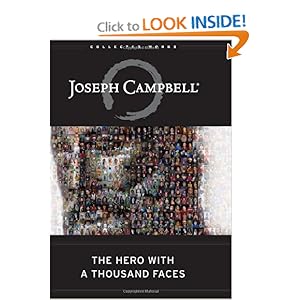
Joseph Campbell cut his academic teeth in the late 1940s with the book The Hero with a Thousand Faces, a comprehensive study of hero myths throughout the ages. He told Bill Moyers in The Power of Myth about the universal characteristics of the  "journey," actual or metaphorical, taken by the mythic hero. The hero sets out on a perilous quest, often in order to locate someone or something of great importance, such as the Holy Grail, that is lacking/missing/lost in the day-to-day world the hero knows. On his (or possibly her) journey, he undergoes many trials, tests, and ordeals; he may have close brushes with death; and, first with the help of wise mother figures and then of demanding father figures, he ultimately succeeds in his quest. After he wins, despite great adversity, he closes the circle of his journey, returning home with a boon in tow. The boon can be tangible or intangible, yet it must always be something beneficial to the hero's community. The benefit can be internal (spiritual) or external (physical, practical).

The latter sort of boon might be a sign that the hero has "performed a courageous act in battle or saved a life." The former kind is more subtle:

" ... the spiritual deed, in which the hero learns to experience the supernormal range of human spiritual life and then comes back with a message."

The Buddha
The beneficent "message" is like the one related by the Buddha, whose "journey" was partly geographic and partly a metaphorical one. After contemplating the true nature of reality while sitting under the famous Bo tree, he went around teaching others what he had discovered. Basically, the Buddha taught the various paths to a full "awakening" of the human soul.


* * * * *

A general description of the hero that Campbell gives to Moyers is:

"The hero is the one who comes to participate in life courageously and decently, in the way of nature, not in the way of personal rancor, disappointment, or revenge."

Another is:

"Even in popular novels, the main character is a hero or heroine who has found or done something beyond the normal range of achievement and experience. A hero is someone who has given his or her life to something bigger than oneself."

The hero can be a woman. Campbell, for example, tells Moyers:

"Giving birth is definitely a heroic deed, in that it is the giving over of oneself to the life of another."

The boon which the hero-mother carries back from her "journey" into childbirth is, of course, the child itself. The new human infant as a female hero's boon is a tangible reality as well as a spiritual one.

* * * * *

Yet the mythic hero, male or female, is not one who seeks ultimate union with "transcendence," a desideratum which Campbell identifies as the final destination of the human spirit. Rather:

"The hero’s sphere of action is not the transcendent but here, now, in the field of time, of good and evil — of the pairs of opposites."

The pairs of opposites? Why are they important in this discussion? Campbell says:

"Whenever one moves out of the transcendent, one comes into a field of opposites. One has eaten of the tree of knowledge, not only of good and evil, but of male and female, of right and wrong, of this and that, and of light and dark. Everything in the field of time is dual: past and future, dead and alive, being and nonbeing."

So the mythic hero operates in the dualistic "field of time," rather than seeking blissful unity with the eternal source of being. He is participating in life's game, says Campbell — a game which Campbell insightfully calls "a wonderful, wonderful opera — except that it hurts."

* * * * *

Joseph Campbell with
his wife, the dancer
Jean Erdman
Parallel with the distinction between, on the one hand, the field of time and its pairs of opposites, and, on the other hand, the eternal source of all that has being, there are two distinct aspects of mythic aware­ness. Campbell says:

"There’s a fine saying in India with respect to ... two orders of myths, the folk idea and the elementary idea. The folk aspect is called desi, which means 'provincial,' having to do with your society. That is for young people. It’s through that that the young person is brought into the society and is taught to go out and kill monsters. 'Okay, here’s a soldier suit, we’ve got the job for you.' But there’s also the elementary idea. The Sanskrit name for that is marga, which means 'path.' It’s the trail back to yourself. The myth comes from the imagination, and it leads back to it. The society teaches you what the myths are, and then it disengages you so that in your meditations you can follow the path right in."

The first aspect, desi — as in "Here’s a soldier suit, now go out and kill monsters ... " — seems to me to match up well with Richard Rohr's first-half-of-life description in Falling Upward: A Spirituality for the Two Halves of Life. Rohr even calls the transition to true second-half-of-life spirituality "discharging our loyal soldier," by which he means getting clear of that system of "impulse control" which has gotten us safely through the first half of life. Yet I think he misses, in this part of his discussion, the myth-hero aspect of wearing "a soldier suit" and slaying "monsters" which threaten the larger society.

Campbell does not miss it. He sees the value "for young people" of such soldier-suit heroism ... even if he, too, talks to Moyers more of the ultimate "trail back to yourself," or marga, that seems to me to correspond well with Rohr's notion of second-half-of-life spirituality.

* * * * *

My thought is that our churches and religions aren't teaching and supporting the "hero's journey" which our young people need first to set forth on, if they are ever to reach their "discharging their loyal soldier" transition into second-half-of-life spirituality. I believe (or so I suddenly find) that if religions did this, you wouldn't be able to keep the youngsters out of today's places of worship that are pretty much empty, or else filled with gray heads like mine.

Instead, the young are flocking to movie palaces to see the likes of Star Wars and Lord of the Rings, and The Chronicles of Narnia, and the "Harry Potter" series. All of these — and, I assume, newer films I have yet to see — are fundamentally about (you guessed it) heroes and their mythic journeys.

Some churches today are quite focused on teaching the (absent/not listening) youth "impulse control." By that I mean the traditional list of sins and taboos, sexual and otherwise. There's a very real place for that, of course, as necessary guidelines to keeping the hero's journey on track, rather than having it run off the rails. But "control" without "mission" is sterile; would-be heroes find it irrelevant to their needs.

* * * * *

Frodo Baggins
The mythic hero of J.R.R. Tolkien's Lord of the Rings trilogy is a Hobbit named Frodo Baggins. The Wizard Gandalf tells the diminutive Frodo that the land of Middle Earth is doomed to serve a power-mad, bodiless master of evil, Sauron, unless a certain golden ring is carried out of the Shire where the Hobbits have blissfully lived since time immemorial. The task falls to Frodo, who begins the story totally ignorant of any imminent danger. The danger now arises because Frodo's Uncle Bilbo had brought the One Ring back with him from his own youthful hero's journey.

The now-aged Bilbo knows full well he needs to relinquish the ring to his nephew, now that Bilbo is about to leave the Shire for the second time, to go off to Rivendell, elsewhere in Middle Earth, to write his memoirs. But somehow the ring keeps finding its way back into Bilbo's vest pocket — he hesitates to put it on his finger, because doing so renders him invisible to all but the maleficent Eye of Sauron. Gandalf has to remind Bilbo repeatedly to leave the ring behind.

The ring is a metaphor. It symbolizes, among other things, the psychological inertia that can keep us from crossing each necessary threshold into a new phase of life. Bilbo is about to enter the phase associated with old age, which, like all the successive stages of life, requires of him a new mindset. He will cultivate that mindset as he writes There and Back Again, recounting the tale of his first threshold-crossing when he as a young Hobbit set out on the hero's quest that Tolkien told of in his earlier book titled The Hobbit.

The One Ring
in Lord of the Rings
Once Frodo takes the ring, his own adventure begins. Accompanied by fellow Hobbit Samwise Gamgee, whom Gandalf adjures to keep watch over Frodo, and by two other Hobbits, Merry and Pippin, Frodo treks out of the Shire and soon has a near brush with death at the hands of the soulless Ring-Wraiths, who at Sauron's bidding seek to restore the One Ring to its evil master. To ward off his momentary demise, Frodo hastily puts the One Ring on his finger and disappears.This act, however, is the one thing Gandalf has told him he must never do, since it alone renders him visible to the archenemy.

This or any other use of the power of the ring, however well motivated, constitutes the equivalent of a sin; on this particular hero's journey, it is Frodo's taboo. Tolkien was a devout Roman Catholic, and although there is no reference to religion in Lord of the Rings, it is not hard to discern religious motifs just under the surface.

One such motif has to do with the self-sacrifice entered into willingly by Frodo, once it has become clear to him that he alone can carry the ring to the destroying fires of the Cracks of Doom, in Sauron's home realm of Mordor. Frodo ultimately succeeds in his arduous quest, but at the cost of losing his psychological ability to return to his home in the Shire and take up ordinary life there ever again. Instead, he goes off with the immortal Elven-folk as they retire from Middle Earth to the Undying Lands of the Valar.

The parallel in Christian belief is Christ's ascension into heaven. When Joseph Campbell tells Bill Moyers in The Power of Myth about the canonical adventure of the mythic hero, as found in all the world's mythologies, he includes Christ's birth, sojourn in the desert for 40 days, being thrice tempted by the devil, return to society with a message, death on a cross, resurrection, descent into hell to retrieve lost souls, and eventual ascension into heaven as an example of a mythic hero's journey.

Frodo can destroy the One Ring and save his Shire and all the other lands in Middle Earth only with the help of an extended band of heroes that include the four Hobbits; the Wizard Gandalf; Aragorn, the self-exiled King of Gondor; his steward Boromir and Boromir's brother Faramir; the Elf Legolas; and the Dwarf Gimli. This is the Fellowship of the Ring. Each member brings both weaknesses and strengths to what amounts to a mutually enabling "ring" of heroes who work together to destroy the physical One Ring, it's immaterial master Sauron, and Sauron's henchman, the turncoat Wizard Saruman.

The Eye of Sauron
So we have a symbolic contrast. The One Ring works to impede what might be called the soul's natural itinerary across life's thresholds toward ever greater consciousness, as Frodo finds when he learns one hard-to-accept truth after another over the course of his hero's adventure. His Fellowship of the Ring, by supporting him in his quest, nevertheless works to "unbind" all Middle Earth from the "One Ring to rule them all/And in the darkness bind them." Two "rings," as it were, exist: the first is a demonic parody of the life-affirming second.

The lesson here is that the greater conscious awareness each new life-stage brings — Campbell refers to it as an increased "experience" of being alive, and in the Bible we find the notion of attaining a greater "abundance" of life — is always paid for by some heroic sacrifice. Symbolically, when Aragorn's resumed reign at the end of the Lord of the Rings tale brings renewed joy to him and all his kingdom of Gondor, and when Sam Gamgee returns to the Shire to marry the true love who awaits him, it is due to Frodo's heroic self-sacrifice on behalf of all Middle Earth. The seeming distinction here between the hero and the beneficiary is, however, an arbitrary one. In actuality, just as we are all said to possess a "Christ within," we can likewise be said to possess a "Frodo within." Something old within us has to "die and go to heaven" each time something new is born.


Tuesday, July 09, 2013

A New Awakening, Part 17

I have in this ongoing series been investigating the wisdom of myth as it informs what I'm calling a hoped-for "new awakening" of spirituality in our society. I take as one of my main reference points the book and PBS television series The Power of Myth, in which, during the mid-1980s, Bill Moyers interviewed at great length the scholar of comparative mythology Joseph Campbell.

Fr. Richard Rohr's book Falling Upward: A Spirituality for the Two Halves of Life tells of a spiritual maturity that we gain only in, loosely speaking, the "second half" of our life. It is a fundamental change that sets how we act and think and what we are like apart from how we once acted and thought, and even who we once were. Yet first-half-of-life religion and second-half-of-life spirituality, however different they may seem on their face, are both absolutely valid and both equally needed.

That it is possible for us to shift gears spiritually, and that until we do so we never finally learn to do our own "sacred dance," is something of a riddle. In our early years — including much of our young-to-middle adulthood — we are, Rohr somewhat wryly says, understandably fixed on "externals, formulas, superficial emotions, flags and badges, correct rituals, Bible quotes, and special clothing, all of which largely substitute for actual spirituality." Only in our later years, if we have done our first-half task aright, does "this burning, this inner experience of God" become possible for us.

Richard Rohr
"Early-stage religion is largely preparing you," Rohr writes, "for the immense gift of this burning, this inner experience of God, as though creating a proper stable into which the Christ can be born." Put another way, "The first task is to build a strong 'container' or identity; the second is to find the contents that the container was meant to hold."

Yet, oddly enough, says Rohr, "Most of us are never told that we can set out from the known and the familiar to take a further journey. Our institutions and our expectations, including our churches, are almost entirely configured to encourage, support, reward, and validate the tasks of the first half of life."

That phrase, "further journey" crops up again and again in Rohr's text. It might well have been the author's alternate choice for the book's title. And here's a key thing: Before we can embark on our "further journey," we have to experience "some kind of falling," says Rohr. There has to be some sort of "necessary suffering." Accordingly: "In legends and literature, sacrifice of something to achieve something else is almost the only pattern. ... In Scripture, we see that the wrestling and wounding of Jacob are necessary for Jacob to become Israel ... and the death and resurrection of Jesus are necessary to create Christianity."

In his sadly now-out-of-print book Enchantments: Religion and the Power of the Word, Jesuit father Thomas M. King writes of a "second baptism," not by water but by "fire and spirit." It typically follows, he says, a parlous "night of the soul" in which old verities collapse and crumble around us. This "dark night" comes only after the bright day of our original devotion to God on High ... or to whatever other "enchantment" we have aligned ourselves with or been captured by. Our baptism by fire and spirit accordingly comes only after we have first undergone an intermediate time of questioning and disenchantment.

This is a paradox. First must come an "enchantment" — our original fealty to a religion, cult, or philosophy — after which our continued growth toward full spiritual maturity demands that we undergo a "disenchantment": we must leave behind all that originally brought us certainty, comfort, and security. Here we undergo the proverbial hero's journey. We need to journey far out of our original comfort zone, and then find that the problem we are actually called to solve in life isn't the one we initially confronted. Or, rather, we may find that it is the same problem, but that it is now somehow transformed.

This hero's journey, with a problem that we are called on to solve — and actually do solve — has a twofold outcome. The internal, spiritual result is that we finally learn to do our own "sacred dance." The external outcome is that we return from the journey with a boon to offer our community, our society, our land. Our compatriots — in Jesus's term, our "neighbors" — can now live life more abundantly in an everyday sense because we are now capable of living life more abundantly in an inner, spiritual sense.

Lord of the Rings author
J.R.R. Tolkien
I consider this the import of what happens to Aragorn in J.R.R. Tolkien's fantasy tale The Lord of the Rings. Aragorn is introduced as "Strider," a quasi-lowlife gifted in hunting, tracking, and living rough. It gradually becomes apparent that his present identity represents his fallen, "dark night" —or "dark knight"? — state, as he was born to be a king. He has for various reasons been dodging his destiny, but the quest of the Fellowship of the Ring to defeat the evil Sauron, along with his power-mad henchman Saruman, entangles Aragorn and elicits from him unstinting leadership and heroism. At the end of the narrative, he resumes his true identity and once more sits upon his rightful throne to rule his subjects in justice, abundance, and peace.

Aragorn's original "life problem" — whether and how to rule — can't be solved until he takes his hero's journey. When he comes home in triumph, the reality of his boon betokens that his original problem now has a solution, where it didn't before. Now he can reign over a peaceable kingdom that is no longer under dire threat from the forces of evil, personified by Sauron and Saruman.

All this sounds abstruse, stated baldly and without the candy-coating of mythical narrative. The mythical "hero's journey" — which Joseph Campbell ably documented in his 1949 book The Hero with a Thousand Faces — is, after all, but a metaphor. It symbolizes in narrative form the transition from first-half to second-half spirituality, from baptism by water to baptism by fire and spirit, inevitably by way of a dark night of the soul.

* * * * *

Clearly, Rohr considers his book to be mainly about second-half-of-life spirituality and the transition to it from the first half's distinctive preoccupations. Yet he does not short-shrift the first half of life. While we are young, he says, we must learn to "value law, tradition, custom, authority, boundaries, and morality of some clear sort. These containers give us the necessary security, continuity, predictability, impulse control, and ego structure that we need, before the chaos of real life shows up."

Put simply, our inner needs in the first half of life revolve around lawfulness. Rohr states, "Here is my conviction: without law in some form, and also without butting up against that law, we cannot move forward easily and naturally ... we have to have something hard and half good to rebel against."

This notion is indeed a subtle one. There has to be an authority figure who sets limits and boundaries for us, a set of rules, and a moral tradition that we take up in a respectful way. But we also must come to rebel against our society's "hard and half good" rules at some point.

Why the need for lawfulness and the need for rebellion, in proper sequence? Rohr says: "You need [to build] a very strong container to hold the contents and contradictions that arrive later in life. You ironically need a very strong ego structure to let go of your ego. You need to struggle with the rules more than a bit before you throw them out. You only internalize values by butting up against external values for a while. All of this builds the strong self that can positively obey Jesus — and 'die to itself.' "

What a conundrum! If what we ultimately seek, spiritually speaking, is to let go of our ego, how odd it is that we must start by creating a very strong ego in the first place. That clearly means we need to build our egos on something other than quicksand.

Writers on Christian spirituality
Richard Rohr and Thomas King
suggest they are all true,
in proper sequence ...
Yet we also need to, by acts of defiance and rebellion, chip away at the very foundation of our ego structure. That is what happens in our youth after we "butt up against" the norms of tradition that have been laid down for us by earlier generations. If we try to short-circuit the process by skipping over the crucial first stage, we will fail to gain the boon of the second stage.

Rohr states it this way: "In fact, far too many (especially women and disadvantaged people) have lived very warped and defeated lives because they tried to give up a self that was not there yet."

It seems that the full human "spirituality sequence" — the early preparation for our "hero's journey," the journey itself, and our ultimate return in triumph — is thus composed of a "baptism by water," early obedience to tradition, later rebellion, an inevitable "night of the soul," and then "baptism by fire and spirit" — at which point we have finally learned to do our own "sacred dance"!


Monday, May 20, 2013

The Sibling Society, Part 3

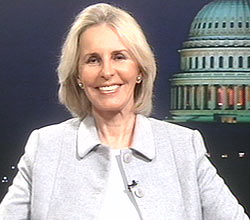
Washington Post writer
Sally Quinn
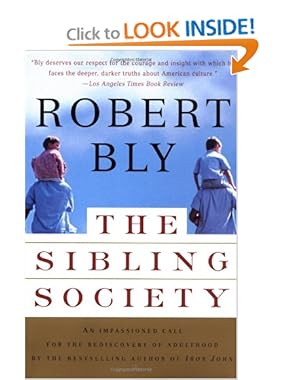
Robert Bly's 1996 book The Sibling Society: An Impassioned Call for the Rediscovery of Adulthood: does it have any relevance to the problem discussed by The Washington Post's Sally Quinn in her latest "On Faith" column? The column is titled "Sex assaults in the military: An epidemic that is being ignored," and its prime concern is that "there were about 26,000 incidents of sexual assault in the military last year ... an astounding average of more than 70 per day."

Why does the military, Quinn would like to know, seem to be unable — or unwilling — to ferret out and prosecute the miscreants who commit these heinous crimes? The writer seeks that there be "people ... going to jail" and "a court-martial in every case, and more people in power ... not just sputtering with outrage, but acting out of outrage."

Air Force Chief of Staff
Gen. Mark Welsh
But she sneers at a claim made by Air Force Chief of Staff Gen. Mark Welsh, in a hearing before Sen. Kirsten Gillibrand (D-N.Y.) and the Senate Armed Services Committee, that "roughly 20 percent of the young women who come into the Department of Defense and Air Force report they were sexually assaulted in some way before they came into the military. So they come in from a society where this occurs. Some of it is the hook-up mentality of junior high, even, and high school students now, which my children can tell you about from watching their friends and being frustrated by it.”

Quinn is wrong to sneer. According to Wikipedia, "In the United States, several studies since 1987 have shown that one in four college women have survived rape or attempted rape at some point in their lifetime ... It has been estimated that one in six American women has been or will be sexually assaulted during her life." Yes, the military culture can and does magnify the problem of sexual assaults and rapes, and yes, it also has means of investigating, prosecuting and punishing such crimes that do not apply in civilian affairs. But the underlying problem is society-wide, and just focusing on the situation in the military misses that.

Poet/social critic
Robert Bly
Robert Bly would say that the perpetrators of sexual assaults and rapes remain "half-adults," most of them. They, like the huge numbers of young people who do not commit such crimes, share the attribute of not being fully brought to maturity by the time they are nominally all grown up. That happens in part because our society has come to disparage the initiation rituals of old, the ones that were once associated with our world's primary religions, ancient mythologies, traditional folk customs, and the like.


The "sibling society" is Bly's metaphor for a world where "adults regress toward adolescence" and "adolescents . . . have no desire to become adults"; where admiration for elders has disappeared, tradition has eroded, ancestors have been forgotten; where the family is being destroyed everywhere, by everyone; where children's brains are addled by day-care and TV; where adolescents, lost and self-destructive, dwell in bastions of boredom called high schools; where parents, particularly fathers, have abdicated their archetypal roles; where mass culture provides not elders but movies about infantile "grumpy old men"; and where respect for ancient myths and tribal ritual has been replaced by the cynical self-centeredness of "do your own thing."

A "kingdom without a king," as Gerzon puts it, is a recipe for chaos, in Bly's view. I would add that it is also a recipe for "anything goes" when it comes to how half-adult men treat girls and women.

Michael Gerzon, author
of A House Divided:
Six Belief Systems
Struggling for America’s Soul
Never mind that I fully agree with Gerzon that:

By the time Bly reaches his epilogue, he seems to sense the one-sided quality of his argument. He allows himself to muse that perhaps there is "some good" or a "gift" buried in this flattening of hierarchy and questioning of authority. If so, he never finds it. Instead, he portrays everything through the same bitter, despairing lens.

Bly's book is a flawed vessel for an important idea: we need to reinvent the faith-based, spiritual, religious wisdom that can form us properly as human beings, so to head off the various sorts of misbehavior that boil over, in the military and outside it, as sexual assaults and rapes.


Monday, May 13, 2013

The Sibling Society, Part 2

Poet and social critic
Robert Bly
I like Robert Bly's 1996 book The Sibling Society: An Impassioned Call for the Rediscovery of Adulthood because it is a sweeping indictment of our culture for having lost sight of what human spirituality is really all about. I dislike the book for the very same reason.

I dislike that Bly aims his book at intellects as grand as his own; most of us are well below that mark. And his very premise confirms it: we in our culture have been actively divested of our ability to interpret poetry, scripture, myth, timeless folktales, and traditional fairy stories, an ancient ability that our great-great-great grandparents took for granted.

This divestiture has come at the hands of several groups of people who have imposed their alternate views of reality on us — secularists, all of them, first and foremost. They object to enshrining the "vertical dimension" of mythology, as Bly calls it, because it leads us away from pursuing the rational and the scientific.

Some of those who have stood in the way of Bly's call for revitalizing a cultural "verticality" have been feminists who, Bly maintains, entirely misunderstood Bly's earlier book, Iron John: A Book About Men (right), which its author says was not about resurrecting patriarchal values and such like.

Religious fundamentalists who interpret scripture with absolute literalness are likewise anti-Bly, for the simple reason that Bly is resolutely anti-fundamentalist. To interpret, say, the first chapter of Genesis literally is to miss what it really has to say to us about divinity and power.

In the realm of high-falutin' literary theory the proponents of "deconstruction," the notion that no written text possesses any iota of external authority, come in for Bly's scorn. In fact, Bly's very prose style is intrinsically authoritative, and his premise can be summarized as that human children, both male and female, need exposure to fatherly authority if they are to grow up properly.

Such things, admittedly, make me cringe. Why couldn't Bly have chosen a topic less radically opposed to the way our society has been moving in my lifetime?

But they also make me cheer, because deep down I agree with Bly in these matters.


Sunday, May 12, 2013

The Sibling Society, Part 1

Robert Bly's 1996 book The Sibling Society: An Impassioned Call for the Rediscovery of Adulthood has a lot to say to us now, as we try to sort out such matters as the lead story in today's print edition of The Washington Post, "Abuse cases up in military." The story informs us that "The Pentagon, using anonymous surveys and sampling research, estimated that 26,000 personnel experienced 'unwanted sexual contact' last year, up from about 19,300 in 2010, according to an ongoing Defense Department study." That's a two-year increase of 34.7 percent.

Furthermore, the "chief of the Air Force’s sexual assault prevention branch [Lt. Col. Jeffrey Krusinski] was arrested by Arlington County police early Sunday and charged with [wait for it ... ] sexual battery." Krusinski, while drunk at 12:30 a.m. last Sunday morning in a parking lot in Crystal City, Virginia, allegedly grabbed the breasts and buttocks of a civilian woman he did not know. She managed to fend him off and call 911. A 41-year-old officer, he's been relieved of his duties and will either be tried in a civilian court or court-martialed.

The Post story details the ways in which the Defense Department, the military, and Congress are suddenly trying to crack down on sexual assaults and rapes in the armed forces. My attitude is: Good! It's about time!

But it's also, I believe, just putting fingers in a dike that has sprung countless, and enormous, leaks in our society in recent decades. That's where Bly's book comes in.

I've been reading the book for some weeks now and trying to figure out how best to paraphrase it. Bly's notion of a "sibling society" is admittedly hard to grasp. Sibling is, of course, a word that includes our blood brothers and sisters. Bly now extends it outward to include all our age peers. And he says we are now, many or all of us, just "half-adults." (I prefer to call such people "post-adolescents" or "adultescents" instead.)

Bly calls us "siblings" to indicate that we in the last several generations have silenced the erstwhile voices of authority who, traditionally, handed down to us when we were children the norms and ethos of our ancestors. Those norms, that ethos, was derived from the word of God if we are Jews, Christians, or Muslims. If we are from other cultures such as that of the Hindus in India, they came down to us from the small-g "gods."

We've set all that aside, in part because we've become predominantly rationalist-secularist-humanist, and in part because it bears the stink of paternalism. The authority figures that passed along to us the norms and the ethos of our society have always been male — in particular, when we were growing up, our fathers. Today's feminists have labored long and hard to "deconstruct" that aspect of our culture.

Bly applauds feminism and the women's liberation movement — most of it. But he thinks we've tossed the baby out with the bathwater by abolishing the idea of the strong father who lives with his wife and children in a two-parent home and helps initiate his sons and his daughters into true adulthood.

Thursday, September 06, 2012

Exalting the Vagina!

Yes, you got that right. This sixty-something, male, never-married Catholic blogger is blogging about something that, in common parlance, is often deemed "naughty," or worse.

The vagina.

I'm writing in response to Ariel Levy's book review in the September 10, 2012, New Yorker, that discusses Naomi Wolf's new book Vagina: A New Biography.

Herewith, a brief summary of what I take Levy to be saying about what Wolf is saying (since, sadly, only New Yorker subscribers can view the full review).

Levy says Wolf slots into the continuing evolution of feminist thought. We who are not exactly frontline feminists may not realize that feminism bifurcated somewhere around the early 1980s over the question of whether to revile pornography as culprit number one in the crime of men "objectifying" women.

Some feminists sided with Susan Brownmiller in working politically to expunge porn from the cultural scene. Others objected that the women of the movement ought not to be "patrolling the erotic imagination": policing what goes on in the heads of, yes, even those feminist sisters who choose to pleasure themselves sexually while looking at porn.

The first group were the "anti-porn" feminists. The latter group became known as the "pro-sex" feminists. (Who knew?)

Now comes Ms. Wolf, who in earlier books had railed against how "strictly and heavily images of female beauty have come to weigh on us." Reducing women to their bodies stood in the way of full women's liberation, thought Wolf. Except ... in this new book, Wolf has it that, "To understand the vagina properly is to realize that it is not only coextensive with the female brain but it is also part of the female soul — it is a gateway to, and medium of, female self-knowledge."

Naomi Wolf
This "profound brain-vagina connection" dawned on Wolf after undergoing successful surgery to remedy spinal compression that was impinging on her pelvic nerve. She knew something was wrong when sex stopped giving her "the usual postcoital rush of a sense of vitality infusing the world, of delight with myself and with all around me, and of creative energy rushing through everything alive."

Apparently, Wolf's pelvic nerve that was amiss connects to the vagina but does not connect to the clitoris, since her clitoral orgasms were still "as strong and pleasurable as ever."

I take the following from this deeply personal experience of Wolf's: Each of us, male or female, is tasked by our human nature with the responsibility of construing ourselves. A big question is, do we construe ourselves as something separate and apart from the rest of "everything alive"?

Another big question is, do we construe our interior selves as separate from our bodies?

The history of western thought — and therefore Catholic thought — runs through the teaching of 17th-century French philosopher René Descartes, who famously wrote, "I think, therefore I am." Descartes construes himself fundamentally as a disembodied rational being who can be certain that he exists only because he thinks, because he has the capacity to doubt. His body, perceived through sense experiences, is to him less certain to exist because his senses are notoriously unreliable.

Descartes' interior self is construed by him as separate from his body.

Naomi Wolf's interior self is construed by her as intimately connected to her body, and specifically to her vagina. When her vagina is working properly — when the stimuli arising from sexual pleasure successfully reach her brain — she is infused with creative energy and worldly delight. She feels richly interconnected to one and all.

I can't imagine anything more true of the way I feel about myself. True, I don't have a vagina. I have a penis. My lifetime sexual experience is not extensive, but I can say that sexual feelings of arousal and satisfaction for me are not just in my penis. They suffuse my whole pelvic and perineal area. According to Wikipedia:
The perineum is the region of the body inferior to the pelvic diaphragm and between the legs. It is a diamond-shaped area on the inferior surface of the trunk that includes the anus and, in females, the vagina. Its definition varies: it can refer to only the superficial structures in this region, or it can be used to include both superficial and deep structures.
It's there that sexual arousal begins. The penis may or may not heed the call and get stiff.

The penis is analogous to the clitoris, as the two organs arise from the same embryonic tissue. I have no idea what the female embryo does to create a vagina, but I'd say there has to be an analogy between it and the male perineum. So what Wolf says about her vagina comes to me as no surprise. For me, there is nothing that gives me a God's-in-His-heaven-and-all's-right-with-the-world feeling more than the pelvic-perineal response I feel when a lovely woman smiles at me.

Here, then, we have a topic that I feel needs to be talked about more in Catholic circles: the connection between our bodies, and especially our sexual organs, and how we construe ourselves. Can we break our habits as thoroughgoing Cartesians — victims of the mind-over-matter thought of René Descartes?

Jesus Preaching a Sermon
At stake is an understanding of how we ought to see ourselves in relation to our world. I believe Jesus wanted us to stand together, all for one and one for all. "Whatsoever you do to the least of my people, that you do unto me" (Matthew 25:28). God bless us, every one — no exceptions!

It's a lot easier to get to that beneficent all-inclusiveness from "a sense of vitality infusing the world, of delight with myself and with all around me, and of creative energy rushing through everything alive." I think Naomi Wolf is on to something!


Saturday, September 01, 2012

Not Enough To Go Around? Let's Remedy That!

"There's not enough to go around!"

In this presidential election year, that's the overarching worry that's driving voter behavior, I take it.

Not enough income. Not enough wealth. Not enough jobs. Not enough economic opportunity.

When we hear President Obama's forces snipe at Mitt Romney about the girth of his bank account and the secrecy surrounding his tax returns, that's the not-so-hidden theme: Romney has gotten more than his fair share, and, as head of Bain Capital, he acquired it by zeroing out American jobs.

Romney snipes back that Obama is clueless about how wealth is created, which is why the current economic recovery is so anemic.

I have yet to hear either side tell how America can be returned to truly robust economic vigor. I think the president has, sadly, been notably silent about this topic.

Yes, we do get to see a few pieces of the respective economic jigsaw puzzles each candidate would try to put together if elected. Obama would let the "Bush-era" income tax cuts lapse for top earners, but leave them in place for the middle class. Romney would reduce all brackets' tax rates by 20 percent.

Obama would preserve Medicare's current way of doing things — though he hasn't really said how he'd head off the program's eventual insolvency. The Romney-Ryan ticket wants to convert Medicare to a voucher program for most yet-to-arrive-at-65 Americans.

Romney wants to solve the debt threat by drastically cutting programs, a full list of which which he has yet to announce, while generating more tax receipts (at albeit reduced tax rates) by "broadening the base" — eliminating or reducing itemized deductions and loopholes. Obama would cut federal programs more sparingly, while increasing tax rates sharply on upper incomes.

One approach or the other, or a mix of both, could shrink the deficit and thus keep the public debt from ballooning out of control, and that's a good, even necessary, thing.

Problem is, neither solution is aimed at enlarging the "economic pie." They represent two approaches to how after-tax income is allocated, addressing fairness-of-income-distribution concerns in two contrasting ways.

The two parties likewise exhibit two different attitudes toward expensive government entitlements like Medicare and Medicaid.

But what about making the economic pie much bigger than it is? Can't we agree that this is a goal we ought to pursue?

Can't we at least discuss it?

Here is problem number one with that, in my opinion: neither candidate really seems to have a clue about how to open up opportunity in this land to its fullest throttle, so more people could become better equipped to hold down ever more challenging jobs, thus enlarging the economic pie with their enhanced productivity.

Romney claims his experience as a businessman gives him the ability to manage the economy better than Obama. Well ... maybe.

But we know he killed or offshored jobs while at Bain; that was, supporters say, simply a much-needed bout of "creative destruction." I'm willing to accept that that kind of thing — putting American enterprise on a slimming diet — may sometimes be necessary for reasons of competitiveness abroad. But it's not the whole answer to growing our economic pie.

So, Mitt, what is the whole answer?

And how about you, Mr. President? Don't you have a plan to once again make America the fecund "land of opportunity" it once was?

If so, I for one haven't heard it.

Here's the kind of thing I think we need: How about a G.I. Bill, not just for servicemen and -women who have risked much in America's wars abroad, but for their children, too? The volunteer military is heavily weighted toward lower-income recruits whose kids may not get the opportunities Barack Obama's daughters and Mitt Romney's grandchildren will enjoy. Let's endow them all with the means to go to the very best schools for which they can qualify.

Meanwhile, I think we all need to get behind those conservative hobbyhorses, school vouchers, along with the parallel education revolution that seems to be exploding today, charter schools. True, vouchers-plus-charters needs to be augmented by serious reforms to traditional public schools, so they don't turn into warehouses for the least educable. And — sorry, NEA — I think teachers' unions will have to stand aside on this.

A G.I. Bill for "servicekids," as a variety of income redistribution, is a liberal notion. Mitt Romney could never embrace it. Vouchers-plus-charters-plus-union-disempowerment is a conservative notion. Barack Obama would never endorse that.

But if there's really not enough to go around these days, enriching opportunities for all demands that a lot of conventional orthodoxies be ushered into unceremonious retirement.

For instance, I propose that we get busy and pass the DREAM Act, the long-stalled-by-GOP-hard-liners congressional legislation that offers conditional amnesty to illegal immigrants in exchange for obtaining, or working diligently toward, a bachelor's degree or higher, or serving honorably in the U.S. military. They'd be helped along (this is not part of the current bill, unfortunately) by eligibility for Pell grants. If they go the military route instead, they'd come away with a sizable amount of training in IT, engineering skills, and the like, that will look great on their civilian résumés.

In addition, I'd pass state laws allowing children of illegal immigrants to pay in-state tuitions at state universities. Even Rick Perry, the conservative GOP governor of Texas, thinks anyone opposing this doesn't "have a heart."

Conservatives who blanch at those two proposals will grin at this one: I suggest we end the practice of affirmative action in hiring and college admissions based solely on race. Race-based affirmative action has outlived its usefulness, and it now just produces jealousies based on skin tone. In its place I would put affirmative action based strictly on socioeconomic factors. Smart working-class kids of any race who'd otherwise lack the slick résumés of the upper crusters would be given a leg up.

Get the point? We need to create a ladder of opportunity for all who now face an unadorned blank wall. This approach to the country's problems would tap the highest potential of all who live and work here, boosting their productivity and enlarging the economic pie for every one of us to feast on.

It would thus dispel the current atmosphere of fear, envy, class jealousy, financial greed, and worse. From the point of view of a Catholic voter like me, it would be a very Christian thing to do, since the current rancid, not-enough-to-go-around atmosphere is inimical to the spirit of Christian charity and poisonous to the milk of human kindness.


Sunday, July 15, 2012

Bring Us Together!

I believe the main problem we face in America in this election year is not the economy, as important as that is. It is not Obamacare, as hot-button as that issue remains. It is not the budget, or taxes, or the federal debt, though all those are important. It is, rather, that Americans stand farther apart from one another than I can ever remember. We are a deeply divided nation. We need someone or something to bring us together.

Red vs. blue. Left vs. right. Rich vs. middle class. Citizens vs. immigrants, especially illegals. Social liberals vs. traditionalists. Straights vs. gays. Big government vs. small. The prerogatives of whites vs. the aspirations of nonwhites. These are political divides that have long existed — and there is nothing inherently wrong with them, until they become so fixed and hardened in place that no one is willing to compromise for the common good.

I think the principal reason the bishops in the Catholic Church are wrong to dig in their heels over the contraception mandate portion of Obamacare is that doing so divides rather than heals. If the bishops got their way, the employees of Catholic-run institutions would not be given contraception coverage in their health plans ... though other, similar, non-sectarian workers would. It would create yet another division in America, a nation in which vast majorities of women, Catholic and non-Catholic, use some form of contraception, at some point in their lives.

The bishops' stance is emblematic of all the inflexible stances being taken today. Republicans take a pledge never to raise taxes, no matter what. Democrats in control of the Senate won't advance any bill passed by the Republican House, no matter what.

When the Supreme Court upheld Obamacare, at first liberals cheered, but the cheering died down when they realized that the deciding vote cast by Chief Justice Roberts did not uphold the rationale they favored: that the Commerce Clause of the Constitution should be interpreted broadly enough to justify the individual mandate, all by itself. Roberts instead called the penalty that those lacking health coverage must pay a "tax," which he said was within Congress's legitimate power to levy. Conservatives were unhappy at Roberts's side-switching to the extent that they are now even more earnestly pledging to do the impossible: repeal Obamacare.

Both sides are being ridiculous.

The individual mandate, which applies to anyone who lacks health insurance, is a prod to those who are in good health and have few doctor bills, who would otherwise be just as happy not to buy insurance, and who don't get insurance from their employer. They must now buy it on a state-run exchange or pay ... a tax. The upshot will be that their premiums will pour into the insurance fund that pays the medical bills of the ill and formerly uninsurable. It's an idea that was originally put forth by conservatives who wished to block liberals' efforts to enact a single-payer healthcare system, sometimes called "Medicare for everybody."

When Mitt Romney was governor of Massachusetts, he enacted an individual mandate at the state level. It was at that time acceptable in conservative circles to do that.

That was then. This is now.

When true believers hold so fast to principle that we all end up being driven further apart, rather than brought together, I say that principle has to yield. But that's not what's happening today.

In my opinion, President Obama has been notably flexible during his presidency. He has not been the "socialist" his opponents claim ... far from it. For example, he changed the original contraception mandate to allow the cost of that coverage to be borne by insurers themselves, rather than by the Church. Though he has temporarily blocked the Keystone XL pipeline, he has allowed oil exploration in Alaska's Chukchi and Beaufort seas. At times, it is true, he has moved in a decidedly progressive direction, rather than a conservative one, as when he came out in favor of gay marriage. But all in all, he has tried to strike a balance.

What does he get for it? Increased intransigence on the right.

We need to get the federal deficit under control, no? But Republicans won't raise income tax rates. So trimming the deficit would have to be done by expenditure cuts ... possibly in addition to vague suggestions about "tax reform" that would (if they could be enacted) eliminate certain tax deductions. Forced expenditure cuts across the board are due to happen this coming January 1, as is the end of the "Bush tax cuts." No one wants us to go over that fiscal "cliff" — it would boost taxes on the middle class, which Democrats hate, while cutting military outlays, which Republicans hate — but no one is putting forth credible alternatives.

Again, both sides are being ridiculous.

The Right Wing
But I believe the right wing, both religious and secular, is being more ridiculous than the left.

When Obama won in 2008 by a large margin over Senator John McCain, as a liberal I began licking my chops. My party controlled not only the White House but also both the Senate and the House — the Senate by virtue of a 60-vote supermajority. In his first year as president, Obama sent to Capitol Hill his Patient Protection and Affordable Care Act (PPACA) ... and in town meetings all over, people came out of the woodwork to call it "socialist medicine." The Tea Party was born. Obama likewise supported, if tepidly, a House-passed measure to set up a "cap and trade" system for carbon emissions, the prime mover in global warming.

Then Senator Edward Kennedy, Democrat of Massachusetts, died, and a special election saw Scott Brown, a moderate Republican, take his seat. The insuperable 60 votes the Democrats could muster to overcome a filibuster had become 59. It became impossible to get "cap and trade" — another regulatory mechanism, once favored by conservatives, that they have now disavowed — through the Senate. PPACA was passed, without a single GOP vote, only by some fancy legislative footwork in the Senate — and Republicans immediately starting working to get it declared unconstitutional.

I'd be wrong about the GOP being the more intransigent of the two parties if it weren't the case that both the individual mandate and cap and trade weren't originally conservatives' own policy suggestions.

But never mind. The overarching point is that everyone has dug ideological trenches and is doing nothing but lobbing mortars back and forth. This has got to stop. And it won't stop until some real grownups step forth and say it must. How about you, President Obama? How about you, Mitt Romney? How about you, Catholic bishops?

Please ... bring us together!