Friday, March 05, 2010

Abortion Funding and the Health-Care Debate

Federal funding of abortion is front-and-center in the debate over health-insurance reform again. President Obama has proposed that the already passed Senate version of the proposed legislation be passed by the House of Representatives, and Democratic leaders in Congress have concurred. Though the House had already passed its own version of the bill, the bill that passed the Senate last Christmas Eve by a vote of 60-39 is has different provisions.

Ordinarily, a House-Senate conference committee would iron out the differences, and the resulting compromise would hopefully be confirmed by an additional vote each chamber. However, since the Senate passed its bill, a special election in Massachusetts has — ironically, since the Lion of the Senate was a prime mover in health reform — turned the Senate seat formerly held by the late Democrat Edward Kennedy over to Republican Scott Brown. Any bill reported out of a hypothetical House-Senate conference committee would be unlikely to garner the 60 votes it needs in the Senate to break a GOP filibuster and go to the president for his signature.

According to the Democrats' strategy, the problem of needing 60 votes to overcome a GOP filibuster in the Senate can be gotten around by resorting to a procedure called "reconciliation." Intended to be used only for measures such as tax hikes that affect the federal budget, reconciliation bypasses filibusters by needing only a simple majority of 51 senators to pass a bill. So, if the House sets aside its own bill and passes the Senate bill, then (since that bill has already passed the Senate) the House and Senate could in theory pass just the changes proposed by the president. Each chamber would require yea votes by a simple majority of its members to do so. In the Senate, a simple majority of 51 votes would do. Those changes, accordingly, would constitute a separate reconciliation measure or "fixer" bill to be voted on in both the House and the Senate and would appear on the president's desk alongside the Senate bill as passed by the House in place of its own bill.

Ordinarily, the matters taken up by the Senate in any reconciliation measure would have to be restricted to budgetary matters, in order for reconciliation rules to apply.

Hence, reconciliation can be used at all only if one of two things happens. One is that Alan Frumin, the Senate parliamentarian — part of whose duty it is to filter out non-budgetary matters in reconciliation bills — lets all of the changes included in the "fixer" bill come to the Senate floor under the aegis of reconciliation. Or, two, if the parliamentarian balks at that, Vice President Joe Biden has the authority as president of the Senate to overrule Frumin and let the "fixer" bill come up for a vote.

The hitch is this: The Senate bill which the House must now pass according to this strategy contains language concerning the federal funding of abortions that varies from the House version as currently passed. Were the matter to be handled in the usual way, a House-Senate conference committee would need to choose between the more strongly anti-abortion Stupak-Pitts Amendment of the House bill and the weaker language introduced by Senate Majority Leader Harry Reid into the Senate bill.
The reconciliation measure would leave the Senate language unchanged. Stupak-Pitts, in short, would vanish under reconciliation.

Stupak-Pitts, introduced into the House bill by Democratic Rep. Bart Stupak of Michigan and Republican Rep. Joseph R. Pitts of Pennsylvania, prohibits use of federal funds "to pay for any abortion or to cover any part of the costs of any health plan that includes coverage of abortion." Exceptions would be made for cases of rape, incest, or danger to the life of the mother. All other abortions would be ineligible, under the Stupak-Pitts language, for:

  • direct federal funding (e.g., through Medicaid)
  • indirect federal funding in any "public option" that the legislation creates
  • subsidies or tax credits for the purpose of paying for any private plans that are sold on state "exchanges" where the uninsured who are not eligible for Medicaid and whose employers don't insure them would be required to buy health insurance

Federal funding for (non-excepted) abortions has been illegal since the Hyde Amendment to a 1976 Senate appropriations bill for the U.S. Department of Health and Human Services. This amendment came just three years after the landmark Roe v. Wade decision of the U.S. Supreme Court struck down state laws prohibiting abortion.

The bill already passed by the Senate, as shepherded through by Senate Majority Leader Reid, would:

  • Require that there be a plan that covers abortion in every insurance market
  • Allow the U.S. Secretary of Health and Human Services to require coverage of any and all abortions throughout any public option program (if there is one)
  • Create new subsidies (funded via income tax credits) that will allow the uninsured to purchase, on state exchanges, private health plans that cover abortion

The Senate bill also includes language originally designed to gain the support of Senator Ben Nelson of Nebraska, a Democrat who opposes federal abortion funding. This additional language insisted that private health plans purchased on insurance exchanges must have their customers sign up separately for abortion coverage, if they desire it, provided the insurance company opts to make it available. Then the customers would have to pay the premiums for that coverage separately, by means of writing a separate check (or by separate automatic debit transactions from their bank accounts).

Abortion policies would thus have to be made available separately on the state exchanges by the insurance companies ...  if they offer abortion coverage at all. Abortion coverage would amount to a second health insurance policy that provides that one single service. Customers would buy this additional coverage, if they desire it, separately from the comprehensive health insurance packages which they also buy from the same insurance companies on a state exchange.

That provision in the Senate-passed bill would obliterate Stupak-Pitts, if the House passes the Senate bill as is. It is a provision that is loathed both by pro-choice advocates such as Planned Parenthood (it "only serves to stigmatize a woman’s right to comprehensive insurance coverage that includes abortion") and by pro-life organizations such as the U.S. Conference of Catholic Bishops (“federal funds will help subsidize, and in some cases a federal agency will facilitate and promote, health plans that cover elective abortions").

The bishops' "will help subsidize" phrase alone is enough to show why the Reid-Nelson language should be scuttled and Stupak-Pitts (somehow) reinstated. Look at it this way: the federal government proposes, via a tax break, to allow subsidy dollars to remain in the right-hand pocket of needy folks so that they can buy health insurance on a state exchange. Then the feds will say, "You can buy an abortion policy, too, if you want, but you have to pay for that with dollars from your left-hand pocket."

Is there any reason why folks can't move the dollars that remain in their right-hand pocket (because they didn't have to hand them over to Uncle Sam in the form of taxes) over to their left-hand pocket and then shell out for their abortion policy from that fattened left-hand trove? Of course not.

The path to health-insurance reform through Senate reconciliation leaves Reid-Nelson in place and scuttles Stupak-Pitts instead. That needs to change before Catholics and others who favor health-insurance reform but oppose federal abortion funding can in good conscience sign on.

Though it is not a purely budgetary provision, it is not impossible that Stupak-Pitts could be inserted in the reconciliation measure/"fixer" bill, even though it technically doesn't belong there. That might need to happen if Rep. Stupak and like-minded anti-abortion Democrats are to remain in the "Yes" column when the Senate bill and its associated reconciliation measure come up for a House vote. According to  "Pro-Life Democrats Confirm: We Will Kill Health Care Bill Over Abortion Funding," an article that appeared on March 4, 2010, Stupak and at least ten other anti-abortion House Democrats are indeed likely to vote no to the Senate bill. The ten other Democrats are:

  1. Jerry Costello (IL)
  2. Kathy Dahlkemper (PA)
  3. Joe Donnelly (IN)
  4. Steve Dreihaus (OH)
  5. Brad Ellsworth (IN)
  6. Marcy Kaptur (OH)
  7. Dale Kildee (MI)
  8. Dan Lipinski (IL)
  9. Jim Oberstar (MN)
  10. Charlie Wilson (OH)

Add to those names Stupak himself and the only GOP member to vote for the original House bill, Anh "Joseph" Cao of Louisiana, who is now considered unlikely to vote yea on the Senate bill, and the 220-215 margin by which the House passed its original bill looks like it's in danger. (Keep in mind that since the House vote, four of the Democrats in the yea column have left the House of Representatives for one reason or another.)

It gets even more confusing in the Senate: under Senate rules, Republicans would have an opportunity to offer endless amendments to the reconciliation measure, which they might do just to keep the bill from ever coming to an up-or-down vote. If Stupak-Pitts is not in the reconciliation measure passed by the House (assuming the House does manage to pass such a measure) it or something like it could be offered as an amendment in the Senate ... but then the Senate parliamentarian would have to agree to let it into the reconciliation measure (or be overruled by Vice President Biden, who does not, unfortunately, have a record of opposing federal abortion funding).

Additionally, in "Democratic leaders working to win over abortion opponents for health-care reform," an article in The Washington Post of March 5, 2010, Rep. Stupak is described as disagreeing with those House leaders who insist that "rules allow only budget-related issues" to be in the Senate reconciliation measure, and that's why Stupak-Pitts must be left out. "Stupak notes that abortion changes could be added if 60 senators agreed," the article says. That is the first I have heard that a Senate supermajority of 60 has the power to bend the reconciliation rules, but if it is true, it offers yet another way to get Stupak-Pitts back into the legislation.

Then, if Stupak-Pitts (or any other amendment to the House-passed health reconciliation measure) were to pass the Senate, would it need to go through a House-Senate conference committee before the president can sign it? I'm not sure anyone has looked that far ahead yet. Stay tuned ...

Wednesday, February 24, 2010

A Catholic Case Against Abortion

Why does the Catholic Church stand against legalized abortion rights? At bottom, it's because persons cannot be — morally, legitimately, permissibly — dispensed with.

No matter how much "better" it would supposedly make things for him or her, no person's life can be rightfully discarded. Assisted suicide, euthanasia, and abortion in view of fetal abnormality: all violate this basic rule.

Again, the disposal of a human life to make things "better" for (no matter how many) others is wrong. There are times when a family may think, "Let us now tenderly pull the plug on Grandma; she's in a persistent vegetative state from which she will never recover. Meanwhile, waiting for her to die is wrecking the lives of so many of her progeny. She wouldn't want that, would she?" No, the Church says, it doesn't matter what even Grandma herself would "want." She must live until her natural death.

In all these cases the life of a person is held sacrosanct, no matter how burdensome to others or to the person himself or herself.

Any fetus, whether medically "normal" or not, is accordingly due the same respect, says the Church. It's not so much that the fetus has a "right to life." It's because the fetus is a person.

Some (including myself some time ago in this blog) have argued that a fetus isn't a person, or hasn't a soul, until there has developed it its brain the capacity for consciousness, at roughly the outset of pregnancy's third trimester. But some persons who are born brain-damaged likely never develop that capacity, and other persons such as sweet comatose Grandma may lose it prior to their death. Consciousness, though distinctly human, is not the same as personhood.

I have also argued that a pregnant woman has a unique relationship to her fetus that trumps the ordinary prohibition against discarding persons. If she in conscience determines that her fetus should not be carried to term, it's her right to abort it.

But that's wrong — for the reason, again, that "rights" are things she has, but her fetus is a person and not a thing.

This is also the (primary) reason why the Catholic Church (and most other moral human beings) will tell you that the Holocaust was wrong. Why the lynching of African Americans in the Deep South under Jim Crow was wrong. Why the indiscriminate killing of civilians in even a just war is wrong.

Now, it might be easy to conclude that the Church's proscription against dispensing with persons flows from its teachings regarding the sanctity of sex and procreation when they are engaged in by a duly married couple. It is true, of course, that the Church insists on sacramental marriage as the foundation-stone of our entire social order. The Church accordingly stands against such things as human cloning and test-tube babies because they rob even a hypothetical fetus of the accouterments of such a sacramental genesis.

Moreover, though, by turning it into an object to be prevented from existing — the reason for the Church's stance against artificial birth control — or a product that can be forced to come to be, such practices are deemed wrong on yet a second count, even when undertaken by "well-meaning" folks for seemingly justifiable reasons.

Yet a human clone or a test-tube baby is still a person. He or she didn't come about in the approved way, but never mind. The same respect is owed to him or her as to any other person. The sanctity of personhood transcends even sacramentality and sexual and social morality.

But why? Why would considerations of personhood or soul trump, in Catholic belief, even sacramentality. Perhaps it's because human personhood images that of God Himself. When we Catholics sing of "God in Three Persons, Blessed Trinity," we aren't just whistling Dixie.

Thursday, February 18, 2010

The Very Logic of Christianity

The following "My Turn" column appeared in a recent edition of The Catholic Review, the weekly newspaper of the Archdiocese of Baltimore:

Theology series aids relationships

Rob Bart Jr.


Growing up outside the Catholic Church in the ’60s, I did not have the benefit of a strong instruction on chastity. Becoming a Catholic in 1999 opened for me a new world of sacraments, saints, popes and the Mass.

A friend, Lou Breschi, shared Christopher West’s video tape series on John Paul II’s Theology of the Body (TOB) with me. My wife, Ginnie, and I watched the eight talks and saw he had written something so incredible that it needed to be shared with everyone – to heal the wounds so prevalent today in marriage and relationships. We agreed we would spend the rest of our lives learning and sharing this message which is the very logic of Christianity.

The legacy that John Paul left us is not new Catholic teaching, but a repackaging of the Gospel message “truth proposed not imposed.”

He teaches us we are not called to be more spiritual, but to be more incarnational. We are embodied souls; He put flesh on our spiritual lives. Ginnie has a great way of looking at it: “We are not like a peanut, the hull being the body and the nut being the soul – discard the hull to get to the nut. Rather, we are like sugar snap peas, it’s all good!”

Recognizing this, TOB helps us to answer two profound questions: “What does it mean to be human?” and “How do I live my life in a way to bring true happiness?”

To answer these, we consider what is the deepest yearning of every human heart. Is it to love and be loved? If so, how?

To answer these questions, John Paul takes us back to the garden, not my vegetable garden where we spend most of our free time in the summer, but “The Garden,” where Adam and Eve lived and loved in perfection, which is our true calling. We get a glimpse that they, and we, are made in the image of God and called to participate in the eternal exchange of love between Father, Son and Holy Spirit, which is self-giving divine love. We learned there is a ‘spousal meaning’ of the body. We are made in one human nature, embodied as male and female and made for union and communion through the sincere and fruitful gift of self. One of the major keys of TOB is that we are made for self-donation. Ask yourself, when are you happiest? Is it when you are giving or receiving?

John Paul proceeds to show us how the fall of man put an end to this perfection, but Christ’s redemption gives us an opportunity to live this way again. Do you yearn for more meaning, true love in your relationships, in your sexuality? Do you believe it is even possible or just a remote hope? If you were given a real way in your real everyday life to realize your heart’s deepest longing, would you accept it? Do you want it? If you do or are not sure, join us for the next study of TOB [here, the author mentions some local parishes, dates, and times].

(Rob Bart Jr. is a St. Francis Xavier parishioner in the Baltimore Archdiocese.)

I would like to add a hearty Amen! to the idea that the chastity message embodied in John Paul's teaching "is the very logic of Christianity." I once didn't understand that; now I do.

John Paul II's book The Theology of the Body: Human Love in the Divine Plan is a compendium of addresses the late pope gave on his "theology of the body" for the benefit of his "Wednesday audiences" from 1979 to 1984, early in his pontificate.

For the benefit of lay audiences, Christopher West elucidated what the Holy Father had to say in his 2004 book Theology of the Body for Beginners: A Basic Introduction to Pope John Paul II's Sexual Revolution.

Mr. West also maintains two websites (here and here) devoted to spreading the word about the theology of the body. Through the first website (click here) you can obtain various books, DVDs, etc. that can be used for private contemplation or for study groups.

Most of these materials are Catholic-oriented, but there are also items aimed at Protestants, since what is at stake is indeed "the very logic of Christianity."

Sunday, February 14, 2010

In Search of Justice

Michael J. Sandel's Justice: What's the Right Thing To Do? is a must-read for those who seek, in the systematic application of moral-philosophical argument, a rational basis for answering some of the thorniest questions surrounding us today. Among the issues Sandel brings up are "The Abortion and Stem Cell Debates," "Same-Sex Marriage," "Citizenship, Sacrifice, and Service," and "The Moral Limits of Markets." His approach will, I think, strike many readers as fresh and helpful.

Justice, the concept of moral rightness based on ethics, rationality, law, natural law, religion, fairness, and equity, is of ultimate importance to a democratic society and its politics. Sandel is a "higher-norms" liberal in a sense that went out with the assassinations of Martin Luther King and Robert F. Kennedy in the 1960s. He opposes the underpinnings of much "liberal" thought today, especially that of ultra civil libertarians who think First Amendment rights are paramount, while quarreling as well with today's right-wing libertarians and individualist, market-loving conservatives.

Sandel presents a pared down history of moral philosophy in a way that makes for anything but heavy lifting for lay readers like thee and me, so clear and crisp is his exposition. We get various strains of Western ethical thought laid before us in the context of moral dilemmas we can relate to. Due to the aptness of Sandel's examples, as we read his opening chapters we feel immediately comfortable with our comprehension of:

  • The traditional utilitarian thought of Jeremy Bentham and John Stuart Mill.
  • Today's resurgent libertarianism as embodied by economist Milton Friedman and philosopher Robert Nozick.

Utilitarianism presumes that justice is a matter of calculating which moral choices make for the greatest utility — happiness, pleasure, satisfaction, the opposite of suffering or pain — for the greatest number of people. Libertarianism, on the other hand, holds that morality is ultimately a matter of individual freedom and uncoerced consent. Sandel gives us reason to believe each of these two principles might work as a solid foundation for general social morality ... and then gives us counterexamples to convince us that both are flawed.

Even so, utilitarianism and libertarianism lie at the heart of many of our moral attitudes today. They are not wrong per se; Sandel wants us not so much to abandon them as to go beyond them.

Libertarianism and Utilitarianism

Libertarianism in particular appeals to the political right and the political left: the right adores marketplaces that leave us free to choose what to do with our own resources; the left adores, say, a woman's unfettered "right to choose."

Utilitarian thought undergirds many of the arguments today's liberals make about the welfare state, in the context of wanting to increase society's overall quotient of happiness be taking wealth from the rich to give to the poor. Conservatives, for their part, are themselves utilitarian when they point to the ability of the "invisible hand" of markets to allocate goods and services in ways that will provide the greatest economic benefit to the most people.

Sandel frames his arguments against both utilitarianism and libertarianism in terms of hot-button topics of the present. The rights and wrongs of surrogate motherhood are a case in point. A utilitarian would say that an infertile couple paying another woman to bear their child maximizes the happiness of all concerned, as the couple winds up with a child and the surrogate mother winds up with a tidy monetary reward. A libertarian, meanwhile, would say that all parties have exercised free choice in the absence of governmental or societal coercion, so what's not to like?

Well, Sandel points out, what about the notion that "surrogacy contracts degrade children and women’s labor by treating them as if they were commodities"? Or that "valuing everything according to utility (or money) degrades those goods and social practices — including children, pregnancy, and parenting — that are properly valued according to higher norms"? (These are arguments Sandel borrows from contemporary moral philosopher Elizabeth S. Anderson.) We need a theory of moral justice, Sandel says, that take account of these "higher norms" and "modes of valuation" that utilitarianism and libertarianism are blind to.

Are There Universal Human Rights?

What, then, lies beyond utilitarianism and libertarianism? Specifically, are there universal human rights that are not possible to justify in terms of either of those approaches?

"Consensual cannibalism or selling oneself into slavery" can be done freely under libertarianism, Sandel notes, yet few libertarians would find either one moral. A consistent libertarian, I might add, would not object to an "assisted suicide" pact with the likes of a Dr. Kevorkian, if entered into freely. Even among libertarians, few would agree that these things are moral or just, so there must be limits to libertarianism.

As for utilitarianism, Sandel writes:

You might defend human rights on the grounds that respecting them will maximize utility in the long run. In that case, however, your reason for respecting rights is not to respect the person who holds them but to make things better for everyone. It is one thing to condemn the scenario of the suffering child because it reduces overall utility, and something else to condemn it as an intrinsic moral wrong, an injustice to the child.

If we want to reject the notion that we "own" ourselves (the libertarian mantra) even to the extent of permitting intentional self-destruction, and to hold moreover that our continued existence as individuals ought not to be subsumed to computations involving the general welfare of society (as utilitarians would hold), then how can we anchor in rational belief our intuitions of intrinsic rights that go beyond the libertarian mantra and the utilitarian bottom line? Doesn't morality, in fact, insist first and foremost that we cherish all human beings qua human beings?

Sandel, in chapter five, says a groundbreaking answer to this question was offered by 18th-century German philosopher Immanuel Kant. Kant upped the ante on the very definition of freedom that had been assumed by proto-libertarians of his day. According to Kant, Sandel writes,

Our capacity for reason is bound up with our capacity for freedom. Taken together, these capacities make us distinctive, and set us apart from mere animal existence. They make us more than mere creatures of appetite.

These two uniquely human capacities, for reason and for freedom, are for Kant the solid foundation for a belief in universal human rights. We apply reason to the question of morality, according to Kant, and we find

 ... the moral worth of an action consists not in the consequences that flow from it, but in the intention from which the act is done. What matters [to Kant] is the motive, and the motive must be of a certain kind. What matters is doing the right thing because it’s right, not for some ulterior motive. (Sandel's words, my italics)

If we are to do the right things for the right reasons, then we must determine our moral duties independently of our personal desires. Our ability to do so (whether a person actually manages to do so in living is life is another matter) is, for Kant, that which lends human lives their dignity and respect.

We humans are accordingly subject to universal moral imperatives in Kant's view; Kant collected these moral mandates all into a single overarching principle, the "categorical imperative." Kant's categorical imperative is distinct from "hypothetical" imperatives that depend on intended outcomes. If we are just and moral, we need to yield to this categorical imperative, to set aside our individual desires. Accordingly, we must never treat persons as means to our own ends.

Kant's categorical imperative is paradoxically one that we, in our freedom, must choose. If we fail to choose it, even though pure reason bespeaks its validity, we are accordingly slaves to our own desires and not truly free!

Kant on Casual Sex

Hence, Kant objects to (among other things) today's "casual" sex:

[Kant] opposes every conceivable sexual practice except sexual intercourse between husband and wife. Whether all of Kant’s views on sex actually follow from his moral philosophy is less important than the underlying idea they reflect — that we do not own ourselves and are not at our own disposal. He objects to casual sex (by which he means sex outside of marriage), however consensual, on the grounds that it is degrading  and objectifying to both partners. Casual sex is objectionable, he thinks, because it is all about the satisfaction of sexual desire, not about respect for the humanity of one’s partner.

In short, casual, unmarried sex is out of bounds, for Kant, for the reason that we do not "own" ourselves — including our own sexuality!

From Kant's Categorical Imperative to John Rawls' Ideals of Political Justice

Kant did not specify how to turn his categorical imperative into a system of political justice. Twentieth-century philosopher John Rawls extended Kant's ideas into a theory of how a just state ought to operate.

What principles, Rawls asked, would we all agree to if we were placed in a situation of initial equality? That is, if we had no advance knowledge of what tenets of social morality would feather our own nests — of who was highborn and who was low, who was well-off and who needy, who was hale and who sickly — and if we all came together under the aegis of pure reason to produce an ideal "social contract," what ought its terms to be? Sandel:

Rawls believes that two principles of justice would emerge from the hypothetical contract. The first provides equal basic liberties for all citizens, such as freedom of speech and religion. This principle takes priority over [utilitarian] considerations of social utility and the general welfare. [Rawls'] second principle concerns social and economic equality. Although it does not require an equal distribution of income and wealth, it permits only those social and economic inequalities that work to the advantage of the least well off members of society.

If we are each just as likely to be poor as to be rich, sick as to be well, obtuse as to be smart, then by Rawls' second principle we would insist on social policies that work to the advantage of the former, weaker categories, rather than the latter, stronger ones. Any other allocation of society's "goods," tangible and intangible, would allow the better endowed to trample the worse off in their reach for ever greater wealth.

Accordingly, in Rawls' view we must start our deliberations about moral justice from behind an imaginary "veil of ignorance," not knowing in advance who would be dealt the most desirable hands in life. If we did so, clearly we would severally subject ourselves to binding obligations that would go beyond individual "consent" as customarily upheld by libertarians: contracts in which "you scratch my back and I'll scratch yours."

In addition to such overt contracts of mutual benefit, in Rawls' philosophy there might be implicit contracts in such a society that we do not overtly consent to. For example, if we allow a "squeegee man" at a traffic light to wash our windshield, we would be implicitly bound to tip him, prior agreement or no.

Meanwhile, certain actual contracts that people enter into might be morally invalid — e.g., when one person uses superior knowledge to inveigle another person into a disadvantageous agreement. Banks that sold subprime mortgages to house buyers that hadn't a prayer of paying them back, and then bundled the bad mortgages into marketable securities to augment their own profitability, come to mind here.

To Rawls, a ideal society would serve the interests, first and foremost, of those born without natural gifts and advantages in life: caring parents, stable homes, good schools, etc. Though economic inequalities would still exist, "only those social and economic inequalities ... that work to the benefit of the least advantaged members of society" would be allowed. That's why doctors, for instance, would be seen to deserve higher pay than bus drivers.

This is not socialism. Strict equality of income and wealth would not be enforced. Even so, says Sandel, Rawls' "theory of justice ... represents the most compelling case for a more equal society that American political philosophy has yet produced."

Sandel's (and Aristotle's) Third Way

Still and all, the moral philosophy of Kant as elaborated into political theory by John Rawls is basically a quasi-utilitarian amplification of the libertarian idea of freedom. It does not always match Sandel's preferred way of determining what's just:

A third approach says that justice means giving people what they morally deserve — allocating goods to reward and promote virtue. As we will see when we turn to Aristotle ... the virtue-based approach connects justice to reflection about the good life.

In other words, though Rawls' theory of justice is pretty good, there needs to be more to the politics of social justice. There is, for instance, the question of actively promoting virtue by having our civic institutions —including our national government — be non-neutral (gasp!) as to what constitutes "the good life."

Our society has today become one that is carefully neutral about the proper grounds of justice and social morality. Anything other than neutrality about where the roots of morality lie, we fear, risks promoting intolerance, whether religious or of other kinds. Accordingly our governments, at all levels, bend over backwards to avoid taking stands on important moral questions.

Sandel does not dwell long on the notion of religion as the viable substrate of morality, it must be noted. While reading his book, however, I could not help thinking of our society's strict-neutrality policy as a way by which it avoids taking any sort of stand in favor of religion qua religion.

Debating Affirmative Action

Our society's "liberals" are typically the most adamant about the strict-neutrality policy. Yet Sandel shows that some of the pet goals that liberals seek, including affirmative action in college admissions, are hard to justify without accepting that "justice in allocating access to a university has something to do with the goods that universities properly pursue."

What "goods" should universities properly pursue, then? That is a question that depends on the university's telos: Aristotle's word for the appropriate ends or purposes toward which a thing (such as a university) is intrinsically directed.

A college or university is intrinsically aimed, among other things, toward serving the common good through teaching and research. But when is a university "serving the common good"? Answering that question demands that we come to some agreement as to what "the common good" is.

To do that, we cannot at one and the same time insist on having our civic institutions be fastidiously neutral among warring religious or secular worldviews. We need to be able to choose among "competing notions of the virtues [which an] institution should honor and reward." If we want to promote civic ideals such as the ability of various races and ethnicities to join in this nation's common enterprise, then our colleges and universities must follow through on their telos. They must not shy away from promulgating a non-neutral conception of "virtue."

"Justice is teleological," writes Sandel. "Defining rights requires us to figure out the telos (the purpose, end, or essential nature) of the social practice in question." Who has what rights to admission to Harvard depends on Harvard's purpose/end/essential nature as a university.

"Closely connected to the debate about a university’s purpose," Sandel continues,

is a question about honor: What virtues or excellences do universities properly honor and reward? Those who believe that universities exist to celebrate and reward scholarly excellence alone are likely to reject affirmative action, whereas those who believe universities also exist to promote certain civic ideals may well embrace it.

The question at hand is, then, should our universities and public institutions curry a civic virtue such as mutual respect and tolerance by going out of their to remedy historical injustices against African Americans and other groups — even to the extent of overlooking the lower test scores of black applicants vis-à-vis whites? The answer to that question depends on what politics is for.

The Telos of Politics

A deeper question is, accordingly, can we come together and reason our way toward a telos-honoring answer to the first question? That deeper question concerns the telos of politics itself.

We today hesitate to invest our politics with a determinate telos that "would seem to preempt the right of citizens to decide for themselves," per whatever whims of public opinion are rife at the time, what they want their political system to do. If our primary concern is to use politics and government to maximize individual freedom, and nothing else, we will accordingly set aside Aristotle's ideas about the "purpose of politics." For Aristotle held that politics is not really intended "to set up a framework of rights that is neutral among ends. It is [rather] to form good citizens and to cultivate good character."

Those who deserve the most honor in a society, Aristotle taught, are "those who excel in civic virtue, those who are best at deliberating about the common good." Accordingly, the telos of a university is to produce graduates who are, first and foremost, excellent at deliberating about the common good — and that fact requires colleges to use admissions policies that are broadly inclusive and do not overemphasize purely academic credentials.

If so, though, doesn't such a commitment run smack against our widely accepted idea that we all all "free and independent selves, unbound by moral ties we haven’t chosen"? Concerning affirmative action in particular, if we ourselves never enslaved, or discriminated against, African Americans, then why do our institutions owe African Americans anything in the way of affirmative action, apologies, or reparations?

Sandel uses this example of a policy dear to the hearts of political liberals today to show that the strict neutrality which those same liberals cherish with respect to competing systems of moral thought and religious belief (or unbelief) won't wash. In order to nail down an irrefutable defense of affirmative action, liberals must show how affirmative action programs lend themselves to a particular view of the basis for the "good life."

Moral Individualism vs. Obligations of Solidarity

Sandel shows that liberals' chariness of rooting affirmative action in a particular conception of the good furthers, in an inadvertent way, an ethical approach more typical of today's political conservatives, for it is the one that (among other shortcomings) denies any societal obligation to provide affirmative action for disadvantaged minorities. He calls this approach "moral individualism." According to it:

... to be free is to be subject only to obligations I voluntarily incur; whatever I owe others, I owe by virtue of some act of consent — a choice or a promise or an agreement I have made, be it tacit or explicit.

Moral individualism, Sandel says, is blind to Aristotle's telos of politics: to form good citizens and to cultivate good character. It is also blind to the ways that we are, all of us, morally "encumbered" by the specific histories of the communities of which we are a part: our families, our schools, our religious institutions, our ethnic groups, our unions, our military services, our professional associations, our localities, our states, our nations.

We are all, says Sandel, members of an interlocking network of clans, tribes, associations, and institutions, whose specific stories stamp us with moral imperatives beyond those that pure reason can show to be universal, and beside those obligations we take on voluntarily in ways that moral individualists would uphold.

In this regard, Sandel embraces the ideas of ethicist Alasdair MacIntyre, who writes:

... the young German who believes that being born after 1945 means that what Nazis did to Jews has no moral relevance to his relationship to his Jewish contemporaries.

To which Sandel adds:

MacIntyre sees in [such a] stance a moral shallowness. It wrongly assumes that "the self is detachable from its social and historical roles and statuses."

If our individual selves are non-detachable from our collective pasts, then our historical narratives obligate us. The story of what Germans did to Jews during World War II binds today's Germans to an exquisiteness of sensitivity to never repeating the anti-Semitic past — a past in which it became illegal, under Nazi rule, for Germans to deliberate together openly about the common good.

Americans, for their part, have their own historical narratives that obligate them to offer affirmative action to African Americans ... in order to fully integrate them into the circle of those who excel at deliberating about the common good.

Moral imperatives like these are what Sandel calls the "obligations of solidarity." They sometimes require us to do what we might not like doing, such as (if we are white) ceding spots in the freshman class at Harvard to African Americans with lower test scores. But they also obligate us to do things that we enjoy doing, such as demonstrating our patriotism by rising for our national anthem. Obligations of solidarity are a two-edged sword.

Storytelling Beings

It is the stories of our lives that create our specific obligations of solidarity. We are "storytelling beings," says Sandel with MacIntyre.

Our personal stories differ from one individual to the next. Yet they overlap in terms of our joint membership in clans and tribes that we are born, or move, into.

None of us can make sense of our individual moral and ethical obligations, Sandel says, unless we see how they flow, some of them, from the narrative histories that shape us and take us past the obligations of individual consent that libertarians look to ... and also beyond the "natural, universal duties" that, Kant showed, do not require our consent at all.

The moral duties that our narrative histories impose on us are particular, not universal. People belonging to tribes with other narrative histories are not bound by the same claims of community. We Americans have a duty to salute the Stars and Stripes, while a Frenchman is obligated to salute the Tricolor.

An American is born into one tribe, a German into another. Still, the story of an American Catholic, which is what I am, intersects the story of a German Catholic, which is what Pope Benedict XVI is. The Pope's personal story and my own personal story have in common that we are both Catholics and are therefore both obliged to uphold Catholic beliefs and teachings, unless in good conscience we cannot.

The moral duties that our narrative histories impose on us form, then, intersecting "obligations of solidarity." As such, they don't live and die by our signing on to them voluntarily. We are encumbered by them beyond our intentional consent, and beyond Kant's categorical imperative to do no injustice to any fellow human.

Linking Our Narrative Histories with the Philosophies of Aristotle, Kant, and Rawls

We have obligations of solidarity that the stories of our communal lives impose on us. How does this source of human moral obligation tie into the telos of our political system?

In his chapter on "What Do We Owe One Another?/Dilemmas of Loyalty," Sandel suggests that it is right and proper for leaders of latter-day Germany to have apologized to Jews for the Holocaust, and to have paid "billions of dollars in reparations ... in the form of payments to individual survivors and to the state of Israel." Why so?

The main justifications for public apologies [and for reparations] are to honor the memory of those who have suffered injustice at the hands (or in the name) of the political community, to recognize the persisting effects of injustice on victims and their descendants, and to atone for the wrongs committed by those who inflicted the injustice or failed to prevent it.

Key words here are "injustice ... in the name of the political community." "Injustice" takes us back to Kantian notions of the categorical imperative: universal truths of morality absolutely prohibit doing what Germany under the Nazis did to the Jews of Europe. "In the name of the political community" joins Aristotle with Rawls, and unites both of them with Alasdair MacIntyre, the exponent of the idea that our joint communal histories saddle us with obligations of solidarity.

A circle formed by the moral philosophies of Aristotle, Kant, Rawls, and MacIntyre thereby tells us that utilitarianism, libertarianism, and "moral individualism" are not enough, and that repairing "injustice ... in the name of the political community" can call forth from us a morality of higher norms.

Tuesday, January 26, 2010

"Rise in teenage pregnancy rate spurs new debate"

The epigraph to this rededicated blog has been changed. It is now a quote from Mere Christianity by C.S. Lewis:

Chastity is the most unpopular of the Christian virtues. There is no getting away from it; the Christian rule is, "Either marriage, with complete faithfulness to your partner, or else total abstinence."

"Rise in teenage pregnancy rate spurs new debate on arresting it," an article from today's The Washington Post, plays off Lewis's sentiment about chastity and abstinence in ways that the greatest explainer of Christian belief of the 20th century could not have anticipated. Lewis died in 1963 before the "sexual revolution" had entrenched itself in the culture. Mere Christianity was the outgrowth of BBC radio talks made between 1941 and 1944, while Lewis, a Britisher, was an academic at Oxford during World War II.

Now, less than half a century later,

The abortion rate among teenagers rose 1 percent in 2006 from the previous year — to 19.3 abortions per 1,000 women in that age group, the analysis [of the most recent data collected by the federal government and the nation's leading reproductive-health think tank] found. Taking that and miscarriages into account, the analysis showed that the pregnancy rate among U.S. women younger than 20 in 2006 was 71.5 per 1,000 women, a 3 percent increase from the rate of 69.5 in 2005. That translated into 743,000 pregnancies among teenagers, or about 7 percent of women in this age group.
has become a news item to be consumed with the morning cereal. In Lewis's time there was not such frank talk about adults', much less teenagers', sex lives.

In the year Lewis died, 1963, although teen pregnancies and teen births were already high in the U.S. by the historical standards of the time, the culture had not yet begun to rely heavily on sex education in the public schools to rein in teen sexual expression. I was a (male) teenager of 16 in that year. The persons we now speak of as "women under age 20" were, at the time, still "girls." The rule was, "Nice girls don't."

In those now seemingly halcyon days, I never had a "sex ed" course, though I believe girls were getting some preliminary form of it in junior high school gym classes under the topic of "hygiene." I wound up in private school by 9th grade, so maybe I just missed it.

Today, those who say sex-ed courses should teach the use of condoms and other birth control methods duke it out with those who want an "abstinence only" curriculum.

I would recommend "chastity only," not "abstinence only." Abstinence per se is not a virtue; chastity is. Abstinence is a negative; chastity is a positive.

The purpose of a public school education is to instill in children the virtues they need to possess if they are going to be good citizens. Not just some of the virtues, all of them. And chastity is one of them.

C.S. Lewis continued, in his essay on chastity:

I want to make it as clear as I possibly can that the centre of Christian morality is not here. If anyone thinks that Christians regard unchastity as the supreme vice, he is quite wrong. The sins of the flesh are bad, but they are the least bad of all sins. All the worst pleasures are purely spiritual: the pleasure of putting other people in the wrong, of bossing and patronising and spoiling sport, and back-biting, the pleasures of power, of hatred. For there are two things inside me, competing with the human self which I must try to become. They are the Animal self, and the Diabolical self. The Diabolical self is the worse of the two. That is why a cold, self-righteous prig who goes regularly to church may be far nearer to hell than a prostitute. But, of course, it is better to be neither.

I think Lewis (pictured at right) was right about one thing here, but wrong about another. He was right to suggest that the Diabolical self can turn us into self-righteous prigs, or as Jesus put it in one of the Gospels, Matthew 23:27, into "whitewashed tombs ... full of dead men's bones and everything unclean." In other words, the worst kind of hypocrites.

But Lewis was wrong to suggest that "the pleasure of putting other people in the wrong, of bossing and patronising and spoiling sport, and back-biting, the pleasures of power, of hatred" are in a different category than the pleasures of the flesh. We have seen, in the years since Lewis wrote, the opening up of the culture to unfettered sexuality. We have also seen a huge rise in all of the ostensibly non-sexual offenses Lewis mentions above.

Think about Internet "flame wars." Think about vitriolic talk radio. Think about all the current furor over the "culture of power in Washington D.C." Think about the naked hatred that seems to be fueling much of our politics today. They suggest that maybe, just maybe, a lack of sexual chastity in the culture morphs inevitably into a lack of chastity in general.

In fact, I think that is exactly what recent history proves. If I'm right, then we all need to reclaim the notion that chastity, sexual and otherwise, lies at the very core of Judeo-Christian belief and practice.

If the monotheistic religions of Judaism, Christianity, and Islam teach the fundamental sanctity of nuptial sex — and all do — then we need to listen to them again. We need to bring their conceptions of virtue back into currency in the "public square." We need to make them once again the foundation-stones of our civic virtue.


* * *


Since the above was posted, Study: Abstinence sex-ed works appeared on the front page of The Washington Post. A scientific study published in the Archives of Pediatric & Adolescent Medicine has shown that abstinence-only sex education programs for sixth and seventh graders can result in fewer children becoming sexually active in the ensuing two years.

As a Catholic, I see that as the cup being half full. On the one hand, it counters the assertions that have recently held sway to the effect that abstinence education is a big flop. On the other hand, it apparently says nothing about abstinence-only programs that "take a moralistic tone, as many abstinence programs do. Most notably, the sessions [under study] encouraged children to delay sex until they are ready, not necessarily until married; did not portray sex outside marriage as never appropriate; and did not disparage condoms.

Would "moralistic" abstinence programs that advocate delaying sex until marriage, not having sex outside marriage at all, and not using artificial means of birth control fare as well? Or perhaps even better? Those important questions are beyond the scope of the study ...

Sunday, January 24, 2010

Rededicating This Blog Yet Again!

An occasional topic of this blog has been Christian chastity. In this blog and in my personal commitments, I've been wobbly about chastity in the past, in terms of what it means, of how important it is (or isn't) to the Christian. Of late I've come to realize that chastity lies at the core of Christian belief and practice.

Sexual chastity, in particular. There are all sorts of promiscuity, and all sorts of its opposite, chastity. But the word chastity calls to mind, mainly, sexual restraint.

Ever since I've been a Christian at all, and it's been some 30 years since I was baptized, I've not been particularly chaste. Nor have I been particularly promiscuous. I've been somewhere in between, and I've rationalized it by imagining that questions of chastity and promiscuity are peripheral to being a good Christian in this day and age.

Wrong.

It's just that, today, in this modern world, traditional Christian beliefs about such things as the sanctity of married, one-man-one-woman, sexually exclusive fidelity have become so much more "radical" than they ever were before that I wanted to believe that some kind of a new dispensation had arrived from God. We could be good, holy, loving-of-others Christians while setting aside the old rules about sex.

I've reformed my views. Why? Because I finally came to see that I've harbored those old views all my life, while at the same time not admitting to others, or myself, that I did.

It's easy to juggle internal contradictions like that — until such time as you realize you've been doing so. I've always absolutely adored the idea of a man and a woman finding one another, pairing off for life under the auspices of holy wedlock, coming to each other as virgins on their wedding night, cherishing each other for the rest of time (and beyond). It's even better when their union produces abundant children whom they love, and who love them back. And so it goes, from generation to generation.

Except, today, it doesn't work that way. Not all the time.

Still, it happens often enough (well, maybe not the virgins-on-their-wedding-night part) that the ancient pattern is not lost to view. Yet the deviations from the pattern are so ubiquitous today that they seem "normal" and the pattern itself seems "outdated" and "quaint."

That's one reason why I say that belief in the sanctity of the pattern is "radical." Another reason has to do with the root meaning of "radical," which is, of course, "of or pertaining to the root." For I have finally put it together in my mind that the old ideas about sexual chastity and holiness lie at the root of Judeo-Christian beliefs.

If you go back to the Hebrew Bible — Christians call it the Old Testament — you find just about every story laced with allusions to sex and marriage. In Genesis alone: Adam and Eve; Abraham and Sarah; Jacob and Rachel (pictured at left), and so on. Even on the Ark "two of every sort [of animal]...male and female" are Noah's passengers.

In the New Testament we learn that Jesus was born of Mary after God's angel visited her and told her that she, though a virgin, would conceive by the Holy Spirit.

Why all the marital imagery?

Catholic theology holds that in the One God in Three Persons — in the Most Holy Trinity, Father, Son, and Holy Spirit — the Persons are related in a way that human marriage and procreation reflect. From the love between the Father and His only-begotten Son proceeds the Holy Spirit. Though this divine love is not sexual, human sexual love and procreation mirror it.

If this is so, then our chastity is favored by the very weave of the fabric of reality. God wove reality in a way that makes wrong the sorts of promiscuity we claim the "right" to freely embrace today.

If we don't like the "weave of reality" metaphor, we can put it differently: Reality is so deeply colored by God's insistence on chastity that it might as well have been dyed that way ... and, shucks, I guess we're back to the metaphor of reality as a fabric that God has woven and given indelible color to.

Another try: God in effect "tattoos" reality with a mark of His holiness, but we are blind to it unless we use sex aright.

But why? It seems more logical that the prevailing wisdom today — that we are "free" to have sex of any type we want, with whatever consenting adults we choose — would be correct. Why would sexual license be responsible for so much of the world's pain?

Don't believe me? Just watch The Maury Povich Show when "Who's My Baby's Daddy?" is its theme, as it so frequently is.

Or, think about the approximately 46 million abortions that are performed worldwide every year. According to this page, 1.21 million induced abortions were performed in the United States in 2005, down from 1.31 million in 2000. From 1973 through 2005, more than 45 million legal abortions occurred in the U.S. Each abortion, wherever it occurs, is a tragedy. Even abortion doctors admit that their patients are anything but blithe as they enter and, after the procedure, leave the clinic.

That observation alone does not make abortions, though deemed legal and permissible by modern society, morally wrong. But it tells me that the general social situation of which the high incidence of abortion is but a symptom represents a veritable cultural sickness. Purposely killing the baby in your own womb is something that should happen rarely if ever. Yet it is anything but rare.

Again, why? Why is the current sexual permissiveness so hard on us? If sex is natural and normal in great variety and quantity, as we are told today, why does it so often put us in situations of regret?

My answer is that permissiveness goes against the grain of reality. No wonder it gives us so many splinters.

And that, to me, bespeaks the existence of God. Why would there be an anti-permissive grain to reality at all, unless that reality reflects at its deepest level something about the inner nature of the God who fashioned it?

Saturday, December 19, 2009

What Is Realism?

Michael Shermer's latest "Skeptic" column in Scientific American is a good one, as usual. Kool-Aid Psychology: Realism versus Optimism takes on the "positive psychology" movement and says of "allegedly salubrious effects of positive thinking":

Evidence is thin. Statistical significance levels are narrow. What few robust findings there are often prove to be either nonreplicable or contradicted by later research. And correlations (between, say, happiness and health) are not causations.

Hence it's no kind of realism, Shermer says, this pseudo-scientific embrace of optimism over pessimism as the royal road to happiness. Shermer does not believe in anything science and reason cannot verify.

I believe in something that science cannot grapple with: that the royal road to happiness lies in serving others.

All humans — all sentient creatures, including animals — have, to one degree or another, conscious experience. I believe that conscious experience can never be fully understood scientifically.

I believe that the mind exists, above and in addition to matter.

I believe, therefore, that there is such a thing as the soul.

And I believe that the connections we conscious beings forge between our souls and those of others are even more important than our possession of individual souls per se.


When I was about fifteen years old, my father, a police chief, was sent to the U.S. island possession of Guam to write a report on the institutions of public safety there. He was away for many months, during which time his brother Ralph was diagnosed with terminal cancer. Ralph quickly became bedridden, lingering on for many weeks in terrible pain.

One day, Dad did something unusual, considering the high cost of telephone calls in those days from Guam to Bethesda, Maryland. He phoned my mother and told her that the previous night he, Dad, had awakened from a sound sleep with the feeling of an enormous burden being lifted from his shoulders. Upon reflection, Dad had become convinced this had been a sign that Ralph had at last passed out of his long misery and died.

Dad was right. Ralph, who lived near our family in Cheverly, Maryland, had been pronounced dead at, as best we could calculate, the moment Dad had awakened on Guam.

Dad was a sound sleeper. He never woke up, once his head hit the pillow at night, until the next morning.


I believe in this odd co-occurrence. Whatever words you care to use to describe it — a disturbance in the ether perhaps, allowing whatever was happening to Uncle Ralph's soul at the moment of his death to ripple halfway around the world and cheer my father's sleep —it is something that I think really happened. It was not a coincidence or a fluke.

It could happen, I think, because there was a deep personal link between my father's soul and his brother's. No one ever wakes up from a sound sleep with a feeling of beatitude when a perfect stranger dies.

My father was not notably spiritual. He rarely was emotional. He never went to church. But I think that as he himself got older and older, knowing he had less and less time to live, he came to believe more and more that there is something beyond this life.

Those near-death experiences reported by people who ultimately got revived — walking through a tunnel of light, being greeted on the "other side" by predeceased loved ones — Dad believed in them implicitly. It always made me squirmy, to hear him talk on that subject. Now I don't know. I think the experiences may be real.

Or, at least, they tell us something important about the nature of reality: we forge links to others that survive our respective deaths.

That's why, I think, we get the most happiness from helping and serving others.

If true happiness arises from helping and serving, then that is something which might be tested. Tested, that is, not scientifically, in any ordinary sense. There is no objective meter for happiness. But tested, in a subjective sense. Help. Serve. See if it doesn't make you happy.

If it does, you have reason to believe that minds, souls, and the connections between them are not strangers to realism at all.

Saturday, May 23, 2009

3-Year College Degrees: Maturity Required

In today's Washington Post: Colleges Weighing 3-Year Degrees to Save Undergrads Time, Money. The article talks about how several American colleges are considering degree programs that take just three years to complete, not the customary four. The cost of a college education might thus be slashed by 25 percent.

But Justin Guiffre, a 19-year-old sophomore at George Washington University in Washington, D.C., cautions, "A three-year program could be appropriate for students who demonstrate commitment, academic excellence and maturity."

Maturity, self-control, and the ability to put off the immediate gratification of urges are excellent predictors of academic success (even more so than I.Q. — see Don't Eat the Marshmallow!, particularly the part about the research of Angela Lee Duckworth). They are rough synonyms of commitment, since that word implies being able to keep one's eyes on the ball for extended periods, until a difficult goal is achieved. So "students who demonstrate commitment, academic excellence and maturity" is a phrase twice redundant ... which is fine, because redundancy is emphasis, and emphasis needs to be put on the need for maturity among young people today.

Wednesday, May 20, 2009

Shock-Trauma — Not!

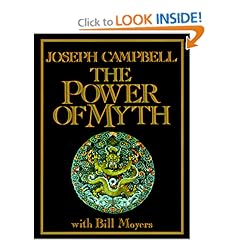
In Rites of Initiation I talked about how myth guru Joseph Campbell, in his The Power of Myth interviews with Bill Moyers, decried the fact that there are no longer any puberty rites to yank young people into mature adulthood.

In my own experience, gains in personal maturity come when there is a confluence of circumstances. First, there is something which precipitates trauma; one knows one is in trouble somehow, even if one has no idea what to do about it.

For me, trouble ensued upon the death of my mother in 1985.

The trouble can be mercifully brief, or it can last and last. If it lasts, part of the reason is often that we resist any and every imaginable strategy of relief.

In my case, the trouble lasted several years, during which time I was ill both physically and psychologically.

Next, there is typically a second precipitating event. This one somehow makes clear in our mind what general path we need to take out of the chaos of whatever trouble we have found ourselves in.

In my case, while I was sick in bed in 1990 I read for the third time a book by J.I. Packer called I Want To Be a Christian. The second precipitating event came when I was part-way through: for the first time, suddenly I was able to say of the Christian belief system, "I believe this!" Before, it had always been, "I just can't believe."

Often, there follows an information-gathering phase that will allow us to choose which particular strategy to use in following that general path.

For me, I bought and read Leo Rosten's Religions of America and C.S. Lewis's Mere Christianity, picked the Episcopal Church, and had a friend take me to a local parish, where I prepared for baptism and was duly baptized. (I have since become a Roman Catholic.)

My overarching point is, though, that there has to be some precipitating trauma — some sort of physical or emotional scarification that brings on personal chaos for a time that can be brief or protracted. Only then can (following a second precipitating event) there be healing. As we heal, we gain in maturity.


Our culture today (as Joseph Campbell pointed out) has gone to ever greater extremes to avoid doling out trauma to the young.

We find this on the secular front: our schools bend over backward to keep from bruising kids' egos and self-images. Corporal punishment is forbidden.

On the religious front, there are no frightening rites of passage such as existed in ancient and primitive societies. There are no ritual circumcisions of pubescent males. No scarifications. Not even any old-time baptisms where someone holds your head under water long enough for your life to flash in front of your eyes.

We allow no ritual doling out of trauma to our kids in part because there is such potential for abuse. In part, though, the problem is that to do so would mandate that the whole community agree on a belief system which justifies the (secular or religious) rite. But just the opposite happens. Parents say, "No one is going to traumatize my kids but me!"

Meanwhile, few parents spank. Few mete out harsh punishment. Few insist on adult-behavior-or-else.


Is it any wonder that so many young people today move back in with Mom and Dad after high school, or college, or grad school? Any wonder that they're waiting to get married until their late twenties, waiting to have children of their own until their early thirties? (Except, of course, for the recent upsurge in unmarried high-school girls getting pregnant in bunches for all the wrong reasons?)

We live in a culture that is averse to shock-trauma, and so sees ever-more-infantile behavior from supposedly adult human beings!

Monday, May 18, 2009

Rites of Initiation

Something human culture used to do well, but doesn't do well anymore, are rites of initiation by virtue of which children at about the time of puberty are ushered into adulthood.

Mythology guru Joseph Campbell told Bill Moyers in The Power of Myth about the need for puberty rites (p. 8):
Moyers: Society has provided [young people] no rituals by which they become members of the tribe, of the community. All children need to be twice born, to learn to function rationally in the present world, leaving childhood behind. I think of that passage in the first book of Corinthians: "When I was a child, I spake as a child, I understood as a child, I thought as a child: but when I became a man, I put away childish things."

Campbell: That's exactly it. That's the significance of the puberty rites. In primal societies, there are teeth knocked out, there are scarifications, there are circumcisions, there are all kinds of things done. So you don't have your little baby body anymore, you're something else entirely.
(You can read more from the book in this MySpace blog entry; scroll down about halfway for this quote. Or, click here to search inside the book; enter "initiation" in the search field.)

Though I am not Jewish, I am, by Campbell's mention of circumcisions, put in mind of the Bar Mitzvah/Bat Mitzvah ceremony at which a 12-year-old girl or 13-year-old boy participates for the first time as an adult in the regular Sabbath service. In today's Judaism it has become a big deal, not unlike a combination of the First Holy Communion and Confirmation sacraments in the Catholic Church, but bigger still.

Jewish boys (but not girls) are ritually circumcised, not at puberty, but within a few days after birth.

Possibly (see this Wikipedia article) male circumcision originated as a rite of passage marking a boy's entrance into adulthood, though other intents have been cited as well. Campbell seems to favor the "rite of passage" interpretation. He also mentions "scarifications," the imposition of scars on the skin to signify the passage into adulthood. Modern civilization toned down the rites of passage such that by the time of Campbell's youth in some 100 years ago, the conferring of the right to wear long pants stood in for circumcisions and scarifications.

Today, in the hip hop generation, we find adult males wearing short pants in situations which would seem to demand trousers.

Campbell further tells Moyers (p. 82):
As a Catholic boy, you choose your confirmed name, the name you are going to be confirmed by. But instead of scarifying you and knocking your teeth out and all, the bishop gives you a smile and a slap on the cheek. It has been reduced to that. Nothing has happened to you. The Jewish counterpart is the bar mitzvah. Whether it actually works to effect a psychological transformation will depend on the individual case, I suppose. But in those old days there was no problem. The boy came out with a different body, and he had really gone through something.
Also (pp. 81-82):
... we know what the aborigines do in Australia. Now, when a boy gets to be a little bit ungovernable, one find day the men come in, and they are naked except for stripes of white bird down that they've stuck on their own bodies using their own blood for glue. They are swinging the bull-roarers, which are teh voices of spirits, and the men arrive as spirits.

The boy will try to take refuge with his mother, and she will pretend to try to protect him. But the men just take him away. A mother is no good from then on, you see. You can't go back to Mother, you're in another field.

Then the boys are taken out to the men's sacred ground, and they're really put through an ordeal — circumcision, subincision [a modification of the urethral opening of the penis], the drinking of men's blood, and so forth. Just as they had drunk mother's milk as children, now they drink men's blood. They're being turned into men. While this is going on, they are being shown enactments of mythological episodes from the great myths. They are instructed in the mythology of the tribe. Then, at the end of this, they are brought back to the village, and the girl whom each is to marry has already been selected. The boy has now come back as a man.

He has been removed from his childhood, and his body has been scarified, and circumcision and subincision have been enacted. Now he has a man's body. There's no chance of relapsing back to boyhood after a show like that.

Moyers: You don't go back to Mother.

Campbell: No, but in our life we don't have anything like that. You can have a man forty-five years old still trying to be obedient to his father. So he goes to a psychoanalyst, who does the job for him.
This gives us profound understanding as to why there is a "maturity gap" today.

Self-Policing Freedom

Nils Lofgren, Taking Memos From the Boss appears in today's Washington Post. It gives several quotes from that ace guitarist in Bruce Springsteen's E Street Band, Nils Lofgren. In answer to the question, "There's some controversy surrounding the show here. TicketsNow, the Ticketmaster-owned reseller, sold some tickets to the show that it didn't have, leaving some fans in the lurch. Do you follow that sort of news at all?", Mr. Lofgren says:

Not too much. . . . I read what Bruce commented about it, how wrong it was, and I'm obviously in total agreement. Listen, that's why the whole planet's getting run down, because of greed and freedom gone unchecked. Sadly, there's people that aren't burdened with a conscience. Greed is king. We don't police those people well enough as a society, and that obviously has to change or things are just going to keep getting worse. This is just a microcosm of what's wrong with the planet. Look at Bernie Madoff.

America to me is the greatest country in the world and the greatest experiment in freedom we'll ever have. But our forefathers, I'm sure, expected us to police freedom appropriately. In other words, you shouldn't have freedom to pipe in porn to kids' computers . . . You shouldn't have freedom to murder and pillage and get out on good behavior in seven years. What the hell is that about? That's the great challenge of society, is to police freedom appropriately. It's not happening at the moment.

An important question, policing freedom appropriately. At first, "policing freedom" sounds like an oxymoron, a contradiction in terms. This blog maintains that the best way to resolve the tension between freedom and policing is self-policing.

In Rededicating This Blog I talked about words such as self-control, maturity, forbearance, and chastity. Self-policing is a good umbrella term for all of those.

To be an adult is to have the ability, ostensibly, to self-police ... which is why Mr. Lofgren bemoans the "freedom to pipe in porn to kids' computers." Adults have the right to look at porn on their computers. They also have the right to forbear looking at porn. In my earlier post, I gave "an abstaining from the enforcement of a right" as a definition of both forbearance and chastity. It could also be given as a definition of the umbrella term, self-policing.

Self-policing is impossible for the immature. For those with just a little bit of maturity, self-policing is a hit-or-miss proposition. For the truly mature, self-policing is a given.

Sunday, May 17, 2009

Rededicating This Blog

This blog is being renamed and rededicated! Once named "In Search of Solidarity," it is now called "In Search of Maturity." (It also has a new look.)

The change is fitting for several reasons. One is that this blogger will turn 62 this year. Quite obviously, if he doesn't gain some sort of maturity at this point in his life, he never will.

Second, I have, finally, in fact turned a corner on my own personal maturity. The maturity I am in search of is actually more that of others in the society and culture, particularly younger people.

Third, as a result of that indefinable something finally falling into place for me personally, in the last few months — as if a capstone has at last been dropped into a waiting arch — what has come into focus for me is the idea that our culture presently suffers from a massive "maturity gap." I'd like to do what I can to help close that gap.


To close the gap is hard, in part because defining the gap and demonstrating that it exists is hard. I would like to begin by citing Don't Eat the Marshmallow!, an earlier post to this blog. The thrust of that post was that an article recently in The New Yorker, "Don't!", furnishes evidence about something I consider to be a near-synonym of maturity, self-control.

Specifically, science has found that self-control is a thing that we can develop, but often fail to. We're not stuck with however much or little we are born with.

Scientists have experimented with children as young as four and found wide disparities in their ability to delay eating a marshmallow or Oreo cookie placed before them while their adult supervisor attends to an errand outside the room. When told to ring a bell if they can't wait any longer, some do and some don't speed up the instant of gratification, with those who don't ever ring the bell and who thus duly put off eating the goodie getting the promised reward of an extra goodie, once the adult returns.

And some children not only don't wait, they don't even bother to ring the bell. They just snatch the goodie and consume it. Some even find a way to (seemingly) fool the adult: lick the cream filling out of an Oreo and reassemble it to escape detection.

Experimenters have looked into the later lives of the impatient "low delayers" (these experiments were originally conducted in the late 1960s) and found that some have become "high delayers," and that these lucky individuals have had more successful lives than the perennial snatchers and grabbers who never learned to postpone gratification.


I would argue that the ability to postpone gratification is the essence of maturity, by whatever name you wish to call it: self-control, self-discipline, self-denial, etc.

I would further suggest that another name for the same phenomenon is "chastity." Here is a word, I know, that immediately rings bells and sounds loud buzzers in the culture, for the first thing it brings to mind is sexual forbearance. Isn't that type of forbearance something the culture gratefully laid to rest in the 1960s? Isn't it the general (and proper) understanding today that sex by and between consenting adults is perfectly fine, whatever the circumstances of those adults?

My response:

First of all, chastity, properly understood, is more than sexual forbearance. It is (as is forbearance per se) a word that means "a refraining from something; patient endurance; self-control; an abstaining from the enforcement of a right." To be chaste is to be pure and virtuous, stainless and undefiled. Obviously, abstaining from the wrong sorts of sex is a big part of chastity, but it's only the tip of the iceberg. There are plenty of ways for someone who is totally celibate, sexually speaking, to offend against chastity.

Second, I may as well say this right out loud, right now, rather than tiptoe around the issue: I no longer believe in the Sexual Revolution.


In fact, I have this confession to make: the recent arrival of the capstone in my arch of maturity coincided with my giving up masturbating, a practice which the Sexual Revolution said was as natural and healthful as eating and breathing.

As I indicated in God of Chastity, Part II and earlier posts in my Theology of the Body series about an important theological outlook espoused by the late Pope John Paul II, my church preaches chastity. This past Lenten season, I began practicing it by stopping masturbating.

Specifically, I gave up looking at porn on the Internet and doing what comes naturally when one looks at porn ... a thing one also tends to do many times, as well, when not looking at porn on the Internet.

More specifically yet, the kind of dirty pictures I favored when looking at online porn were not "normal," but oriented toward a particular fetish or perversion. I'm not going to say what it was ... it's a preoccupation that a lot of men have, and not a few women as well, in which something bodily that is not intended to provoke lust does anyway. I now realize that entertaining such preoccupations, though no one is really harmed by it, is nothing if not immature.

And this is now a blog against immaturity!


I bring these personal things up because I believe a lot of the sexual behavior that goes on today without any stigma of illicitness is just the acting out of immaturity and the inability to postpone gratification. It has been so since very early in my life — I was born in 1947 — but the pace picked up with the Sexual Revolution of the 1960s. And, as the young people of my Baby Boomer generation threw off the old shackles of sexual repression, they also gave evidence of being notably less mature in other ways.

I witnessed this in my own young life in the form of the cataclysmic violence that erupted in the late 1960s as college and university students tried to "tear down the walls" and summarily enact a political revolution.

I was a junior at Georgetown University in 1968 when opposition to the war in Vietnam turned ugly. Students who were "clean for Gene" early in the year — for Senator Eugene McCarthy, who ran as an antiwar candidate against incumbent President Lyndon Johnson — watched as the hope engendered by his positive early results in the New Hampshire primary and elsewhere were doused by the killings of Martin Luther King and Bobby Kennedy. King was the crucial link between the civil rights movement and establishment politics, and Robert Francis Kennedy was the man most likely to translate McCarthy's quixotic crusade into a successful peace Presidency.

With their snuffing out, leaders of the "movement" for civil rights and peace descended on Chicago during the week of the Democratic National Convention bent on goading the police into starting a riot — which is what actually happened. Young self-styled radicals defended what they had wrought in terms of no longer being willing to wait for peace and justice.

No longer being willing to wait ... that, par excellence, is a recipe for the victory in one's soul of the precipitous and the immature.

Did their coming to prevail have anything to do with the Sexual Revolution? The question answers itself when you consider that the old order of sexual propriety was based on the notion that sex before marriage is a sin. When sex before marriage is a sin, sex outside of the duly sanctified bridal chamber is out of the question entirely. Throwing such notions aside, I believe, was manifestly a recipe for the onset of radical immaturity in other avenues of life.

Believe me, I wish it were otherwise. I wish we could have our marshmallow and eat it, too: that we could be faultlessly mature in other areas of life while not reining ourselves in sexually in the least degree. But my experience is that we are not built that way, and the world does not work that way.

I don't plan to say all that much about sex in my rededicated "In Search of Maturity" blog, though. I know of no better way to turn what I would hope to be a reasonable discussion into a food fight than to become a scold about the kind of behavior I know people want to hear nothing negative about.

Besides, there are any number of topics related to maturity and self-control that don't ask people to give up such a mainstay of their present lifestyle as "illicit sexuality" ... until they're ready to do so, that is. Lord knows, that was literally the last thing I myself wanted to give up!

* * *


Before I shut up, a few words about the quotation at the head of my blog. "Use the Force, Luke!" are words that echoed in the thoughts of new-minted Jedi Knight Luke Skywalker as he led the rebels' attack against the Death Star of Darth Vader in the original Star Wars movie in 1977. Luke had learned them from his mentor, old Ben Kenobi, when being trained in the ways of the Force.

Using the Force is, I'd say, a metaphor for the wisdom taught by all our religions, a wisdom that comes down to the values of self-control, discipline, and chastity in the broad sense in which that word is spoken of above. Luke had, or developed, such virtues as a Jedi knight-in-training, in contrast to the gruff dissolution of the lifestyle of Han Solo. Han was by no means evil like Darth Vader; he was good, but as a cynical hothead he was clearly no candidate for Jedi knighthood.

The character of Obi-wan Kenobi made manifest such wisdom and maturity as young Luke was in need of en route to his knighthood. Often, those in the presence of Ben Kenobi would automatically do as the Force would have them do, no matter how much they were customarily in thrall to the Dark Side. That's why I hereby make "Use the Force, Luke!" the epigraph to this blog.

Friday, May 15, 2009

Kathleen Parker on Francis Collins

Washington Post columnist Kathleen Parker's piece about Francis Collins, A Physician-Geneticist Seeks to Foster Both Faith and Science, is a must-read for anyone interested in the question of whether one can be a Christian and believe in evolution, too.

Francis Collins headed the Human Genome Project, a big part of the scientific effort that cataloged our species' genes, so he is a scientist par excellence. He is a believer in the theory of evolution. A noteworthy Christian as well, he does not see any conflict between the two.

Everybody knows that many Christians disagree on this. Of those who think evolution is anti-Christian, Parker writes, "Their objections haven't changed much since Billy Sunday first articulated them almost 100 years ago and revolve around the fear that acceptance of evolution negates God."

That, then, is the heart of the matter. If Christians could come to see that evolution does not — repeat, does not — negate God, the world would be a better place.

"To that end," writes Parker, "[Collins] created the BioLogos Foundation and last month launched a Web site — BioLogos.org — to advance an alternative to the extreme views that tend to dominate the debate ... Through the foundation and Web site, Collins is hoping to help home-schoolers and other Christian educators come to grips with their scientific doubts. Among other projects, he intends to develop curricula that combine faith and science."

To which I say, more power to him!


We Christians need to embrace evolution, I would say, because for some of us to hold out against it not only splits the church, it splits society at large along fault lines that don't really need to be there. It unnecessarily puts off people who are not yet believers. It makes all religion seem, to some, foolish and dispensable.

Plus, Parker cites Collins as arguing that:
The problem of not believing in evolution as one might not believe in, say, goblins or flying pigs has repercussions beyond the obvious — that the United States will continue to fall behind other nations in science education. Collins says that many creationist-trained young people suffer an intense identity crisis when they leave home for college, only to discover that the Earth is about 4.5 billion years old. Talk about messing with your mind.

Collins says he hears from dozens of young people so afflicted. Most susceptible to crisis are children who have been home-schooled [as was Collins himself, until the sixth grade] or who have attended Christian schools.


I am well aware how hard it is to get evolution opponents to, so to speak, see the light. Darwin's theory (as brought up to date over the century-and-a-half since he published On the Origin of Species in 1859) is hard to grasp. It demands belief in things that seem wholly counterintuitive, like the ability of hereditary material — genes, DNA — to stay basically the same from one generation to the next, and on to the next, except of course when it does change.

That is what "mutations" are, changes in genetic material, and they happen a lot. It's just that, as there are so many genes per organism, "a lot" turns out to be an exceedingly tiny percentage of the total number of genes passed to offspring from their parents. Too, most mutations either make no tangible difference to survival chances, or if they do make for palpable change, they can get snuffed out in the offspring that bear them because they make that offspring less well adapted to the environment.

Such "survival of the fittest" is key to evolution. In a dangerous world, more offspring are produced than can possibly make it to adulthood and produce yet more offspring. Which ones produce their own posterity and which ones don't is often determined by which ones have genetically derived characteristics that fit them best to the circumstances under which they find themselves living.

Darwin's name for this reality was "natural selection." Evolutionists emphasize that it is purposeless and blind. Even so, along with the mutations that occur at random in genetic material and the "superfecundity" which ensures that there are way more offspring born than can possibly survive, it is the guarantor of evolutionary change.

If one is an evolutionist, one also has to believe that changes in the stuff of heredity, when they are not vetoed by natural selection, take uncountably long amounts of time — hundreds of thousands, if not millions, of years — to make major changes in what their host organisms look like or how they function, very occasionally leading over eons and eons to the actual emergence of a brand new species.

Still, our planet's fossil record seems to show — "fossils" are remains of living organisms that have been preserved somehow — that there are bursts of "speciation" in which large numbers of new species arrive all at once. These short bursts punctuate much longer periods of stasis and equilibrium. There are also occasional "mass extinctions" in which large numbers of species rapidly perish.


To get a new species to emerge, nature first has to find a way to make sure two populations of a single ancestor species get "reproductively isolated" from each other, perhaps owing to the interposition of a geographic barrier. One branch will then start adapting to a changed environment and, typically millions of years later, Bob's your uncle (as the British say). If the barrier is then removed, the two formerly isolated groups will no longer interbreed; they are separate species.

Geologically, the Earth is something like 4.6 billion years old, and the first organisms, single-celled bacteria or the like, appeared perhaps 2.7 billion years ago. To our minds, things remained pretty dull until the seemingly rapid appearance of most of today's major groups of complex organisms around 530 million years ago, in the Cambrian explosion.

As of about 65 million years ago, dinosaurs roamed the Earth. When they went extinct, little organisms who fed their young on milk — the early mammals — began to have a field day. For the first time, the world was their oyster.

By some five to seven million years ago our closest living cousins, the chimpanzees, were well-established in Africa. From them, the first species of our own genus, Homo, split off. (See Human evolution in Wikipedia.) Our own particular species, Homo sapiens, is all that is left of that genus. Its earliest known examples, called "archaic Homo sapiens," arose less than one half million years ago. It's hard to be absolutely sure these early humans were precisely of our species, though most scientists say they were.

Roughly 250,000 years ago, in a time between two ice ages, Homo sapiens proper appeared. By 160,000 years ago, the first "anatomically modern" version of our species had arrived.


Less than 10,000 years ago, certain humans began worshiping a single God, Yahweh. The earliest known copy of the Torah dates from the 7th century B.C.E., about 9,000 years ago. From it and its Abrahamic tradition descend the Judaism, Christianity, and Islam of today.

The Torah — the most holy scripture of Judaism, revered by Christians as the first five books of their Old Testament — begins with the book of Genesis, whose first chapter describes how the Lord, the One God, in his power and might created the world and everything in it, including all living kinds and mankind itself.

Today's creationists insist that this creation story must be read literally, for it must be literally true or true not at all. If it is literally true, the theory of evolution cannot be right.

I say the creationists are dead wrong in their belief. Genesis, chapter one, was written (or written down, out of earlier oral tradition) by and for a pre-scientific people who could not have understood today's scientific evolution theory. The point of the story was, and remains, the establishment of the fact that the Lord God is a unique deity of incomprehensible power and might.

God is supernatural, and how He creates the world is beyond our categories of thought. Yet stories must be told. But why would we who believe in Him want to cage His unimaginable power and might to create the world as He sees fit within any particular story and its entirely human categories of thought?

Francis Collins, according to Kathleen Parker, puts it this way: "To Collins, Darwin is a threat only if one thinks that God is an underachiever. Collins doesn't happen to believe that. His study of genes has led him to conclude that God is both outside of nature and outside of time. He's big, in other words. The idea that God would create the mechanism of evolution makes sense."