Showing posts with label Deep Ecology. Show all posts

Monday, July 01, 2013

A New Awakening, Part 16

I have in this ongoing series been investigating the wisdom of myth as it informs what I call a potential "new awakening" of spirituality in our society. I take as one of my main reference points the book and PBS television series The Power of Myth, in which, during the mid-1980s, Bill Moyers interviewed at great length the scholar of comparative mythology Joseph Campbell.
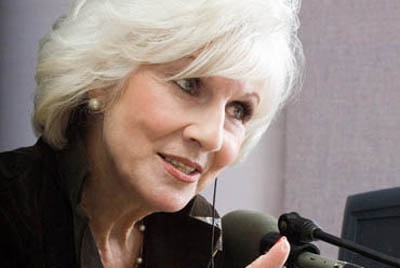
Diane Rehm of NPR
President Obama, before leaving on his recent tour of Africa, gave an address laying out new administrative policies to address climate change. The World Bank similarly called for concrete steps to combat global warming. I heard one reporter, Ruth Marcus, speaking on the Diane Rehm show on National Public Radio, call Obama's plans "the sleeper story of the week" — in view of Supreme Court decisions affirming gay marital rights but casting a shadow over minority voting rights, and of the Senate's passage of a comprehensive immigration bill.

Granted that gay rights, the voting rights of ethnic minorities, and immigration are issues of the first rank, why does the environment rate below them in prominence? Why does having the president finally sign on to controversial, long-awaited climate initiatives deserve a "sleeper" designation? Why is the environment always number eleven on the top ten list of urgent areas of political concern?

Is this "the environment"?
Where are we humans?
There are all sorts of contributory reasons, but I think the root cause is revealed by a careful scrutiny of the word "environment." The word suggests that the world is neatly divided into two parts: us, and everything around us. Everything other than us is "the environment," meaning something that is akin to a house that we live in, but are not of. We can modify our house at will to suit our likes and dislikes, or we can let the whole thing fall down around us if we want. After all, a house is just a thing.

Our instrumentalist view of the world is, however, just an illusion fostered by our religious orientation, Joseph Campbell tells Bill Moyers in The Power of Myth. They are discussing the ubiquity of snakes and serpents in various cultures' creation myths. In other cultures, Campbell says, the serpent represents “immortal energy and consciousness engaged in the field of time, constantly throwing off death and being born again.” The serpent in those cultures does not betoken evil.

But that changes in the Genesis account of Adam and Eve in the Garden of Eden:

Genesis 3:1: "Now the serpent was more subtil
than any beast of the field which
the LORD God had made."
“MOYERS: In the Christian story the serpent is the seducer.

“CAMPBELL: That amounts to a refusal to affirm life. In the biblical tradition we have inherited, life is corrupt, and every natural impulse is sinful unless it has been circumcised or baptized. The serpent was the one who brought sin into the world. And the woman was the one who handed the apple to man. This identification of the woman with sin, of the serpent with sin, and thus of life with sin, is the twist that has been given to the whole story in the biblical myth and doctrine of the Fall. ... The idea in the biblical tradition of the Fall is that nature as we know it is corrupt, sex in itself is corrupt, and the female as the epitome of sex is a corrupter.”

Our culture has, of late, done a great deal to X-out the traditional ideas that sex is corrupt and that women, temptresses all, are corrupters of men. But the Genesis idea that nature itself has been corrupted by Original Sin continues to encourage us to treat the natural world as a somehow tainted thing that we can legitimately scorn and at the same time exploit.

But this view of nature inherently distorts our understanding of who we are and what our life is all about, in Campbell's view. We as a species spring, via evolution, from what we now characterize as "the environment." Campbell says that the Garden of Eden, in a myth-aware view, symbolizes a state of being that is prior to the splitting of a primordial, eternal, timeless unity into a series of pairs of opposites: man and woman, life and death, good and evil, and so on. Thus do we live in a world where everything has its opposite. In our world of time, and of death following life, says Campbell, “the essence of life is this eating of itself! Life lives on lives ... .”

Chief Seattle
of the Duwamish Indians
The spirituality of cultures outside the orbit of the Book of Genesis, Campbell tells Moyers, encourages “the reconciliation of mind to [these] conditions of life.” Genesis, though, points us as Peoples of the Book — as Jews, Christians, and Muslims — toward a life outside this temporal world. It is a longed-for life, but it is one in which we can no longer say, along with Chief Seattle:

“The perfumed flowers are our sisters. The bear, the deer, the great eagle, these are our brothers. The rocky crests, the juices in the meadow, the body heat of the pony, and man, all belong to the same family.”

If this world is not our true home, all of what Chief Seattle wrote is nonsense. But if our true home is right here in this Earthly Kingdom, we had better find ways of inflecting our traditional religions toward the urgency of saving and preserving our "environment." And that isn't going to happen, I don't believe, unless and until there is a new awakening of myth-aware spirituality in the land.


Wednesday, June 26, 2013

A New Awakening, Part 15

I have in this ongoing series been investigating the wisdom of myth as it informs what I call a potential "new awakening" of spirituality in our society. I take as one of my main reference points the book and PBS television series The Power of Myth, in which, during the mid-1980s, Bill Moyers interviewed at great length the scholar of comparative mythology Joseph Campbell.

What will it take to have a new awakening of spirituality — a devotion to a newly hatched myth of the society of the entire planet, precisely as the late Joseph Campbell envisioned?

Chief Seattle
of the Duwamish
To me, the answer is clear — or, rather, I see it intellectually, even if I don't yet live it spiritually. The answer is set forth eloquently in the famous letter the Indian chief Seattle wrote to the U.S. Government as a reply to its offer to purchase the land in the Pacific Northwest long lived on by the chief and his tribe of Native Americans, the Duwamish. Campbell reads that letter to Bill Moyers in The Power of Myth, having first stated, “Chief Seattle was one of the last spokesmen of the Paleolithic moral order.”

I take that to mean that we moderns of European descent have to cast our minds all the way back to the Stone Age — Old, not New — to locate our Old World ancestors who thought like Chief Seattle.

The Central Pacific's engine Jupiter
and the Union Pacific's engine No. 119
meet on May 10, 1869,  at Promontory Summit, Utah.
Seattle wrote his letter to the white man's government in about 1852, seventeen years before the first transcontinental railroad was completed and the hegemony of white men in North America was there and then cemented into place. But Chief Seattle, even if we weren't listening, had informed us:

We are part of the earth and it is part of us. The perfumed flowers are our sisters. The bear, the deer, the great eagle, these are our brothers. The rocky crests, the juices in the meadow, the body heat of the pony, and man, all belong to the same family.

Later in the letter, in these words, he elaborated:

Will you teach your children what we have taught our children? That the earth is our mother? What befalls the earth befalls all the sons of the earth.

This we know: the earth does not belong to man, man belongs to the earth. All things are connected like the blood that unites us all. Man did not weave the web of life, he is merely a strand in it. Whatever he does to the web, he does to himself.

One thing we know: our god is also your god. The earth is precious to him and to harm the earth is to heap contempt on its creator.

And finally:

As we are part of the land, you too are part of the land. This earth is precious to us. It is also precious to you. One thing we know: there is only one God. No man, be he Red Man or White Man, can be apart. We are brothers after all.

Thomas Harrison Matteson,
The Last of the Race, 1847
His key points are accordingly: that all of us are brothers (and sisters), the whole world round; that no people's God is more true than any other people's God; that there is a single web of life on this Earth that unites all people and natural things and makes them all sacred; and that if we despoil the Earth, we defile ourselves.

Well, we have despoiled the Earth. Look at any belching smokestack and say otherwise. Concomitantly, we have spiritually defiled ourselves: to wit, only a minority of us seem to care all that much about the despoliation of the planet.

I'm not even sure how much I myself really care.

How  too much CO2
enters the atmosphere
After all, I look at that belching smokestack and imagine the coal that is being burned so that I personally can have the electricity I need to charge my iPad and run the computer I'm using to write this with. It bothers me that the CO2 in the coal-fired smoke warms the planet and endangers Chief Seattle's (and our) delicate "web of life," a web in which my own life is but one single strand.

It bothers me, yes ... but it doesn't bother me enough.

I know intellectually that every part of nature connects to every other sacred part, but the reason that I don't know it spiritually is that I don't have — we don't yet have — a myth of the whole planet that informs us of that fact, deep in the marrow of our bones.


Tuesday, June 18, 2013

A New Awakening, Part 14

I have in this ongoing series been investigating the wisdom of myth as it informs what I call a potential "new awakening" of spirituality in our society. I take as one of my main reference points the book and PBS television series The Power of Myth, in which, during the mid-1980s, Bill Moyers interviewed at great length the scholar of comparative mythology Joseph Campbell.

Joseph Campbell tells Bill Moyers in The Power of Myth that a new mythology is needed today. Even Campbell doesn't know what precisely it will be:

“You can’t predict what a myth is going to be any more than you can predict what you’re going to dream tonight. Myths and dreams come from the same place. They come from realizations of some kind that have then to find expression in symbolic form.”

Planet Earth
Still, the broad outlines of what that new myth will be are plain. It will be, Campbell says, a mythology of the whole planet:

“And what it will have to deal with will be exactly what all myths have dealt with — the maturation of the individual, from dependency through adulthood, through maturity, and then to the exit; and then how to relate to this society and how to relate this society to the world of nature and the cosmos. That’s what the myths have all talked about, and what this one’s got to talk about. But the society that it’s got to talk about is the society of the planet. And until that gets going, you don’t have anything.”

"The society of the planet" is something of which Campbell's prognosticated mythic conception was dealt a near-mortal blow when al-Qaeda hijacked American jets and crashed them into the Twin Towers of the World Trade Center in New York on 9/11/2001.

New Amsterdam in 1664
Campbell's view that there is a planet-encompassing society a-forming, one which will be accompanied by an appropriate planet-wide mythos, is cosmopolitan — as cosmopolitan as New York City has historically been, actually and symbolically, since a Dutch colony called New Amsterdam was founded as a trading center on Manhattan Island in 1625.

I'd say we today remain collectively unmoored, spiritually speaking, so long as we don't yet have a myth of the whole planet serving to anchor us in a symbol-rich narrative of who we are today.

The headlines on this particular day find President Obama in Europe attending a summit of G-8 leaders at which they wish to discuss new trade agreements to promote mutual prosperity. They will likely find themselves distracted by scuffles over such matters as the two-year-old civil war in Syria, with its attendant spillover of refugees and angst into neighboring countries, including Greece as a portal into a wider Europe; the looming problem of global warming and climate change, which no one seems able to find the political will to address substantively; and other issues such as what to do about the lingering economic woes in Europe and the United States.

Ground Zero
At home, Obama is still wrestling, so far unsuccessfully, with how to fulfill his promise to close the prison for suspected Islamist terrorists at Guantanamo Bay, Cuba. We quite understandably fear the rise of Islamism in today's world, which is our basic context for understanding recent events in Syria, in Libya, in Egypt, in Iran, in Iraq, in Afghanistan, in Bosnia. It is hard to dream big enough to generate a new mythos as long as we are haunted by the spectre of Ground Zero, no?

Islamism is not — repeat, not — representative of Islam, the great religion of which it is a demonic parody. Yet Islam is an Abrahamic religion rooted in the same prehistory that gave us the Hebrew and Christian scriptures. Campbell says of that scripture that it — unfortunately, if we need to radically change mythic course today — saddled us with a "biblical condemnation of nature”:

“God is separate from nature, and nature is condemned of God. It’s right there in Genesis: we are to be the masters of the world.”

If Biblical myth is holding us back today, what's the antidote? Campbell tells Moyers:

“But if you will think of ourselves as coming out of the earth, rather than having been thrown in here from somewhere else, you see that we are the earth, we are the consciousness of the earth. These are the eyes of the earth. And this is the voice of the earth.”

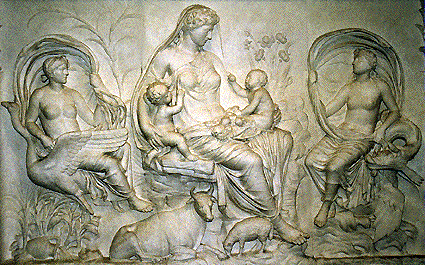
Gaia in Greek Mythology
Science has told us, Moyers mentions, of the Gaia Principle. Campbell calls it the notion of “the whole planet as an organism.” Gaia (pronounced GUY-uh or GAY-uh) was the Greek goddess of the Earth. The Gaia Principle is the somewhat controversial scientific hypothesis that all things on Earth, living or nonliving, are interconnected in such a way as to (says Wikipedia) form “a self-regulating, complex system that contributes to maintaining the conditions for life on the planet.” So when we humans get too big for our britches and start polluting the atmosphere with carbon dioxide, the oceans respond by taking up carbon and becoming more acidic — which is fine for some sea creatures but very bad for coral reefs.

If we see ourselves as "masters of the world," do we care about the odd coral reef here and there? We ought to. We are suffering from a spiritual "vitamin deficiency." We can't regain full health until we dream our new myth.

Yet we can't do that while the civilized world is fighting off jihadists at every turning, killers wedded to a twisted version of the old scriptural mythos that seems to nominate a singular, beloved-of-God "us" and an infidel "them," where the "them" must be stamped out by any means whatever. Jihadists insist on being "masters of the world" on their own bloody terms.

Meanwhile, Gaia herself is in huge trouble, climate-wise. Stay tuned for more fallout from that ...


Saturday, April 14, 2012

If You Want Peace and Justice ...

The familiar bumper sticker says, "If you want peace, work for justice," a quote from Pope Paul VI. Well, yes, but I think it goes deeper than that. "If you want peace and justice, work for harmony," I'd put it.

By "harmony" I mean the word as used by the Prince of Wales in his recent book Harmony: A New Way of Looking at Our World. It's basically a book to warm the cockles of any environmentalist's heart. Prince Charles says we are so out of harmony with the natural world, and so out of balance within our own collective human psyche, that we don't begin to comprehend how out of whack we really are.

I don't want to put words in Charles's mouth, and I don't claim to be wise enough to know how far beyond his meaning my thoughts lie. Yet I increasingly believe he'd agree: We have injustice and war because we are fundamentally off-center within our own human nature, when taken in its very complex totality.

Many ills are byproducts of our deep disharmony, I think. Take sex in its most negative aspects. Look at how many abortions there are each year. Look at how many single-parent households and broken homes we have. How many rapes. How many unmarried childbirths intentionally sought by misguided teens. How much time we spend debating supposedly "settled" issues like women's "right" to contraception.

And look at how het up we all get over hot-button, non-sexual issues, like whether the children of illegal immigrants deserve a legal path to a college education and U.S. citizenship — or, again, whether addictive drugs or gay nuptials or carrying a concealed weapon should be legal.

The plain fact is that we fundamentally disagree about so many things. Some of us "go to war" over them, putting on display our entrenched disagreements about what is, or is not, right or just.

Sociologist Charles Murray's most recent book says, via its title, that we are "coming apart" class-wise. The mores and lifestyles of the "new lower class" are today dangerously different from those of the (safely ensconced within their socioeconomic bubble) "new upper class."

Seemingly, the upper-crusters' ethos isn't so different from America's long-celebrated "founding virtues," to use Murray's term, while the bottom-dwellers' lives ways have "come apart" from our once-universal American mores. Crime, welfare dependency, opting out of the workforce, single parenthood, dropping out early from the educational trajectory — all these are symptoms of how our socioeconomic bottom-dwellers no longer find our "founding virtues" — industriousness, basic honesty, marriage, and religious faith — of great value.

But I think we non-bottom-dwellers live lives of incongruity, too. I call ours a "bikini-wax world." At the beach, women wear bikinis that are (warning: frank talk ahead) too tiny to conceal all of their pubic hair. So they pay someone to wax away the offending hair.

In a world of less incongruity, there might be a thorough covering up of the pubic region at the beach, or there might be brazen nudism in which everything is bared and no body fur need be removed. What with now-obsolete women's bathing dresses and the occasional nudist beach, we've seen both in our cultural history. And there are comprehensible philosophical underpinnings for both.

For teeny-weeny bikinis and paying good money for Brazilian wax treatments, though, not so much. Go ahead and try: give a comprehensive philosophical justification for bikini bottoms that conceal some, but not all, of nature's hairy endowments.

In a bikini-wax world, seemingly incompatible ideas simply coexist. It's no longer OK to go braless today — that's ostensibly "skanky" — but it's OK to let your bra straps show — that's ostensibly not "skanky."

Or, in a graver realm, it's OK to privately oppose abortion on moral grounds, but it's not OK to impose your beliefs on anyone else.

I contend our bikini-wax society has lately become obsessed with fighting — and yet, at one and the same time, with avoiding fights.

Notice how oriented toward clashes our popular culture has become. Look at just about anything on TV and, when sex isn't front and center, it's usually fighting, in one guise or another, that's on tap.

And yet ... as individuals we often decline to stand and deliver for what we believe in, i.e., a particular moral code. On issues concerning sexuality, social justice, war, the environment, and much else, many of us opt out of the debate entirely. Different strokes for different folks, we say. Your truth is not my truth, and there's no absolute truth anyway.

Except when we get het up over something. There's the actual truth, we think then, and there's also what the other side of the discussion falsely believes.

But both sides feel the same way, of course. Bothe sides think they alone have a handle on the truth.

A world of such incongruity is a fractionated world. In such a fractionated world, I believe, there's no real road to either justice or peace, unless and until we get back into some semblance of natural-societal-intrapersonal harmony.

Monday, April 09, 2012

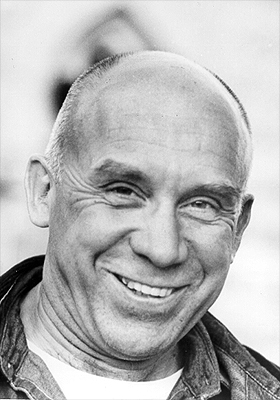
Thomas Merton, Deep Ecologist

Thomas Merton
(1915-1968)
Thomas Merton (1915-1968) was a Trappist monk who — according to Fr. Daniel Berrigan, who should know — became the conscience of the peace movement of the 1960s.

He was not only that. He was one of the most prolific Catholic writers of the 20th century.

A collection of Merton's writings on the natural world, When the Trees Say Nothing: Writings on Nature, shows that he was also, in his own way, a "deep" ecologist — recognizing (says Wikipedia of deep ecology) the inherent worth of all living beings, regardless of their instrumental utility to human needs. Merton wrote:

It is not Christianity, indeed, but post-Cartesian technologism that separates man from the world and makes him a kind of little god in his own right, with his clear ideas; all by himself. ...

What a miserable bundle of foolish idiots we are! We kill everything around us even when we think we love and respect nature and life. This sudden power to deal death all around us simply by the way we live, and in total “innocence” and ignorance, is by far the most disturbing symptom of our time. ...

A phenomenal number of species of animals and birds have become extinct in the last fifty years — due of course to man’s irruption into ecology. There was still a covey of quail around here [his abbey near Bardstown, Kentucky] in early fall. Now I don’t hear a single whistle, or hear a wing beat.


The Abbey of Gethsemani at Trappist, Kentucky, was Merton's home for the last 27 years of his life, where he looked for and found God "beyond all and in all." There was for Merton no contradiction between the "beyond" and the "in":

I want not only to observe but to know living things, and this implies a dimension of primordial familiarity which is simple and primitive and religious and poor. This is the reality I need, the vestige of God in His creatures.

"The vestige of God in His creatures": It's what I mean when I talk of "this sacramental earth"!