Showing posts with label Eating the Seed Corn. Show all posts

Friday, September 23, 2011

Eating the Seed Corn, Post 2

My core belief (see Eating the Seed Corn, Post 1) is that our lack of environmental sensitivity, awareness, and concern is causing much of the dysfunction we see in our world. It's not just ecological dysfunction, but economic as well ... and also social, cultural, religious, spiritual, and psychological.

We're greedy to improve our standard of living. We have a lust for material wealth. We insist on moving up the economic ladder. If we're already rich, we want to get richer. If we're not yet rich, we expect to get there someday.

Meanwhile, we inhale consumer goods by the boatload, even though we don't really need most of the stuff we buy.

Sometimes we justify our lust for wealth and material comforts as wanting to give our children and grandchildren the chance to have more, economically, than we ever had. If we today can afford those flat-screen TVs and all those iPads galore, imagine how wealthy our descendants can be ...

Except: we can have all this stuff only if we plunder the Earth. If we cut down rainforests; overfish oceans; pollute rivers and streams, lakes and bays; pour carbon into the atmosphere to produce the electricity to run those flat-screen TV and charge those iPads; and burn the gasoline that lets us run down to Best Buy whenever we want to check out the newest gadgets ... only then can the feeding frenzy continue.

I'm just as bad as anyone else, by the way. This is definitely a case of the pot calling the kettle black.

It all leads to what I call "Masters of the Universe" syndrome. If we have an itch, we believe we have the power to scratch it. If we have a desire, we have the power to gratify it. If we have an urge, we can, at any and every moment, pleasure ourselves in its satisfaction. This is our birthright, and no one can take it away from us.

Scratch that itch. Gratify that desire. Put ourselves in a never-ending urge-satisfaction-pleasure loop. It sounds like the justification for looking at porn on the Internet ... but let's not go there!

Rather, let's ask the question, is all this dysfunctionality ipso facto 'unnatural'?

We tend to imagine that anything that is 'natural' isn't dysfunctional.

It's natural to want to feather our own nests and pass our nest eggs along intact to our heirs. So how can it be dysfunctional?

Natural, Yet Dysfunctional

There are lots of things that are natural, yet dysfunctional. For example, as most bird lovers know, birds will 'foolishly' fly into a plate glass window/door to fight with their own reflection. When they hit the glass, which they can't see, they will often die.

This is completely natural, since birds have evolved to protect their territories and their mating relationships by attacking interlopers. But they have not evolved in environments where vertical reflectors such as glass windows and doors exist, so they are helpless to interpret that seeming interloper as their own reflection.

Yet, clearly, this behavior is dysfunctional. It leads to unnecessary deaths.

The source of the dysfunctionality, meanwhile, is not the birds. It is us. We developed glass and put huge panes of it in our homes and office buildings.

Another example is that of a fox whose leg gets caught in a steel trap chewing off its leg to get free. The fox's need for freedom is absolutely natural. But chewing off its own leg is dysfunctional. Again, the source of the dysfunctionality is us, the inventors of steel traps.

Raccoons raiding bird feeders and garbage containers is yet another example of things that are natural, yet dysfunctional. Raccoons have evolved as opportunists who will feed on whatever they can find. But we humans have given them extra opportunities that Mother Nature never dreamed of.
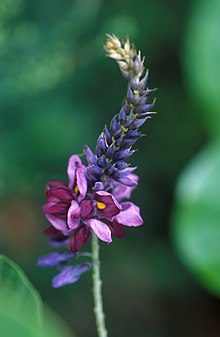
Examples of the natural-yet-dysfunctional aren't limited to the world of animals. Among plants, kudzu is one of the most opportunistic and reviled in the U.S.

In and of itself, kudzu (left) is a lovely plant with attractive blossoms, a member of the pea family.

Introduced into this country from Japan at the Japanese pavilion in the 1876 Centennial Exposition in Philadelphia, it has been spreading here at the rate of 150,000 acres annually. It has overgrown roadside trees to the point of smothering them, and it has been nicknamed 'the vine that ate the South'.

Known as 'kuzu' in Japan, it was introduced into that country, and also into Korea, from China. In those parts of the world it has been no nuisance, since the kuzu vine dies back each cold winter season.

In the American South, that doesn't happen.

The lesson here is that natural behavior can be dysfunctional when a thing gets transplanted into soil that it did not evolve for.

We humans are such a transplanted thing.

For example, we evolved in the savannas of Africa, where not many sweet things grow. But sweet taste is what sugars produce in ripe fruit, and it is a sure sign that eating the fruit will give us much-needed energy. We adapted to our primeval situation by developing an inborn craving for sweets.

Fast forward to today. Today, we face an obesity pandemic because we have learned to grow and manufacture foodstuffs galore that pander to our sweet tooth. For similar reasons, we consume too much salt and fat.

But here's the odd thing. We transplanted ourselves into the economic and cultural soil we now find ourselves in.

A lot of that had to do with the scientific revolution of the seventeenth century. We discovered a lot of stuff then ... including the idea that discovery was power. From those times forward, scientists teased out the laws of nature and then applied those laws to such things as agriculture and manufacturing. We subdued and mastered the Earth in service to a vision of unlimited economic growth. We learned to produce and sell the things consumers most wanted to buy.

What we could not subdue was our sweet tooth. We wanted to consume things in vast quantities that weren't good for us.

It was entirely natural that we would want to do so.

Yet, at the same time, it was vastly dysfunctional.

Now we have arrived at a point in time when our natural-yet-dysfunctional appetites are causing us to nibble away at our own sweet seed corn. We can't seem to restrain ourselves from plundering the natural world from which all good things — including our own species and all that nourishes it — flow.


Tuesday, September 13, 2011

Eating the Seed Corn, Post 1

I have been actively blogging to This Sacramental Earth since the middle of June 2011. It's now September 11, a special date. I think it's time I opened up more fully about my worldview and core beliefs.

It's a worldview that's about as radical as you can get.

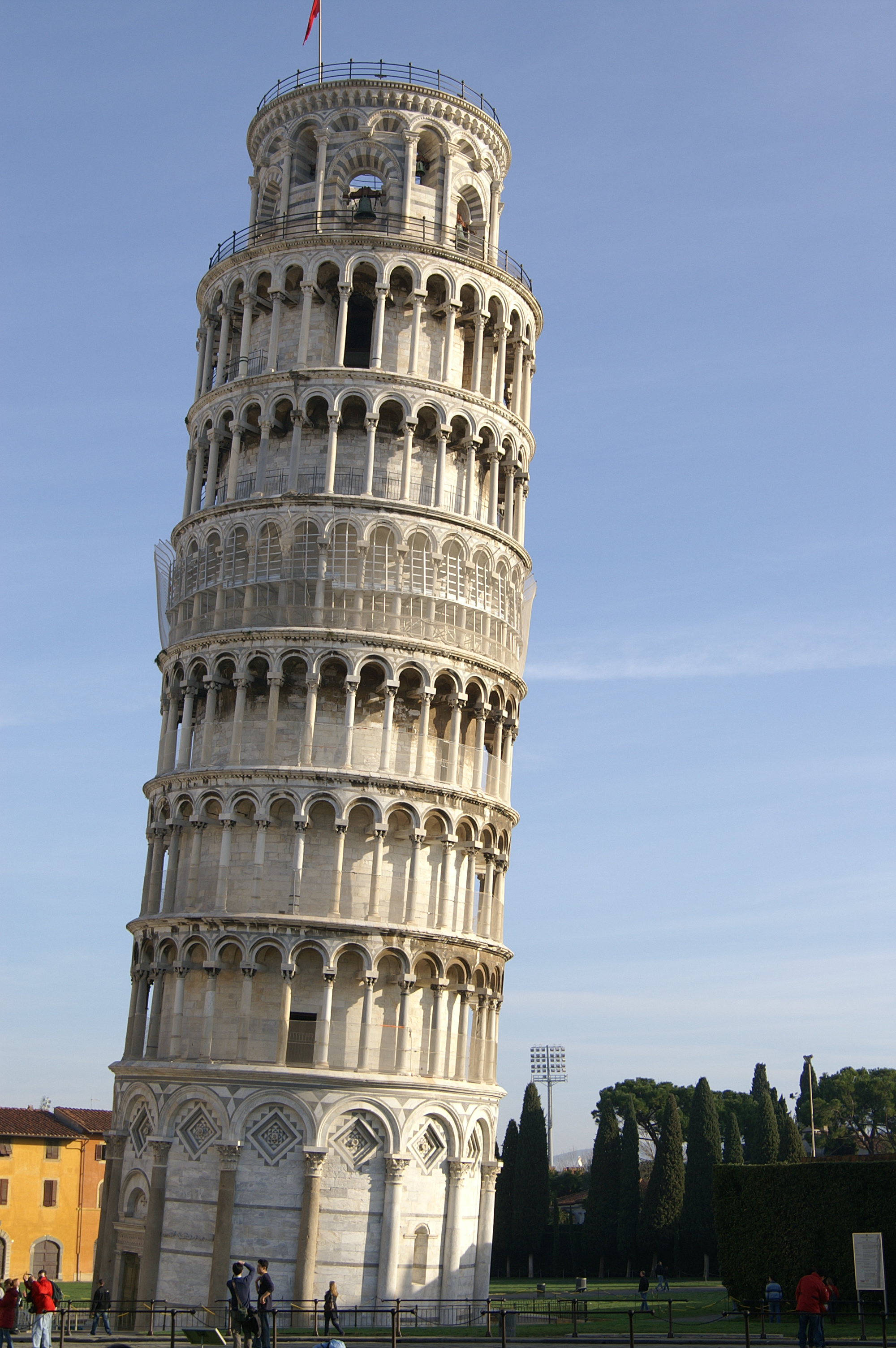
Leaning Tower
of Pisa
I think our economy, and indeed our whole culture, is a house built on sand. It's like the Leaning Tower of Pisa; the ground underneath is too soft. The edifice can't stand straight, and it keeps tipping over more and more as time goes on.

Why aren't things working out for us as we expected? Because we've gotten out of step with Mother Nature.

The natural world includes us ... we have forgotten that. We have accordingly forgotten that Mother Nature imposes her own hidden patterns on us, and we violate them at our peril.

It's as if we are coloring in Mother Nature's coloring book, and we have been heedlessly coloring outside the lines. Any time now, Mother Nature will have no choice but to take away our crayons.

That is what the present threat of manmade climate change amounts to. Ditto, our destruction of the planet's rainforests. Ditto, our pouring chemicals and silt into our bays, rivers, and wetlands. Ditto, our eradication of innumerable wonderful species that have evolved over millions of years. You name the environmental threat, and I'll include it in the list.


Dysfunctionality: Economic

As I've tried to show in earlier posts, our despoliation of the environment amounts to eating our seed corn. The ultimate source of our economic wealth is nature itself ... yet we forget, as fertile and self-renewing as nature is, that there are limits. The limits amount to the lines in Mother Nature's coloring book, and our greedy crayons continually dash outside those lines with heedless abandon.

So nature just cannot renew itself fast enough to keep up with our greed.

For example, when we take too many tuna and other food fish from the oceans each year, fish populations dwindle. Consuming the 'extra' fish we take each year is like eating our seed corn. We have great abundance now, but at some point down the road we'll impoverish ourselves.


Dysfunctionality: Other

That's an economic argument for deeper environmental awareness and concern. But I think our 'eating the seed corn' habit of consumerist greed makes us dysfunctional in non-economic ways as well.

Let there be no doubt: we are hugely dysfunctional. All you have to do is read the newspapers to see what I mean. Today's paper is, of course, full of recollections of 9/11. When I think of 9/11, I think of both heroism and dysfunction. The radical Islamist movement which spawned the 9/11 attacks was and is incomprehensibly vengeful and hateful. It's hugely dysfunctional. The world is not supposed to work that way.

Further along in today's Washington Post, one finds (it comes as no surprise) that we Americans continue to search for a solution to the Great Recession and an unemployment rate that won't come down. Meanwhile, the richer nations in Europe's 'euro zone' are once again contemplating (resisting?) bailouts for Greece and other poorer nations such as Italy and Spain. This is, of course, economic dysfunction. But it's also political and cultural dysfunction, when Greeks take to the streets in violent protest against their own government's necessary austerity measures, and when armchair pundits wonder why Germans who oppose bailing Greece out aren't taking to the streets as well ... yet.

The world isn't supposed to work that way, either. Why do our economic institutions seem poised on the edge of a precipice?


Dysfunctionality Headlines

A news story in today's paper bears the headline, 'Guns tied to a botched federal weapons-smuggling investigation have been recovered at a second Arizona crime scene ... '. A world in which there is weapons smuggling is bad enough, I'd say. A world in which the 'good guys' (our Bureau of Alcohol, Tobacco, Firearms and Explosives agents) botch investigations of same, and no one is really surprised to hear of it, is downright dysfunctional.

Another dysfunctional headline: 'Gunmen kill two, wound 22 at club'. 'Nuff said.

Another: 'In wildfire-weary Texas, crews expect an extended battle'. The drought and wildfires in Texas are a result of 'global weirding', which is a side effect of climate change. The companion headline 'Many Pa. flood evacuees return to their homes' is about how the same tropical storm, Lee, whose hot winds turned Texas trees into kindling wood, turned the mid-Atlantic states into flood zones.

The headline 'Search continues for oil workers missing off Mexican coast' has to do with the wrath of Tropical Storm Nate. Oil workers from a Texas-based company evacuated an oil structure in Mexico’s Bay of Campeche to elude Nate. Ten of them remained missing as of the filing of the article. They would not have been out on the bay at all, were we not so desperate for fossil fuel. Lives get lost that way. It's dysfunctional, in my view, to have to do so much risky offshore drilling.

Dysfunction is international: 'Fed up with violent crime, Guatemalans head to the polls/Front-runner has offered an iron fist in fight against drug gangs'

I just want to make clear at this point that I'm connecting a whole lot of dots as I try to make a case about how dysfunctional we are. I'm connecting the dots into a picture that isn't a very pretty one ... and then, as I hope it's already perfectly clear, I intend to argue that much or all of our current economic-cultural-political-social-religious dysfunctionality is a byproduct of our insatiable lust for an unsustainable level of material wealth.

It is that feeding frenzy which puts us out of step with Mother Nature, and it is that frenzy along with our maybe-we'll-save-the-environment-later-but-not-now cussedness that sows the seeds of our present dysfunctionality, in all its guises.

That's my core belief.