Monday, July 04, 2011

The Dream of the Earth, Part 6

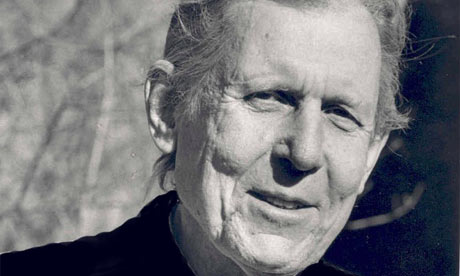
Thomas Berry (1914 - 2009)
The late Passionist monk and priest Thomas Berry parts company with some of the traditional teaching of the Catholic Church in his 1988 book The Dream of the Earth. He charges our traditional belief system with being too oriented toward the soul's redemption "out of" — away from — this created world. Now, in view of the several environmental crises which humankind faces, he says we need to be more earth-aware and creation-centric.

This is the sixth installment of my ongoing series about his book. In it, I'll discuss his chapter 12, "Patriarchy: A New Interpretation of History." As you can tell from the title of the chapter, its subject is one that will stick in the craw of many Catholics, as our church is one of the more patriarchal institutions on the face of the earth.

First, a brief recap of my earlier posts. Berry's book is about the need for our society to move from the current industrial-technological-consumerist age into a new "ecological age." We need to do this because we are turning our planet slowly but surely into a toxic trash heap. We are destroying the earth's rainforests and other forested land, exhausting or destroying the topsoil we grow food on, poisoning the water we drink, and polluting the air we breathe. In doing all these things as the supposed means of satisfying human aspirations — most of which are bogus needs created entirely by the ceaseless stimulus of constant advertising — we are killing countless living species along with the complex ecosystems they live in.

In this collection of essays that can stand alone or be read as a group, Berry lays out what he considers the most significant facets in the history of Western Christian thought. The Western view of the world, starting in classical Greek and Roman times, is constituted mainly by the history of Christian belief and, in more recent centuries, by secularist-humanist derivatives of medieval church teaching. Thought patterns born long ago in the West, Berry contends, underlie our current worldwide age of industrial, scientific, technological striving. It is that striving that is now destroying the earth.

"Patriarchal" vs. "Matricentric"

Chapter 12, "Patriarchy: A New Interpretation of History," is an indictment of a particularly virulent thought pattern that began in Old Europe some 5,000 years ago. Today that thought pattern has been labeled "patriarchy."

The word "patriarchy," according to The Merriam-Webster Dictionary, refers to "social organization marked by the supremacy of the father in the clan or family, the legal dependence of wives and children, and the reckoning of descent and inheritance in the male line; broadly: control by men of a disproportionately large share of power."

I'm admittedly guessing about some of this, but apparently Berry is placing the start of the patriarchal period in Europe at roughly the beginning of the Later Neolithic age ... if not slightly before. In this essay, he gives not one but two dates for the onset of patriarchal culture in Europe: 3500 B.C. and 4500 B.C. According to Wikipedia's article on the Neolithic Age, that age ended in Europe in about 3000 B.C. Specifically, the Later Neolithic period in Europe ran from 3500 to 3000 B.C.

The arrival of patriarchal culture in Europe coincided, Berry says, with the arrival of conquering tribes that imposed control over Europe's settled agrarian cultures. The conquerors' society was nomadic and patriarchal. On the other hand, the settled agricultural denizens of Old Europe — the folk whom the invading tribes conquered, that is — had a matriarchal social organization. We know this because archaeologists find that their primary deities were female. They were goddesses, not gods. Accordingly, we can confidently call the pre-patriarchy age in the numerous agrarian locales of Europe "matriarchal" or "matricentric."

Berry says patriarchy was long associated with cities/civilizations such as Rome, while matriarchy was found mainly in rural areas.

Matricentric Culture

The matricentric cultures of Old Neolithic Europe were egalitarian, democratic, and peaceful. According to Judy Chicago, a feminist archaeologist whom Berry cites, the "female-oriented agricultural societies gradually gave way to a male-dominated political state in which occupational specialization, commerce, social stratification, and militarism developed" (p. 143).

Sound familiar? Our society today extols three of those four values — the exception being social stratification, as we are ostensibly more egalitarian and democratic. (Yet in terms of income stratification and wealth stratification, it seems we may have little to brag about.)

Patriarchy and Dominion

Not only were occupational specialization, commerce, social stratification, and militarism four of the primary motifs associated with early patricentric cultures. At a more basic level, the male drive toward conquest and dominion was (and remains) deeply characteristic of patriarchy.

The ecofeminist rap against our patriarchal culture is (in part) that patricentric conquest and dominion of the earth has left us playing out a currently unsustainable pattern of behavior. In the name of exercising control over Mother Nature, we are turning the abundance of natural resources of our planet into an overabundance of trash, waste, and toxicity.

Matricentric Attitudes Yet Endure

Berry's position on such matters is that we need to move from our present "patricentric" view to a new, "omnicentric" one that will put neither gender above the other. Our new ecological age will, however, draw much inspiration from the matricentric attitudes of Old Europe. These matricentric attitudes, it turns out, have been preserved right through the last five patriarchal millennia by virtue of an ineradicable substratum of belief and practice. Berry writes:
Even in this period of patriarchal dominance the heritage of the earlier matricentric phase has continued as an undercurrent within Western cultural traditions. Matricentric ways of thinking and their associated rituals seem to be among the component elements of our submerged cultural traditions. They carry on an earlier wisdom associated with alchemy, astrology, the pagan nature rituals, and the hermetic teachings [the teachings of a magical and religious movement stemming from the philosophy of Hermes Trismegistus]. These hidden traditions, considered destructive and unacceptable within the religious-humanist traditions of [today's] Western society, need reconsideration for the contributions they make to our understanding of the universe, its deeper modes of functioning, and the proper role of the human. The carry some of the most creative aspects of our civilization. In their symbolic modes of expression, especially, they enable us to go beyond the rational processes derivative from the classical philosophers and [also from] our later theologies. Through these traditions we have [for instance] recovered our understanding of the archetypal world of the unconscious. (p. 145)

Archetypes of the Unconscious

The "archetypal world of the unconscious"? What is that?

Unconscious archetypes, according to the early-twentieth-century psychologist Carl Gustav Jung (pronounced "YOONG"), generate universal symbols that are used in myths and heroic narratives across all cultures. We each natively carry all of these universal archetypes in our bodies and brains, though they remain unconscious until they are brought up to conscious awareness.

The process of bringing archetypal wisdom up to the level of conscious awareness can lead to "self-realization" — which in a male of the species involves actualizing the universal archetype of the feminine(!) that lurks buried within every man's psyche.

Ecofeminism Depicted
Archetypes, if they have not yet been lifted to the level of consciousness, typically express themselves as (often cryptic) symbols in dreams, myths, and works of art.

The image at left is not all that cryptic. It unites the deep archetypal idea of the feminine with the deep archetypal idea of the natural world.

It accordingly makes a fine icon for Ecofeminism.


What is Ecofeminism?

Endorsed by Berry in his book, Ecofeminism is a movement that sees ...

* * *

Whoa!

After starting that last sentence, I got called away and never finished it. Then commenced a string of problems that cropped up and kept me from getting back to writing this post for several days.

When I resumed, I ran into another problem: I could not find a short, pithy quote from Berry's "Patriarchy" chapter that would complete the sentence for me. Berry manages to convey what Ecofeminism is obliquely, by hinting at what life in the settled agricultural communities of Old Europe may have been like, before the conquest by the patriarchal peoples who brought with them their male deities. Ecofeminism is accordingly a movement that would unite the goals of today's ordinary feminism with those of the ecology movement by hearkening back to the values cherished in the matricentric days of over 5,000 years ago.

The Later History of Patriarchy

Admittedly, Berry's "Patriarchy" chapter frightened me. In it, Berry shows how a male-centered, patriarchal outlook has typified our culture since the days of the earliest true cities in Egypt and Sumeria. Those quasi-empires were succeeded by the true civilizations of Mesopotamia, Babylon, Persia, Greece, and Rome ... all of which had rulers that were either male deities themselves or the anointed agents of the chief male gods.

As such, their authority was written in the stars. The whole cosmic order that undergirded natural phenomena bespoke their unrivaled status. One thinks of the sign of the Messiah's birth given by the Star of Bethlehem, or that by which the Once and Future King, Arthur, was identified, when only he could pull the sword Excalibur from the stone imprisoning it.

That much I could swallow. I could also handle it when I read how, according to Berry, patriarchy instilled its values into our ecclesiastical establishment from its earliest days on, and in our nation-states when they came into existence in more recent centuries.

Patriarchy and the Modern Corporation

When Berry starts talking of how those same masculine tendencies towards rapacity and conquest characterize our modern corporations, which he says are the primary agents responsible for plundering our environment today, I start to squirm. It's not that I don't see his point. Rather, it's that I do see his point, and I don't like it very much.

I would have to be stupid or blind not to see that my whole lifestyle depends on our major corporations. I would not be typing this blog post into my computer, for instance, were it not for the providence of Apple, Inc. I look out my window at my car, parked in front of my house, and see a product of the British Mini Cooper company, a corporation that is owned by BMW in Germany. My breakfast cereal was made by General Mills, or Post, or Nabisco. The list goes on and on.

If corporations are rapacious (and they are) and if their rapacity is a reflection of the patriarchal outlook that began 5,000 years ago (which it is), then my whole worldview is wrong, wrong, wrong. The entire pattern of my life is pathologically skewed. That's scary.

A Bitter Pill To Swallow

Berry goes on to state:
What is needed is a profound alteration of the pattern, not some modification of the pattern. To achieve this the basic principle of every significant revolution needs to be asserted: rejection of partial solutions. The tension of the existing situation must even be deliberately intensified so that the root cause of the destructive situation may become evident, for only when the cause becomes painfully clear will decisive change take place. The pain to be endured from the change must be experienced as a lesser pain to that of continuing the present course.
These four patriarchal establishments [empire, church, nation-state, corporation] have made a world that carries with it a certain pathos. Assuredly there is grandeur in many of its achievements. Enormous energies have been expended in what has been thought to be beneficial to the larger human process. To realize suddenly that so much of this has been misdirected, alienating, and destructive beyond anything previously known in human history is a bitter moment indeed. ... 
None of the other revolutionary movements in Western civilization has prepared us for what we must now confront. ... It is possibly the most complete reversal of values that has taken place since the Neolithic period (pp. 158 - 159)
Oh, woe and dread. Then Berry goes on:
The revelatory experience and the classical humanism on which our civilization has been founded — these are under challenge. Presently they are being severely criticized as manifestations of a biased mentality and as the context, if not the cause, of the universal devastation of the earth that is now taking place. (p. 159)

Need for a New Dream Vision

In his later chapter "The Dream of the Earth: Our Way into the Future," Berry identifies all the major thrusts of human cultural development with "dream visions" and "revelatory experiences" of the type associated in tribal societies with shamans. The biggest things we humans generate come out of intuitive, extra-rational visions, not out of reason or philosophy. No matter what our reason tells us after the fact, we are ever in the grip of an original myth.

That in itself is not bad, for our myths and revelatory visions derive from our "genetic coding." Our genes create the archetypes which express themselves as symbols in our sleeping or waking dreams. Those dreams power our changing, evolving "transgenetic cultural coding" (p. 200), each historical version of which provides "the functioning norm of a human community."

All we make, first we dream.

And our genes are the product of the earth itself, in its never-ending evolutionary capacities ... which in turn are expressions of the evolutionary capacities of the entire universe in which we arise.

Revelatory Experiences as Pathological

That would seem to me to suggest that the "revelatory experiences" that power our civilizations would be reliably beneficial, not pathological. However, according to Berry our civilization has been founded on one that has paradoxically turned into the context or cause of "the universal devastation of the earth that is now taking place."

How that could happen is a mystery Berry does not truly address. I personally feel it has something to do with what the literary critic and biblical scholar Northrop Frye, in his books The Great Code and Words with Power, called "demonic parody." A demonic parody, according to Frye, is an expression of what Berry would call a true "revelatory experience," but one which twists the original mythic motif in such a way that it becomes ugly and harmful rather than helpful and beautiful.

Prophecy and Dread

Yet that is but an intellectualization I use to avert my eyes from the dread which Berry's dire prophecy stirs in me. I simply don't want to confront the order of magnitude Berry says our revolutionary confrontation of patriarchal environmental atrocities must take on.

Which is surely why, after I wrote the beginning of my earlier unfinished sentence about the definition of Ecofeminism, I abruptly developed a lower back malady which prevented me for several days from sitting at my computer and trying to finish that sentence in an unthreatening, antiseptic way that I now see couldn't be done in the first place.

The material human body, in Berry's view, is wiser than the reasoning mind. The body imposes its own true nature on our plans and intentions. My body was telling me, "Stop! You are heading into dangerous territory. You are being called on to believe things that deep down you already realize are true ... but that you don't want to admit are true. You need to respond to that crisis of belief in a constructive, creative way that mere intellectualizations are designed to bypass. Think (and dream) some more before you try to finish that sentence!"

Wednesday, June 29, 2011

The Dream of the Earth, Part 5

Thomas Berry (1914 - 2009)
Passionist priest-monk Thomas Berry, judging from his 1988 book The Dream of the Earth, parted company with much of the traditional belief system of the Catholic Church. In earlier posts in this ongoing series, I've laid out his thought regarding our need to embark upon a new, ecological age. Now I'd like to consider the question of whether Berry believed our current modes of religious and spiritual expression can be maintained in the new age.

In doing so, I'll be exploring his chapter "The New Story." This, chapter 10 in his book, is the first in which he pins down to any great extent why the religious modes we inherit today in our Christian West need to change.

Berry writes that during the late classical and early medieval periods, up until the middle 1300s, Western Europe told itself the religious story rooted in the Old and New Testaments. A primary part of the story consisted of the events of creation as told in the Book of Genesis. According to that story, all was going well in God's creation until
... the original harmony of the universe was broken by a primordial human fault [the Fall in the Garden of Eden], and that necessitated formation of a believing redemptive community that would take shape through the course of time. (p. 124)
That's the way the basic Genesis story was interpreted in that day. Berry tells of how this interpretation shaped our world:
Human history was [seen in that era as] moving infallibly toward its fulfillment in the peace of a reconstituted paradise. ... However severe the turbulent moments of history through the late classical and early medieval periods, these at least took place within a secure natural world ... (pp. 124 -125)

Death Comes Knocking at Europe's Door

From "The Dance of Death"
by Michael Wolgemut (1493)
In such a secure world, the "basic human or spiritual values" of medieval Europe were never in doubt. Then, beginning in 1347, Europe was devastated by the Black Death (see "The Dance of Death" at left). "It is estimated," Berry writes (p. 125), "that this plague ... had by 1349 killed off perhaps one-third of [Europe's] population. Almost half of the people of Florence died within a three-month period."

Meanwhile, though Berry doesn't mention it explicitly by name, the Hundred Years' War (1337 - 1453) was raging in France and England. Yet Berry alludes to "other social disturbances of the fourteenth and fifteenth centuries," and one imagines this state of near-constant warfare provoked many of them.

Terrible plagues continued to ravage the populace from time to time, for, Berry writes, "In London the last of the great plagues was [as late as] 1665." These devastating plagues and the concurrent social disturbances had two huge effects on our subsequent history.

The first was one that impelled a large part of Western thought and belief "toward a religious redemption out of the tragic world." Given that we as yet knew nothing about disease-causing microbes, there was "no explanation of the plague, other than divine judgment on a wicked world [and so] the answers most generally sought were in the moral and spiritual order, frequently outside the orthodox teachings of the church."

Faith Turns Fervent, Even Esoteric

There were two branches of this trend toward fervid faith. One of them took "recourse to supernatural forces, to the spirit world, to the renewal of esoteric traditions, and sometimes to pre-Christian beliefs and rituals that had been neglected in their deeper dynamics since the coming of Christianity." Here, one imagines, is the explanation for the rise of witchcraft and the occult arts in that time ... which in today's world are echoed in Wiccan and Neo-Pagan practices and in the rise of New Age religion in general.

The other branch of ardent spiritual commitment involved "an intensification of the faith experience" within traditional Christianity. This was:
... an effort to activate supernatural forces with special powers of intervention in the phenomenal world now viewed as threatening to the human community. The sense of human depravity increased. The need for an outpouring of influences from the higher numinous world was intensified. Faith dominated the religious experience. Redemption mystique became the overwhelming form of Christian experience. (p. 126)

An Rx for Terror: Secular Progress

The plagues and social disturbances of the late medieval period had that first large effect on Western history. There was a second. This one "led eventually to the scientific secular community of our times" as it "sought to remedy earthly terror not by supernatural or religious powers, but by understanding and controlling the earth process."

So, between 1620 and 1725, seminal scientific treatises by Francis Bacon, Isaac Newton, and Giambattista Vico appeared. In that same era the telescope and microscope were invented. The mathematical field of calculus, "the supreme instrument of modern science" (p. 127), was discovered. And a new "scientific priesthood" sprang up as "the celestial bodies were scrutinized more intently, the phenomenon of light was examined, new ways of understanding energy evolved."

The new secularist bible proceeded to extend its hold over us. In 1859, Charles Darwin's The Origin of Species explained the what and how of evolution, in response to the fact that:
... evidence was appearing in the realms of geology and paleontology indicating that there was a time sequence in the very formation of the earth and of all lifeforms upon the earth. The earth was not the eternal, fixed, abiding reality that it had been thought to be. It suddenly dawned upon Western consciousness that earlier lifeforms were of a simpler nature than later lifeforms, that the later forms were derived from the earlier forms. The complex of life manifestations had not existed from the beginning by some external divine creative act setting all things in their place. The earth in all its parts, especially in its lifeforms, was in a state of continuing transformation. (pp. 127-128)
Next, in the later nineteenth and early twentieth century, came much experimental work leading to the physical theories of quantum mechanics and relativity. These were the twin advances in physics by which humankind developed a fuller understanding of "the infra-atomic world and the entire galactic system" (p. 128).

The Earth as "It," Not "Thou"

In the wake of the Black Death, then, came two historical movements in the West. One began as an attempt to break the hold exerted over our souls by erstwhile human attempts at prayerful harmony with a fickle, faithless world. The other began as an attempt to use science and technology to fix a broken, treacherous world. Both movements deprecated the value of the physical earth per se. The earth — Mother Nature — was seen not as "Thou," but as "It." "It" needed to be transcended or else "It" needed to be mended ... but "It" was to be viewed no longer as a splendid revelation of glorious divinity.

"Thou" and "It" are terms I borrow from Martin Buber's I and Thou, a book which posits that when we treat a "Thou" such as you or me not as a person having subjective inner experiences but as a utilitarian thing or object to be exploited and tosses aside — as an "It" — we commit the ultimate atrocity.

Berry teaches us the same thing not just about one another but about the whole earth, with all its living and nonliving forms ... and indeed about the entire universe.

That seems at first to be incomprehensible, no? How can we say that the earth, much less the universe, has consciousness and subjectivity, the way we have? Berry's answer is that we are, in effect, the universe's subjective, conscious, self-aware eyes and ears. The unfolding evolution of the universe made life on Earth, then made us as Earth's only conscious lifeforms. We are inseparable from the process that made us and sustains us. If we are sentient, so too is the process that generated us.

Telling Ourselves the "New Story"

"The New Story" — Berry's chapter title — is the story of the unfolding evolution of the universe that made us. Berry tells the story this way:

The story of the universe is the story of the emergence of a galactic system in which each new level of expression emerges through the urgency of self-transcendence. Hydrogen in the presence of some millions of degrees of heat emerges into helium. After the stars take shape as oceans of fire in the heavens, they go through a sequence of transformations. Some eventually explode into the stardust out of which the solar system and the earth take shape. Earth gives unique expression of itself in its rock and crystalline structures and in the variety and splendor of living forms, until humans appear at the moment in which the unfolding universe becomes conscious of itself. The human emerges not only as an earthling, but as a worldling. We bear the universe in our beings as the universe bears us in its being. The two have a total presence to each other and to that deeper mystery out of which the universe and ourselves have emerged. (p. 132)


Told that way, the story is one which resents all attempts to drive a wedge between us and the natural order from which we emerged. Yet that is exactly what the "believing redemption community" today does, whenever it rejects evolution science. In doing that, Berry shows, the anti-Darwin portion of the faith community is heir to the large skein of Western thought and belief that in the wake of the Black Death in the fourteenth century moved "toward a religious redemption out of the tragic world."

The new story we can tell today likewise resents attempts to drive a wedge between us and "that deeper mystery out of which the universe and ourselves have emerged." Yet that is exactly what many scientists have done in their "wish to experience the real in its tangible, opaque, material aspect" and in their "demand for objectivity and the quantitative aspect of the real" (p. 133). Science has in the recent past preferred to play down what it now, according to Berry, can no longer ignore: "a growing awareness of the integral physical-psychic dimension of reality."

An Integral View of Reality

Berry feels that science is already moving toward such an "integral" view of reality. The question is whether the "believing redemption community" — including us Catholics, among others — is doing likewise. In the main, I believe Berry's answer to that query is no.

He is, however, gentle in his chiding of religious faith for its resistance:
The believing redemption community is awakening only slowly to this new context of understanding. There is a fear, a distrust, even a profound aversion, to the natural world and its processes. It would be difficult to find a theological seminary in this country that has an adequate program on creation as it is experienced in these times. The theological curriculum is dominated by a long list of courses on redemption and how it functions in aiding humans to transcend the world, all based on biblical texts. Such a situation cannot long endure, however, since a new sense of the earth and its revelatory import is arising in the believing community. (pp. 133 - 134)

What About Values?

"Revelatory import" in the abstract is one thing. What about the question of "where the values are" (p. 133) in all this? How are the values we live by to be derived, and how are they to be transmitted to succeeding generations? In a passage that I, as a Catholic, especially relate to, Berry says:
In transmitting values through the sequence of generations, we no longer have the initiation techniques whereby the vision and values of earlier generations were transmitted to succeeding generations. Yet there is an abiding need to assist succeeding generations to fulfill their proper role in the ongoing adventure of the earth process. In the human realm education must supply what instinct supplies in the prehuman world. There is need for a program to aid the young to identify themselves in the comprehensive dimensions of space and time. This was easier in the [classical] world of [Plato's] the Timaeus, where the earth was seen as an [unchanging] image of the eternal Logos. In such a world Saint Thomas [Aquinas] could compose his masterful presentation of Christian thought, and the place and role of the human within that context. This could then be summarized in catechetical form and taught to succeeding generations. (pp. 135 - 136)
Clearly, Berry thinks it is no longer valid just to catechize our young as to the supposedly timeless wisdom of Thomas Aquinas about a supposedly static universe. Sorry, my fellow Catholics, but (as Berry writes) this "later, more philosophical mode of Christian explanation provided in our theologies" will no longer do. (He is talking here about the philosophy-heavy theological understanding which supplanted what was originally a more narrative-based and direct relationship with Christ as the Christian centuries wore on.)

Instead, we today need "a new way of understanding values":
We are returning to a more traditional context of story as our source of understanding and value. ... It is of utmost importance that succeeding generations become aware of the larger story outlined here and the numinous, sacred values that have been present in an expanding sequence over the entire time of the world's existence. Within this context all our human affairs — all professions, occupations, and activities — have their meaning precisely insofar as the enhance the emerging world of subjective intercommunion within the total range of reality. (p. 136)

Following Our Bliss

So, in broad outline, what are these "numinous, sacred values"? What do we need to be doing, here in this unfolding universe of ours today? Berry answers that the most important thing of all is to articulate our own inner reality:
Interior articulation of its own reality is the immediate responsibility of every being. Every being has its own interior, its self, its mystery, its numinous aspect. (p. 135)
The guru of myth Joseph Campbell put this same insight more succinctly: "Follow your bliss." Berry goes on:
To deprive any being of this sacred quality is to disrupt the larger order of the universe. Reverence will be total or it will not be at all. The universe does not come to us in pieces any more than a human individual stands before us with some part of its being. ... Here we come to the further realization that the universe is coherent within itself throughout the total extent of space and the entire sequence of its time development. This web of relationships throughout the universe is what first impinges on our waking consciousness. It is this deepening association within the universe that enables life to emerge into being. The living form is more individuated, with greater subjectivity and more intensive identity within itself and with its environment. All these factors are multiplied on a new scale of magnitude in the realm of consciousness. There a supreme mode of communion exists within the individual, with the human community, within the earth-human complex.
Then come these especially beautiful words:
Increased capacity for personal identity is inseparable from this capacity for mutual presence. Together this distance and this intimacy establish the basic norms of being, of life, of value.
Amen to that!

Monday, June 27, 2011

The Dream of the Earth, Part 4

In the earlier posts in my The Dream of the Earth series, I've been setting forth the ecologically prophetic thought of the late Passionist priest-monk Fr. Thomas Berry, as detailed in his 1988 book The Dream of the Earth. Berry (1914 - 2009) had what I'd call a "panoptic view" of our world and universe. He presents in his book a comprehensive, panoramic view of all that is truly important in understanding the ecological age we presently need to be embarking on and how it must contrast with the earlier ages of humankind.

Berry says we can begin transitioning into an ecological age when we realize that science has given us a new creation story. In the twentieth century, human scientists discovered how to listen to the cosmic background radiation reaching us from the far fringes of the universe, and from it to discover the age of the cosmos, which is some 14 billion years old. We figured out that it all started with a big bang, a veritable explosion out of nothing of huge amounts of energy, some of which firmed into the first subatomic particles. A rapid evolution took place over the first fractions of a second, then over larger and larger durations of time, as the primordial stuff that eventually coalesced into galaxies and stars sped outward alongside the expanding reach of the cosmos.

Some of the starstuff, deep in stars' interiors, was turned into elements heavier than hydrogen and helium. After being expelled from an exploding star and traveling amid its own galactic cousins, a rich mix of chemical elements cooled and made planets, including Earth. Our planet appeared some 4.6 billion years ago. The first living cells arose on it 3.7 billion years ago. Complex cells containing a nucleus and other internal structures appeared 2 billion years ago. Multicellular life, 1 billion years ago. The earliest aquatic animal life is 600 million years old. Plants on land, 475 million years old. Mammals, 200 million years. Flowering plants, 130 million years. Our own genus of mammals, Homo, 2.5 million years. Our own species in particular is only 200,000 years old.

Berry focuses intently on the fact that our kind is the only known species in the universe that is conscious, in the sense of being sentient or self-aware. Only we can contemplate the universe in its evolving totality and consider our destined place in it. This is what gives us our meaning today, both collectively and individually.

Our species has always had its creation stories, in every culture and every time. Our Western, Judeo-Christian culture's first creation story — the first of the two told in the Book of Genesis — concerns what the Lord God did "in the beginning" to make the world and all its living kinds. (Our second creation story is the one about Adam and Eve in the Garden of Eden.)

From our societies' creation stories, no matter what our religious culture and time period, we have always derived our idea of the world's meaning and our own identity. For example, when we are told in Genesis, chapter one, verse 31, "And God saw everything that he had made, and, behold, it was very good" — having heard our own species' inception told of earlier in the same story — we know something crucial about who and what we are.

Now, today, we have a scientific creation story — the big bang, etc. — that unites us all, in every culture. And not just geographically in a spatial dimension, but evolutionarily in the dimension of time. All of cosmic evolution since the big bang has had as its upshot a species which can contemplate ... all of cosmic evolution since the big bang.

Our Disastrous Impact on the Earth

Yet this same species has altered the geology, chemistry, and biology of its own planet in disastrous ways, Berry says. Not only is what we have done to plunder the earth unconscionable, it is unsustainable as well. We will have to change our ways.

That is why we have of necessity begun to embark upon an ecological age. And in that age, there will be a reconfiguration of our entire palette of Western religious and spiritual values.

In his chapter called "Christian Spirituality and the American Experience," Berry points out that, as Americans, our country's background derives mainly from the historically Christian societies of Western Europe. This is true of American Catholics such as I, and it is also true of all Protestant Americans. Berry says of Western spirituality in general (pp. 113 ff.):
While the positive aspects of Western spirituality can be seen throughout the American experience, there are also the negative, alienating, and even destructive aspects of the same spiritual traditions. That traditional Western spiritualities have not enabled their followers to mitigate or even to understand or protest the terrifying assault of American society on the natural world is evidence of a certain incompetence or lack of understanding in these traditions.
Our inherited spiritual traditions, Berry says, are far from being totally to blame for our urge to plunder the environment without shame — but they are nonetheless "a pervasive force of great significance in understanding the total process."

Our Problematic Religious Traditions

What then are the aspects of our traditional religious belief systems that facilitate our carelessness about the living systems of the earth? Berry begins his answer by making this point:
When we inquire into the reasons for this inefficacy in our spiritual traditions, we might observe that our identification of the divine as transcendent to the natural world makes a direct human-divine covenant relationship possible, but also we negate the natural world as the locus for the meeting of the divine and the human. The natural world becomes less capable of communicating divine presence. This makes possible the conception of the natural world as merely external object.
This is a key point. From a Catholic Christian point of view, I have to recognize that Berry is largely right. Our religion tells us that we Catholics have (through the Catholic Church) a "direct line" to God in sacrament and prayer. On the other hand, we Catholics also have a highly sacramental view of the world, such that various physical or material objects or events can, in effect, "show" us God. We can see God within or behind these things or acts, not just above and beyond them.

Other Christians, however, are not so sacramentally oriented. Their "direct line" to God is a shorter one. For many of them, there is no church mediating between them and the divine — just Scripture. Nor are there sacraments in the Catholic sense of "visible signs of invisible grace." These Protestant Christians have historically had, at least compared with us Catholics, more to do with forming the spiritual orientation of the West as it pushed into the age where science, technology, and industry have ruled the day. For Protestant Christians especially, I have to think, the natural world has become "less capable of communicating divine presence."

Our Traditional Spiritual Covenant

Berry next moves on to a second aspect of traditional religious belief that has helped set the environment up for despoliation by us:
A further difficulty results from our insistence that the human is a spiritual being with an eternal destiny which is beyond that of other members of the created world. We were related to the divine by a special covenant. Our sense of being integral members of the earth community was severely weakened through both of these commitments. We thought that we were elevating the human when in reality we were alienating ourselves from the only context in which human life has any satisfying meaning.
That we humans alone have souls and that our soul will leave this earth to go to God when we die means, at its crassest, that we can leave behind us any amount of trash and spoilage when we go — in much the way that some people will leave a motel room in utter disarray when they check out.

Mind over Crass Matter

Berry's third unfortunate aspect of our traditional Western value system is a bit trickier to decode:
A third difficulty came later, when not only the divine and the human were taken away from intimate presence to the natural world, but also when the inner principle of life in natural beings was taken away in the Cartesian period. The concept of crass matter emerged as mere extension, capable only of externally manipulated and mechanistic activity. We entered onto a mechanistic phase in our thinking and in our basic norms of reality and value. If this has proved to be enormously effective in its short-term achievements, it has been disastrous in its long-term consequences.
The name of the French philosopher René Descartes (1596 - 1650) has the adjectival form "Cartesian." Cartesian philosophy is epitomized by the saying, "I think, therefore I am." Put another way, "My mind constitutes my whole true being." The implication is that my body is merely what my mind uses to allow it to mechanistically manipulate crass matter — in fact, that my body has no "inner principle of life" and is itself nothing but crass matter.

When Cartesian philosophy became dominant in the age of Isaac Newton (1643 - 1727), it set science up to become the handmaiden of a new "mechanistic phase" of human culture. Our "basic norms of reality and value" followed suit. With our "mind" wholly separated from all physical "matter," we felt free to exploit crass matter to the fullest in pursuit of our human imperatives.

Secular Borrowings from the Christian Tradition

Even though secularism and atheism have asserted themselves in Europe and in much of America in recent centuries, it is (to me, not to Berry) surprising the degree to which values that came originally from Christian beliefs have adapted themselves to the secularist-humanist scientific-industrial age that has been our cultural backdrop in the West for the last 400 years or so.

Berry describes our most prominent borrowed-from-Christian-tradition value this way:
Another significant factor in the American experience is found in the Christian doctrine of an infrahistorical millennial age of peace, justice, and abundance to be infallibly attained in the unfolding of the redemptive order. ... While the millennium was originally considered a spiritual condition to be brought about infallibly by divine providence, it was later interpreted simply as an age of human fulfillment to be brought about by human effort and human skill in exploiting the resources of the earth. ... When [the] millennial age did not appear by divine grace, the American people felt an obligation to raise it up by human effort.
The millennium is of course prophesied in the Book of Revelation, the final book of the Christian Bible. When the Lord returns to earth as Christ our King in what is called the Second Coming, he will rule over the planet for a thousand years — a millennium. Upon the earth in that period there will be perfect peace, ideal justice, and infinite joy.

Reach for a Secular "Millennium"

Berry is saying that in our secular striving to perfect the lot of humankind, we have tried by our own devices to produce just such a millennial "wonderworld." However, what we are actually doing is increasingly turning our planet into a despoiled "wasteworld."

At this point, I have to admit to some initial skepticism about that claim of Berry's, that a secularized "millennial vision of a blessed future" deserves a huge amount of the blame for having "left all present modes of existence in a degraded status." I at first questioned the putative millennium-oriented template that Berry says underlies his description of our initial situation in America:
All things were in an unholy condition. Everything needed to be transformed. This meant that anything unused was to be used if the very purpose of its existence was to be realized. Nothing in its natural state was acceptable.

The Compulsion To Use (Up)

That version of Berry's thesis failed to resonate with me. But the next thing he said exploded all my doubts:
This compulsion to use, to consume, has found its ultimate expression in our own times, when the ideal is to take the natural resources from the earth and transform them for consumption by a society that lives on ever-heightened rates of consumption. That consumption has something sacred about it is obvious from the central position it now occupies. This is all quite clear from the relentless advertising campaigns designed to convince the society that there is neither peace nor joy, neither salvation nor paradise, except through heightened consumption.
Yes! Amen! When Berry couches our secularist-millennial urge in terms of the glorification of individual consumption, rather than of the more abstract concept of industrial production, I begin to see the light.

That we are programmed to consume goods in a frenzied trance not unlike that of ecstatic worshippers in a Holiness church is, I think, shown by the recent Black Friday — the day after Thanksgiving when stores slash prices in hopes that the sheer volume of sales will put their annual balance sheets in the black — when a shopper was trampled to death by rampaging hordes that had been waiting impatiently in the wee small hours for the door of an emporium to be unlocked. Everybody wanted to be the first in line to grab one or another of the quantities-limited "doorbuster" discounts. No one bothered to notice when somebody fell and was pummeled to death by their flying feet.

So when Berry asserts that, historically, "the ultimate basis of our ecological difficulties lay in our spirituality itself as it has come down to us through the centuries," I am all ears.

Berry's Rx for Our Spiritual Malaise

What, then, is the remedy? What can we do today to set aside what Berry calls the "dark aspects" of our own religious and spiritual traditions? What can lead us all into the ecological age?

Berry says our situation ...
... could be remedied only by a more intimate human association with the natural world in its evolutionary unfolding.
This is not just a matter of visiting unspoiled seashores and national parks on our vacation trips. That would surely be part of it, but unless we develop our awareness of the "evolutionary unfolding" of what we are immersing ourselves in — how it is also our evolutional unfolding as well — we're missing more than half the point. "Nature" isn't a thing to take snapshots of, it's a process to be witnessed in its eons-long evolution.

The Great Religious Traditions as Ongoing Processes

So, too, are the traditions of the "great classical religious civilizations" that formed our present age:
By definition any "tradition" is a process, not some established, contained, unchanging mode of believing, thinking, or acting. There is no definitive Christianity or Hinduism or Buddhism, but only an identifiable Christian process, Hindu process, or Buddhist process. The historical reality is the reality of the tradition. (Emphasis added.)
We Christians need to guide the trajectory of our own tradition as it moves into the future alongside "a much more comprehensive change in human consciousness" — and here we find one of Berry's characteristic references to how we humans are uniquely able to ponder our own evolution — that is "brought about by the discovery of the evolutionary process." Berry continues:
Discovery of this unfolding process of the universe can be considered a moment of supreme significance not only for the human community, but also for the universe itself, especially in its expression on the earth as the only biospiritual planet we know.
"The primordial atomic particles," writes Berry in describing the first moments of time following the big bang, "held within themselves the destinies of all that has followed, including the spiritual shaping of the human" order into its present "psychic structure ... and spirituality." In other words, all that has ever happened, including the formation of who and what we are, is part of one single process of unfolding by and within the universe. We need now to deflect the course of our future theology to reflect on that fact.

The Importance of Tradition

Can't we just start with blank pages and write new theology books? Not if Berry is right and theological traditions are evolutionary processes that possess their own integrity over time. We have several such traditions in our human history: Judeo-Christian, Hindu, Buddhist, etc., and in the new age all of them must come together, says Berry, to form branches of the same tree of ecological wisdom, rooted in a common awareness of our new creation story.

Berry says the switch from our current age of plundering the natural environment to the needed new age of putting human affairs in integral touch with nature will come quite hard. We all wear opaque blinders about this, owing to what Berry refers to as our "cultural coding."

Cultural Coding

Cultural coding has to do with the way our scientific-industrial age has falsely programmed us to believe that the way in which our technology has "altered the planet in its physical structure and the biosphere in its most basic functioning" reflects some "sublime human-spiritual accomplishment" on our part.

That's because, writes Berry, "the negative side of our cultural determinations is generally hidden from consciousness. In this sense, the [present] culture depends on what might be called an altered state of consciousness, a trance state." As a result of this degenerative trance, we have sacrificed the "extraordinary sense of the divine" formerly visible within and behind the natural world.

A case in point, though Berry does not expressly mention it: most of us turn a blind eye to the practice of blowing the tops off mountains in the Appalachians so coal can be extracted and burned. Doing so produces, not just electricity, but also the acid rain that falls on the Appalachians, poisoning the teeming waterways and eating away at the survival of the mountains' extraordinarily rich flora and fauna. The more the Appalachians are thus brought low and denuded of life, the harder it becomes to locate "an extraordinary sense of the divine" in the higher places of our land.

Ending Our Degenerative Trance State

Our destructive trance state can end only when:
... we begin to recover a reverence for the material out of which we were born, for the nourishing context that sustains us, the sounds and scenery, the warmth of the wind and the coolness of the water — all of which delight us and purify us and communicate to us some sense of sacred presence.
We must, then, create the "cultural coding" of a new age, rooted in our new creation story. We need to "complete" the story as currently told to us by science by adding:
... the more integral account that includes the [numinousness] and consciousness dimensions of the emergent universe from its primordial moment.
Berry says we need, more than anything else, to tell the story of this "meaningful universe" in its entirety. Then the story will become what he calls a "functional cosmology" by means of which we can come to experience "as the primary mode of divine presence" nothing less than "the intercommunion of all the living and nonliving components of the universe."

Lessons of the Universe

If the universe itself is now to become our "primary educator," as Berry prognosticates, what will be its main lessons?

Berry says "the basic characteristics of the universe as manifested from the beginning" are these:
  1. The unique and irreplaceable qualities of the individual
  2. [Each being's] inseparable bonding with every other being in the universe
Each of us as an individual is "unique and irreplaceable"; yet each of us in inseparably entangled with "every other being in the universe." Our cultural coding has long taught us the first of these cosmic principles. The second is a bit harder to grasp. Berry puts it this way:
The interrelatedness of the universe in its every manifestation is what establishes the unity of the entire world and enables it to be a "universe." Every atomic particle is immediately present to every other atomic particle in a manner that enables us to say that the volume of each atom is the volume of the universe. 
Berry is referring to the gravitational attraction that all particles exert on all other particles, no matter how far apart they are in the universe. This attraction "which holds every being in its identity and its relatedness finds its fulfillment in the meeting of individuals in the world of the living and in the full expression of affection at the level of human consciousness." No gravity, accordingly, no love.

Another scientific insight that reveals what Berry calls "the sense of communion at the heart of reality" is one he does not address. It is the idea of "entanglement," one of the mysteries of quantum physics. An example of quantum entanglement is this: two electrons, introduced to one another so that they become "entangled," then separated by any amount of distance — say, halfway across the universe — will continue to act as mirror images of one another. If one is given clockwise "spin," for example, the other will instantly develop counterclockwise spin.

We live in a quantum universe in the sense that all energy is made up of massless quantum packets called photons, and the mass of all particles, Einstein showed, is condensed-yet-diffuse energy. It appears from the laws of quantum mechanics that the constituent quantum packets of which everything is made, including every one of us, are intrinsically bound together in untold cosmic skeins of entanglement.

Ergo, no entanglement, no cosmos. No cosmos, no love.

A Creation-Oriented Spirituality

If we, in our new ecological age, are to take all the above sufficiently into account, we will need to develop, says Berry, "a creation-oriented spirituality." Such a spirituality will be centered upon our new, culturally universal creation story, and as such will need to remedy our present Christian "overattachment to the salvific role" of our own spiritual tradition.

Berry is here referring to the way our Christian doctrine emphasizes its redemptive or salvific aspects, rather than highlighting the ongoing process of cosmic creation that our new spirituality must instead accentuate. We are told by our religious credo that our souls are saved by Christ's death on the cross, suggesting that when we die, our souls will depart this material world en route to heaven. We have grown way too attached, Berry believes, to that one notion. From its narrow, uncharitable perspective on the material world we presently live in, what difference does it make how big a mess we leave in our "motel room" when we go?

That can't reflect the real heart of our spiritual story, though. If we improvidently change "God saw everything that he had made, and, behold, it was very good" into "God saw everything that he had made, and, behold, it was left spoiled and barren," then I think, right along with Berry, that we miss our true spirituality.

Wednesday, June 22, 2011

The Dream of the Earth, Part 3

In two earlier posts in my The Dream of the Earth series, I set out the ecologically prophetic thought of the late Passionist priest Fr. Thomas Berry, as revealed in his book The Dream of the Earth.

It was when I come to Chapter 8 in the book, "The American College in the Ecological Age," that I really prick up my ears. My feeling is that American colleges and universities, having lost sight of their primary mission, have been going downhill since at least the time, 1988, when Berry wrote his book. They have not followed, as they should have, the advice Berry gives in this chapter: to reground the educational curriculum in the intellectual and spiritual wherewithal that can move us from our current scientific-technological-industrial age into the ecological age we need to enter now.

The Six Courses of the New College Curriculum

Berry proposes (see pp. 99-108) that six courses be put at the center of the new curriculum. To begin with:
A first course, perhaps the most difficult, would present the sequence of evolutionary phases of this functional cosmology [in which we could relate to the universe mainly in terms of what it has done and made over its billions of years of existence]: the formation of the galactic systems and the shaping of the [basic chemical] elements out of which all future developments took place; the formation of the earth within the solar system; the emergence of life in all its variety upon the earth; the rise of [our quintessentially human] consciousness and human cultural development. 
This course, if related to the stars we see, the air we breathe, the water we drink, the food we are nourished by, the earth we stand on, the natural life of the environment as well as the cities we inhabit, could provoke a profound sense of mutual presence of the student and the universe to each other. But, most powerfully, the student, looking at his or her own hand and considering the time span of fourteen billion years that it took [for the universe] to produce such a hand, could feel a personal importance in the scheme of things.
Next comes:
A second course in the proposed curriculum ... on the various phases of human cultural development: the Paleolithic phase, the Neolithic village phase, the period of the great religious cultures [around the world], the scientific-technological phase [that we are just exiting], and the emerging ecological phase. This course would enable the student to envisage a comprehensive human development in its historical stages as well as in its cultural differentiation. ... Thus a person could more easily appreciate the genius of the time when the languages of the human community took shape, when the religions and arts and social forms of the world were developed, when the great humanistic cultures [that for the first time stressed a human individual's dignity and worth and capacity for self-realization through reason] were formed, when the elementary technologies were invented, [and the person would come to] appreciate how the modern sciences emerged within the European cultural region, and the need now for a new adjustment of human modes of being and activity to the dynamics of the natural world.
Next, there would be:
A third course [that] might deal with the period of the great classical cultures that has dominated human development over the past several thousand years and which has given to the human community [our] more elaborated patterns of linguistic expression, of religious formation, of spiritual disciplines; its critical understanding in the arts and sciences and literature [in the sense of "exercising or involving careful judgment or judicious evaluation"]; its political and social structures; its ethical and legal norms; its advanced craft skills; and its popular recreations.
Here, Berry alludes to the "widely differentiated" cultural patterns "that cover the planet" and that "will always be present in the psychic structure of the human." From each of these cultural patterns, Berry writes, we can learn
... the powerful impact of the divine, the need for spiritual discipline, the majesty of art, the great literature and music and dance and drama which befits the human mode of being, as well as [learning how we have achieved] economic well-being through technological skills.
Whatever the future holds, Berry says the ways of life established by our species' various cultural patterns will still constitute
... the main principles of civilized order known to the human community. These traditions are still the most formidable barriers to chaos that the human community possesses. The problem, of course, is that these traditions cannot remain static; they must enter a new phase of their own history. No longer will each [cultural pattern] be isolated from the others, no longer will the economies of the various peoples be independent of the others.
Moving right along, Berry proposes:
A fourth course that might be proposed is the study of the scientific-technological phase of human development, culminating in the awakening of human consciousness to the time sequence in the story of the universe, of the earth, of life, and of the human community. ... This is the age of dominance of the human over the natural [world]; it is also the period when the numinous presence pervading the universe [i.e., the awe-inspiring presence of divine holiness] was diminished in human awareness in favor of a dominant preoccupation with human reason, human power, and the sense of the machine as the dominant metaphor for understanding the reality of things.
Yet Berry admits that the scientific-technological phase has also been one in which a "profound social consciousness" developed that would partially offset the "machine" metaphor of our physical existence, and "medical advance" and other developments gave us "release from many of the physical and social ills of former times."

Next:
A fifth course could deal with the emerging ecological age, the age of growing intercommunion among all the living and nonliving systems of the planet, and even of the universe entire. [This age] should concern itself with reestablishing the human in its natural context ... [within] the integral function of the biosphere [i.e., the totality of all living organisms taken together with their environment], the healing of the damage already done to the dynamics of the earth, the fostering of a renewable economic order by integration of the human [species] within the ever-renewing cycles of the natural world as they are sustained by solar energy.
In this emerging ecological age, Berry writes, we will need a revised approach to law that safeguards "the inherent rights of natural realities ... of living beings to exist and not be abused or wantonly used or exterminated ... ."

Medicine in the new age would come to "envisage the earth as primary healer," assisted by the physician in his or her newly understood role as interpreter of our health-giving "intercommunion with the earth, with its air and water and sunlight, with its nourishment and the opportunity it offers for the experience of human physical capacities. (In relating to this at-first puzzling point of Berry's, I find I can bring to mind the numerous instances told of in Ken Burns' PBS TV series The National Parks, which I am presently re-watching, in which various individuals such as John Muir are said to have repaired to unblemished, sublime nature to heal themselves of earthly afflictions.)

As for religion in the new age, Berry says it "would perceive the natural world as the primary revelation of the divine, as primary scripture, as the primary mode of numinous presence. Christian religion would cease its antagonism toward the earth and discover its sacred quality."

Commerce, for its part, would "recognize that a base exploitation of the planet — the poisoning of earth, air, and water — cannot be justified ... . [Our base exploitation of nature] is ultimately self-destructive for commerce as well as for the human community and constitutes an ultimate blasphemy against a sacred reality."

The Sixth Course and Today's Changing Sexual Morality


Finally, Berry discusses one more curricular need:
A sixth course [that] could be a course on the origin and identification of values. This course would seek to discover within our human experience of the universe just what can be a foundation for [our ethical and moral] values.
I find this sixth part of the curriculum to be of special significance because, as Berry writes,
Such a foundation for values should supply for our times what was supplied in medieval times by the doctrine of natural law [as defined by Thomas Aquinas]. This becomes especially urgent since we no longer accept [Thomas's] earlier doctrine of the fixed nature of things, which in former times determined the natural goodness or evil of things or actions. Obviously we cannot simply transpose values from the medieval to the modern period. We need to discover the values indicated by reality itself as we experience it.
I think this principle to be of especial importance in view of my earlier post, Catholics and Sex. In it I discussed how there is today a rift in the Catholic Church over the church's traditional teachings on issues of sexual morality: artificial birth control as it applies to individual marriages and also to global population control; abortion; homosexuality; masturbation; oral sex; the life-affirming value of nuptial sex; sex between unmarried people; priestly celibacy; the all-male priesthood vs. women's vocations; etc.

The common thread of the dispute, I tried to indicate, is that our church hierarchy insists on, in effect, "transposing values from the medieval to the modern period." The pope and the Vatican tell us that what the estimable Thomas Aquinas determined to be static and unchanging natural law still holds today in all matters, sexual and otherwise.

Liberals within the church, on the other hand, are in effect saying, "Not so!" Today's Catholics, and many of our non-Catholic cousins as well, experience their own reality differently than ever before, or so we liberals insist. Our modern experience of reality should now be permitted to affect and alter church doctrine from the bottom up. No longer is an imposed, top-down, static view of sexual morality valid.

The outcome of that dispute, it seems to me, will determine where the Catholic Church will go in the near and far future. It is an appropriate topic for this post about Thomas Berry's prophetic ecological vision because if the church hierarchy is correct about the static truth of natural law, then everything else Berry proposes about where the human race needs to be heading must be viewed with extreme skepticism.

But if the basic nature of a non-static universe, such as ours is, is its ability over time to evolve newly emergent natural realities, including changes in sexual do's and don'ts, then the church hierarchy has to be viewed as fundamentally wrong about unchanging natural law, and Berry must be given the benefit of the doubt as to his all-encompassing view of an ecological age to come!

The above discussion of how the church ought to willingly revise its teachings on sexual morality must not be construed as licensing any and all varieties of sexual expression in the new ecological age, though. When Berry speaks of ideas of "the powerful impact of the divine [and] the need for spiritual discipline" that come to us from "the period of the great classical cultures that has dominated human development over the past several thousand years," he does so with the greatest respect. Not having indiscriminate sex is a matter of proper spiritual discipline now, just as it was in the time of Thomas Aquinas. That "these traditions [that we inherit from the classical cultures] are still the most formidable barriers to chaos that the human community possesses" mandates that we in conscience redefine what spiritual discipline requires of us today — not that we throw such discipline entirely out the window.

Monday, June 20, 2011

The Dream of the Earth, Part 2

Fr. Thomas Berry (1914 - 2009)
In The Dream of the Earth, Part 1 I introduced the thought of the ordained Passionist monk-priest Thomas Berry, who in his 94-year lifetime was both a historian of human cultures and an environmental prophet. His 1988 book The Dream of the Earth is a classic presentation of why all of us, Catholic or not, need to develop a spiritual connection to Planet Earth and all the life forms who represent our evolutionary cousins. Indeed, as products of the universe that our God has created, we must come to see — as the ancients saw — that we are but expressions of the energies of the cosmos.

A Functional Cosmology

In the book Berry discusses a number of other writers of his day who were making contributions to our ecological understanding of the Earth. Many, he says, made valuable points, and yet ...
... all of these writers fail ultimately because none is able to present data consistent within a functional cosmology. (p. 87)
That phrase, "functional cosmology," is key to Berry's ideas. He sees the cosmos — the universe — as having evolved over eons of time in a direction that produced stars and galaxies, then planetary systems like the Solar System, then habitable planets like our Earth. On one of those habitable planets — ours — life came into being. Out of our planet's evolutionary process came a single species — again, ours — whose members are conscious and able to reflect on themselves and on the cosmos-at-large that has generated them. Accordingly:
Neither humans as a species nor any of our activities can be understood in any significant manner except in our role in the functioning of the earth and of the universe itself. We come into existence, have our present meaning, and attain our destiny within this numinous context, for the universe in its every phase is numinous in its depths, is revelatory in its functioning, and in its human expression finds its fulfillment in celebratory self-awareness.
The Merriam-Webster Dictionary defines "numinous" as "filled with a sense of the presence of divinity: holy." Berry makes much of the fact that God's presence can be felt by us only through our celebration of nature, including of our own self-aware human nature.

Berry goes on:
Neither the psychological, sociological, nor theological approaches is adequate. The controlling context must be a functional cosmology.
"Cosmology," the dictionary says, is both "a branch of astronomy that deals with the origin, structure, and space-time relationships of the universe; also : a theory dealing with these matters" and "a branch of metaphysics that deals with the nature of the universe; a theory or doctrine describing the natural order of the universe." Berry embraced all of the scientific understandings of the universe that emerged during his lifetime, including Einstein's theories of relativity and the discovery of the big bang. Yet his use of the word "cosmology" bears the stamp also of the definition having to do with metaphysical theory and doctrine.

I think Berry's repeated use of the words "functional" and "functionally" is meant to denote the fact that the development of the universe over time has served the function of producing certain predestined outcomes, namely, self-aware life in a habitat such as ours, rich with fellow living creatures.

Berry's "New Story of the Universe"

Berry says next:
At this time the question arises regarding the role of the traditional religions. My own view is that any effective response to these issues [relating to environmental degradation] requires a religious context, but that the existing religious traditions are too distant from our new sense of the universe to be adequate to the task that is before us. We cannot do without the traditional religions, but they cannot presently do what needs to be done. We need a new type of religious orientation. This must, in my view, emerge from our new story of the universe. This constitutes, it seems, a new revelatory experience that can be understood as soon as we recognize that the evolutionary process is from the beginning a spiritual as well as a physical process.
Berry refers to "our new story of the universe." This is the story told to us by modern science, amplified by a sense of the numinous that Berry says has begun to creep into the thought of supposedly agnostic/atheistic scientists:
The difficulty so far has been that this story has been told simply as a physical process. Now, however, the scientists themselves are awakening to the wonder and the mystery of the universe, even in its numinous qualities. They begin to experience also the mythic aspect of their own scientific expressions. Every term used in science is laden with greater mythic meaning than with rational comprehension ...
At this point in Berry's presentation, I think mainly of the mysteries of quantum physics, and in particular the idea of "quantum entanglement." Two electrons, introduced to one another so that they are "entangled" and then separated by any amount of distance — say, halfway across the universe — will continue to act as mirror images of one another. If one is given clockwise "spin," for example, the other will instantly develop counterclockwise spin wherever it is.

What is the "mythic meaning" of the fact that in our universe elementary particles and even particles of light — photons — persistently dance with one another so? Who is the Lord of that Dance? What does She want of us? Who, then, are we in relationship to Her?
... Thus science has overcome its earlier limitations out of its own resources. As [mathematical cosmologist] Brian Swimme notes concerning scientists, "Their experience with the most awesome realities of the universe revealed a fantastic dimension that exceeded, exploded, and destroyed the language of the everyday realm." He notes further, "To speak of the diaphanous quality of matter or to speak of the cosmic dawn of the universe is to treat questions that every culture throughout history has confronted."
Matter, as is now known by science, has a "diaphanous quality" because at bottom all matter is energy, Einstein showed. Berry prophetically continues:
We are entering into a period that might be identified as the period of the Third Mediation. For a long period the divine-human mediation was the dominant context not only of religion, but of the entire span of human activities. Then, for some centuries of industrial [socioeconomic] classes and nation-states, a primary concern has been interhuman [i.e., human-to-human] mediation. Now the dominant mediation can be identified as earth-human mediation. The other two mediations will in the future be heavily dependent on our ability to establish a mutually enhancing human-earth presence to each other.


Earth as Subject, Not Object

Here, Berry treats the Earth, including all its life forms, as a "subject," not an "object." A subject is, as it were, a person. We capture this notion of the earth as a person who undergoes some sort of subjective experience when we refer to our natural environment as Mother Earth or Mother Nature.

If Mother Earth were not a subject but an object, we could exploit it — not Her, but It — at our will for our own satisfaction and pleasure. In fact, this is what we have been doing, quite wrongly, for several centuries now. But we have begun to realize that this course is unsustainable. If our life on this planet is to be sustained, so too must be the planet itself and every life system that has appeared on solid land, in mysterious seas, and in beautiful skies.

Berry adds:
The great value of this approach is that we have in the earth an extrahuman referent for all human affairs, a controlling referent that is a universal concern for every human activity. Whether in Asia or America or the South Sea Islands, the earth is the larger context of survival.
All human professions, institutions, and activities must be integral with the earth as the primary self-nourishing, self-governing and self-fulfilling community. To integrate our human activities within this context is our way into the future. 
In fact, as Berry prophesies in his book, the new age of "earth-human mediation" is our only way into the future.

Friday, June 17, 2011

The Dream of the Earth, Part 1

The Dream of the Earth, by Thomas Berry, ought to be required reading for any Catholic who is grappling, as I am still, with questions of how much our religious commitment ought to extend to concern for the earth and the natural world.

The book, whose author was an ordained Passionist monk who died at age 94 in 2009, appeared in 1988 under the imprint of Sierra Club Books. Unknown to me until quite recently, Berry was an advocate in a movement I'd been equally unaware of, Deep Ecology.

Deep Ecology has it that we ought to care about our planet and its natural environment first and foremost because our present ways will sooner or later bring ruin. Our plans for progress toward a "wonderworld" of human economic fulfillment are bound to fail, Berry says. We have to steal from Mother Nature to build our imaginary wonderworld. The bill for that is surely coming due.

We might justify "going green" by that reasoning alone, but Berry offers a deeper reason. We ought to care about the earth because in despoiling our world in the name of material progress, we risk losing
... contact with the revelation of the divine in nature. Yet our exalted sense of the divine itself comes from the earth, in all the splendid modes of its expression. Without such experience we would be terrible impoverished in our religious and spiritual development, even in our emotional, imaginative, and intellectual development. (pp. 80-81)
"Our fulfillment is not in our isolated human grandeur," Berry writes (p. xiv), "but in our intimacy with the larger earth community, for this is the larger dimension of our being. Our human destiny is integral with the destiny of the earth."

Berry's Thought

Few educated people today can disagree with Berry's basic framework of thought and belief. Our species emerged on this earth, which is the only known home for life in the universe, after billions of years and the earlier evolution of tens of thousands of our cousin species. The earth itself and its sun emerged in the cosmos after an even greater number of billions of years of expansion following the big bang.

Berry accordingly writes:
Such a fantastic universe, with its great spiraling galaxies, its supernovas, our solar system, and this privileged planet Earth! All this is held together in the vast curvature of space, poised so precisely in holding all things together in the one embrace and yet so lightly that the creative expansion of the universe might continue on into the future. We ourselves, with our distinctive capacities for reflexive thinking, are the most recent wonder of the universe, a special mode of reflecting this larger curvature of the universe itself. If in recent centuries we have sought to collapse the larger creative curve within the horizons of our own limited being, we must now understand that our own well-being can be achieved only through the well-being of the entire natural world about us. The greater curvature of the universe and of the planet earth must govern the curvature of our own being. In the coincidence of these three curves lies the way into a creative future. (p. xv)
Ergo, we cannot go on leveraging the indiscriminate industrial-technological-agricultural destruction of numberless life forms and our natural environment as a whole without squandering the legacy of fourteen billion years of cosmic evolution, a protracted process of development which produced the only life form anywhere, so far as we know, that can reflect on its own existence: us.

Certainly we know about divinity through Scripture and religious teaching, but, Berry says, we cannot fully savor the Creator's unimaginable greatness except through our experience of the natural world. If we turn that world into a trash heap in which we are reduced to being semi-alive and spiritually impoverished, we render the ultimate insult to God.

Berry puts it this way:
We should be clear about what happens when we destroy the living forms of this planet. The first consequence is that we destroy modes of divine presence. If we have a wonderful sense of the divine, it is because we live amid such awesome magnificence. If we have refinement of emotion and sensitivity, it is because of the delicacy, the fragrance, and indescribable beauty of song and music and rhythmic movement in the world about us. If we grow in our life vigor, it is because the earthly community challenges us, forces us to struggle to survive, but in the end reveals itself as a benign providence. But however benign, it must provide that absorbing drama of existence whereby we can experience the thrill of being alive in a fascinating and unending series of adventures. (p. 11)

Many Cultures and Their Creation Mythologies

In one of his early essays — each chapter in his book amounts to a self-contained essay — Berry recites a history of "creative energy" in our world. He writes (p. 25), "Belief in a personal creative energy principle is the primary basis of Western spiritual tradition. Thus the creed opens with a reference to power as the distinguishing attribute of the creative principle of heaven and earth and all things."

Berry refers here to the start of the Nicene Creed which we say at every Catholic Mass:
I believe in One God, the Father, the Almighty
Maker of all that is, seen or unseen ...
Power and energy — almightiness — are crucial to Berry's worldview; he believes the universe itself reveals "creative intentions." Even so:
Unfortunately Western religious traditions have been so occupied with redemptive healing of a flawed world that they tend to ignore creation as it is experienced in our times. ... So concerned are we with redemptive healing that once healed, we look only to be more healed. We seldom get to our functional role within the creative intentions of the universe. (p. 25)
"In an earlier phase of human development," Berry continues, "creation mythologies provided the basic context for personal and social existence. In accord with these great mythic statements the various cultural forms were established."

The Archetypal Age of Antiquity

We need to keep in mind here that our Christian creation myth, the first chapter of Genesis, is what tells us that our Lord God is "Maker of all that is, seen and unseen." Before our modern times, it and innumerable kindred creation myths powered the development of various civilizations in the world. "Thus," writes Berry (p. 26), "the sages, rishis, yogis, gurus, priests, philosophers, prophets, heroes, and divine kings of antiquity: Confucius, Buddha, Ignathon, Moses, Isaiah, Darius, Ch'in Shi Huang Ti, Asoka, Plato, Christ, and, later, Mohammed."

Those great figures of antiquity and their successors in recent times, says Berry, "have been instrumental in keeping the energy level of the various civilizations sufficient to carry on the basic functions required for their continuance."

Civilization's "Basic Energy Structure"

The "personal energy principle" of which Berry speaks amounts to, in other words, "a basic energy structure" (p. 27). This basic structure is of a kind which fuels every civilization, including our own.

This basic energy structure, inflected through the classical pagan cultures that preceded our Judeo-Christian one, "was a kind of energy pulsating in and through sacred liturgies carried out in seasonal life periods, as well as in the personal life cycle from birth to maturity to death." According to the prevailing mystery religions of the time, nothing ever really changed. Decay and death led inexorably to new life and growth.

A New Interpretation of Myth and Ritual

But the modern period introduced a new interpretation of myth and a "new historical mode of thinking." Now the ceaseless ebb and flow of life in the world developed, for the very first time, a vector of "progress." Berry writes of the new mode of thinking:
The world was [now] a one-time emerging world. There was no established cosmos, no abiding society, only a cosmogenesis and a sociogenesis. The evocation of energies continued within the ancient patterns, but these patterns themselves came to be interpreted within a new historical context. (p. 27)
So, in our modern Western world, our Christian "evocation of energies" — our rituals, prayers, creation myth, scripture — came to be reinterpreted in such a way as to harness them to a secular vision of man-made, earthly progress.

The Secular "Millennium"

Berry shows that the dream of the modern world to control nature and turn it to the economic benefit of humankind, leading to our eventually inhabiting an "industrial wonderworld" (p. 29), is just a secular borrowing of ancient biblical prophecy:
Although this new vision was first set forth in the prophetic writings and in the apocalyptic visions of Daniel [in the Old Testament], it found its most effective presentation in the Revelation of John the Divine [the final book of the New Testament], especially in his reference to the "millennium," the thousand years at the end of the historical process when the great dragon would be chained up, when peace and justice would appear, and when the human condition would be decisively surmounted. This millennial vision is the source of what may be the most powerful psychic energies ever released on the earth, psychic energies that have eventually taken extensive control over the physical functioning of the planet and are now entering into control of its biological systems. (p. 28)

Our "Mythic Addiction" Today

Berry says we are creating not a "wonderworld," but a "wasteworld" instead. Our world has become "anthropocentric," centered on our own needs and wants, rather than "biocentric," centered on the prerogatives of the living earth from which our species derives. Our secular reinterpretation of the religious myth of the "millennium" has been driving all this. Our secular co-opting of religious myth has gotten to the point where it controls us rather than us controlling it:
We could describe our industrial society as counterproductive, addictive, paralyzing, [a] manifestation of a deep cultural pathology. Mythic addictions function something like alcohol or drug addictions. even when they are obviously destroying the addicted person, the psychic fixation does not permit any change ... . (p. 32)

Our Need for a New Myth

We now need to replace our current, dysfunctional "mythic commitment" with what Berry poetically calls "a mystique of the rain." This amounts to a new mythic font of psychic energy:
A taste for existence within the functioning of the natural world is urgent. Without a fascination with the grandeur of the North American continent, the energy needed for its preservation will never be developed. Something more than the utilitarian aspect of fresh water must be evoked if we are ever to have water with the purity required for our survival. There must be a mystique of the rain if we are ever to restore the purity of the rainfall.

Berry's Prophetic Voice

I hear Berry's voice as more prophetic than mythic, though. I mean "prophetic" an an Old Testament, Biblical sense of calling us back to a prior commitment from which we have fallen away. The commitment Berry has in mind is not that of Yahweh's original people, but more like that of Christianity in the West prior to the Enlightenment.

Yet it must also be a return to the commitment that all of earth's peoples have in fact made, from pre-Neolithic times on. If humankind's needs are once again to turn to "the natural fruitfulness of the earth" for their sustainable satisfaction, that's the commitment that all of us need now to make. "This is not a socialism on the national scale," Berry writes (p. 79),
... nor is it an international socialism, it is planetary socialism. It is a socialism based on the Summa Theologica of Saint Thomas [Aquinas], wherein he deals with the diversity of creatures. Beyond planetary socialism he proposes an ultimate universal socialism where he says that because the divine goodness "could not be adequately represented by one creature alone, he produced many and diverse creatures, that what was wanting to one in the representation of the divine goodness might be supplied by another. For goodness, which in God is simple and uniform, in creatures is manifold and divided; and hence the whole universe together participates [in] the divine goodness more perfectly, and represents it better than any single creature whatever."

Into the Future

Yet Berry does not want to turn back the clock. We cannot move back in time — only forward. Berry writes that we need a renewal that can propel us into the future, not a return to the past:
Just now one of the significant historical roles of the primal people of the world is not simply to sustain their own traditions, but to call the entire civilized world back to a more authentic mode of being. Our only hope is a renewal of those primordial experiences out of which the shaping of our more sublime human qualities could take place. While our own experiences can never again have the immediacy or the compelling quality that characterized this earlier period, we are experiencing a postcritical naiveté, a type of presence to the earth and all its inhabitants that includes, and also transcends, the scientific understanding that is now available to us from these long years of observation and reflection.
Berry by no means rejects the scientific understanding of the world that began for us "in the sixteenth- and seventeenth-century work of Francis Bacon, Galileo Galilei, and Isaac Newton" (p. 40). It is just that we must now turn the insights our empirical science has given us toward the work of healing the earth, not conquering it.